



Estimated reading time: 10 minutes
The dangers of medication for ADHD extend beyond common side effects and deserve careful consideration before starting treatment. Although stimulant medications help many children improve focus and reduce ADHD symptoms, they can also affect:
- Sleep
- Appetite
- Growth
- Mood
- Emotional regulation
- Cardiovascular health
- Overall well-being
Some children experience only mild side effects, while others struggle with significant behavioral or emotional changes that outweigh the benefits.
Understanding the potential dangers of medication, including both short- and long-term risks, can help you ask better questions, monitor for problems, and make confident, informed decisions about your child's care.
I'm Dr. Roseann Capanna-Hodge, and for more than 30 years I've worked with children and families facing ADHD, attention challenges, and complex behavioral concerns.
What You'll Learn:
- How stimulant medications work and the side effects parents should monitor.
- The potential short- and long-term risks associated with ADHD medications.
- How to evaluate whether medication fits into a comprehensive treatment plan.
Understanding ADHD Medication Side Effects
The use of Adderall and similar medications often sparks concerns among parents and families due to their potential side effects. While these drugs can provide benefits in managing ADHD symptoms, parents must weigh the possible drawbacks, including stomach discomfort and other more severe reactions.
The side effects of Adderall prompt questions about its safety, especially because adverse reactions, such as cardiovascular and psychiatric effects, are a possibility.
Beyond physical side effects, it's also essential to recognize the impact of Adderall's impact on a child or teen’s mental well-being. When not adequately monitored, constant use can evoke distress and confusion, leading to feelings of frustration, anxiety, or self-doubt.
Children and teens may question why they feel unwell or different from their peers, affecting their self-esteem and sense of identity. Similarly, parents may struggle with guilt or uncertainty as they witness their child's discomfort. Finding the delicate balance between managing symptoms and minimizing adverse effects can be difficult with ADHD medications.
Get The Natural ADHD Focus Formula Kit Here
Alternatives to the Side Effects of Adderall ADHD Medication
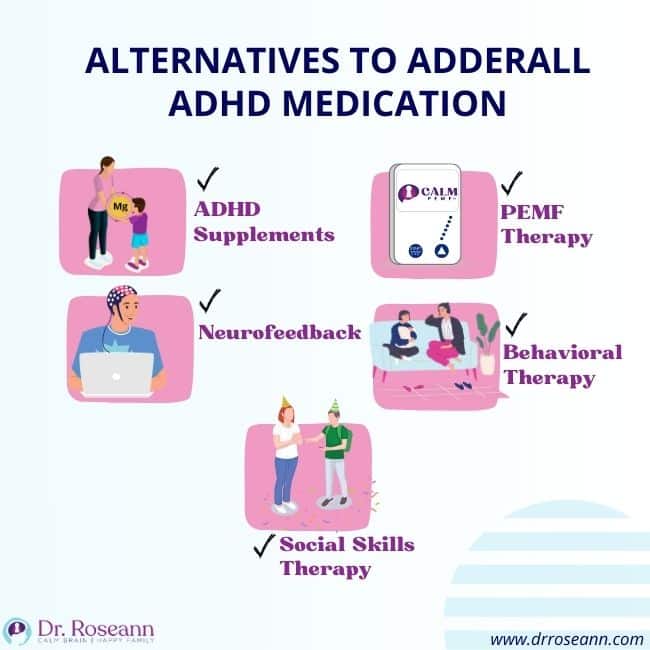
When considering ADHD medication, it's essential to think through all options and weigh the risks and benefits carefully. While medication can be effective for some, others may seek alternatives that offer similar benefits with fewer risks. Let's list some natural and safe options for Adderall:
1. ADHD Supplements
Supplements containing nutrients like omega-3 fatty acids, zinc, and magnesium have shown promise in managing ADHD symptoms. Many individuals, especially children, find relief from these natural remedies.
One study examined how L-threonic acid Magnesium Salt (LTAMS) might help adults with ADHD. Fifteen adults with moderate ADHD took LTAMS for up to 12 weeks. Almost half of them showed improvement in ADHD symptoms, as measured by different tests. The participants also showed better performance on IQ tests (Surman et al., 2020)

2. Neurofeedback
Neurofeedback therapy trains individuals to regulate their brainwaves, potentially reducing ADHD symptoms. It's a non-invasive approach that focuses on improving brain function without medication.
One study analyzed brain activity during neurofeedback (NF) training and its correlation with clinical outcomes in children with ADHD. A separate study compared the effects of different NF techniques on ADHD symptoms in children with tic disorder. Both studies suggest that NF training can effectively treat ADHD symptoms (Gevensleben et al., 2014).
3. PEMF Therapy
Pulsed electromagnetic field (PEMF) therapy is another non-invasive option that targets brain activity. This therapy exposes the brain to electromagnetic pulses to improve focus and attention in children and teens with ADHD.
4. Behavioral Therapy
Therapeutic interventions, such as cognitive-behavioral therapy (CBT) and behavior modification techniques, can help individuals develop coping strategies and improve self-control without relying solely on medication.
5. Social Skills Therapy
Many children with ADHD struggle with social interactions. Social skills therapy focuses on improving communication, empathy, and relationship-building skills, which can positively impact overall well-being.
Get The Natural ADHD Focus Formula Kit Here
Considering the Pros and Cons of ADHD Medications
When it comes to managing ADHD, it's essential to consider both the benefits and risks of medication. While medication may offer immediate relief for some, others may find that the benefits of avoiding drugs outweigh the risks. It's essential to think healthily and discuss options with healthcare professionals to find the best approach for individual needs.
In ADHD management, medication represents just one aspect of a multifaceted approach. Beyond pharmaceutical interventions, various therapeutic modalities, lifestyle modifications, and alternative treatments merit consideration.
Each option, from behavioral therapy to dietary adjustments, has potential benefits and limitations. Parents can tailor their treatment plan to align with their unique preferences and values by adopting a holistic perspective and exploring diverse strategies.
Reducing Reliance on ADHD Medications
For those seeking alternatives to medication in managing ADHD, a variety of strategies exist to mitigate reliance on pharmaceuticals and reduce the risk of potential side effects. Collaborating closely with healthcare professionals is essential, as they can guide in navigating treatment options.
Lifestyle modifications, including maintaining a nutritious diet, regular exercise, and stress management techniques, offer a holistic approach to supporting overall well-being and addressing ADHD symptoms.
Therapeutic interventions such as behavioral therapy and social skills training provide practical strategies for improving attention, organization, and interpersonal communication. Natural supplements like omega-3 fatty acids, zinc, and magnesium also offer benefits.
However, it is crucial to consult a healthcare professional before incorporating them into a treatment regimen. By taking a proactive and informed approach to treatment, parents can empower themselves to make decisions that prioritize their child's well-being and minimize potential risks.
If your child's hyperactivity, impulsivity, or difficulties with focus and attention are wreaking havoc on their grades and causing turmoil in your household, download The Natural ADHD Focus Formula Kit. Boost your child’s attention, focus, and school performance without medication!
FAQs
Are ADHD medications safe long-term?
ADHD medications can be safe for some children when carefully monitored, but long-term use may affect growth, sleep, appetite, mood, and emotional regulation. Every child responds differently, so regular follow-ups with your healthcare provider are essential to ensure the benefits continue to outweigh the risks.
Do all kids experience ADHD medication side effects?
No, not all kids experience ADHD medication side effects, but many do. While some side effects are mild and temporary, others—such as emotional blunting, irritability, anxiety, or aggression—may signal that the medication or dosage isn't the right fit.
Can I stop my child's ADHD medication suddenly?
No, you should never stop your child's ADHD medication suddenly without medical guidance. Always work with your prescribing provider to safely reduce or discontinue medication while monitoring your child's symptoms and overall well-being.
What's the first step if I don't want ADHD medication?
If you don't want ADHD medication, start by supporting your child's nervous system. Prioritizing sleep, nutrition, movement, emotional regulation, and brain-based therapies such as neurofeedback can improve brain function and may reduce the need for medication in some children.
How do I talk to my child's doctor about concerns over ADHD medication?
The best way to talk to your child's doctor about ADHD medication concerns is to be honest and ask specific questions. Discuss potential side effects, long-term risks, alternative treatments, and whether a regulation-first approach can be used before or alongside medication.
Are ADHD medication side effects temporary or long-term?
Some ADHD medication side effects are temporary and improve after dose adjustments or as the body adapts. However, persistent side effects—including ongoing sleep problems, appetite loss, mood changes, or slowed growth—should always be discussed with your child's healthcare provider.
Are there alternatives if ADHD stimulant medication causes too many side effects?
Yes. If ADHD stimulant medication causes too many side effects, your healthcare provider may recommend non-stimulant medications, neurofeedback, behavioral therapy, nutrition and lifestyle interventions, or other evidence-based treatments that better support your child's unique nervous system.
Citations
Gevensleben, H., Kleemeyer, M., Rothenberger, L. G., Studer, P., Flaig-Röhr, A., Moll, G. H., Rothenberger, A., & Heinrich, H. (2014). Neurofeedback in ADHD: Further Pieces of the Puzzle. Brain Topography, 27(1), 20–32. https://doi.org/10.1007/s10548-013-0285-y
Surman, C., Vaudreuil, C., Boland, H., Rhodewalt, L., Di Salvo, M., & Biederman, J. (2020). L-Threonic Acid Magnesium Salt Supplementation in ADHD: An Open-Label Pilot Study. Journal of Dietary Supplements, 18(2), 119–131. https://doi.org/10.1080/19390211.2020.1731044
Dr. Roseann is a mental health expert in ADHD Treatment who is frequently in the media:
- The Healthy 12 Silent Signs of Adult ADHD You Might Be Ignoring
- Seeme & Liz 12 Essential Parenting Tips For Kids with ADHD
- Evan H. Hirsch, MD – EnergyMD with Dr. Roseann Capanna-Hodge (Video) Topic: Is it Brain Fog or ADHD?
Is it ADHD or something else?
Take the ADHD Quiz to discover why your kid can’t focus, listen, or complete tasks
Dr. Roseann is a Children’s Mental Health Expert and Licensed Therapist who has been featured in/on hundreds of media outlets including The Mel Robbins Show, CBS, NBC, PIX11 NYC, Today, FORBES, CNN, The New York Times, The Washington Post, Business Insider, Women’s Day, Healthline, CNET, Parade Magazine and PARENTS. FORBES called her, “A thought leader in children’s mental health.”
She coined the terms, “Re-entry panic syndrome” and “eco-anxiety” and is a frequent contributor to media on mental health.
Dr. Roseann Capanna-Hodge has three decades of experience in working with children, teens and their families with attention-deficit hyperactivity disorder (ADHD), autism, concussion, dyslexia and learning disability, anxiety, Obsessive Compulsive Disorder (OCD), depression and mood disorder, Lyme Disease, and PANS/PANDAS using science-backed natural mental health solutions such as supplements, magnesium, nutrition, QEEG Brain maps, neurofeedback, PEMF, psychotherapy and other non-medication approaches.
She is the author of three bestselling books, It’s Gonna Be OK!: Proven Ways to Improve Your Child's Mental Health, The Teletherapy Toolkit, and Brain Under Attack. Dr. Roseann is known for offering a message of hope through science-endorsed methods that promote a calm brain.
Her trademarked and It’s Gonna be OK!Ⓡ Podcast has been a cornerstone for thousands of parents facing mental health, behavioral or neurodevelopmental challenges.
She is the founder and director of The Global Institute of Children’s Mental Health, Neurotastic®Brain Formulas and Dr. Roseann Capanna-Hodge, LLC. Dr. Roseann is a Board Certified Neurofeedback (BCN) Practitioner, a Board Member of the Northeast Region Biofeedback Society (NRBS), Certified Integrative Mental Health Professional (CIMHP) and an Amen Clinic Certified Brain Health Coach. She is also a member of The International Lyme Disease and Associated Disease Society (ILADS), The American Psychological Association (APA), Anxiety and Depression Association of America (ADAA) National Association of School Psychologists (NASP), International OCD Foundation (IOCDF).
© Roseann-Capanna-Hodge, LLC 2024
Always remember… “Calm Brain, Happy Family™”
Disclaimer: This article is not intended to give health advice and it is recommended to consult with a physician before beginning any new wellness regime. The effectiveness of diagnosis and treatment vary by patient and condition. Dr. Roseann Capanna-Hodge, LLC does not guarantee certain results.
Are you looking for SOLUTIONS for your struggling child or teen?
Dr. Roseann and her team are all about science-backed solutions, so you are in the right place!

Meet the Expert
Licensed Therapist | Certified School Psychologist
Board Certified in Neurofeedback (BCN) | 30+ Years Clinical Experience
Expert in Emotional Dysregulation in Children and Nervous System Regulation
Host, Dysregulated Kids Podcast | Author, The Dysregulated Kid
Dr. Roseann Capanna-Hodge is a licensed therapist, certified school psychologist, and leading expert in emotional dysregulation in children and nervous system regulation. With over 30 years of clinical experience and having analyzed more than 10,000 brain maps, she helps families understand what behavior is really signaling—and how to calm the nervous system first so real change can happen.
She is the creator of Regulation First Parenting® and the CALMS Protocol™, host of the top 1% podcast Dysregulated Kids, and author of The Dysregulated Kid.