
Find Your Solution
In 3 minutes, you’ll know where to start ➤


Enrollment NOW OPEN: CALMS Certification Level I. - Be a Founding Member! Learn more.
Mood and Behavior Case Study: How a 12-Year-Old's Lifelong Dysregulation Finally Made Sense — and Started to Heal
This mood and behavior case study follows Henry, a 12-year-old boy who had been difficult to reach, difficult to manage, and difficult to understand since the day he was born.
Not because he was a bad kid. Because his brain, from the very beginning, never had the regulation it needed to let him be the kid he was capable of being.
Henry had been medicated, counseled, IEP'd, and social-skills-grouped for most of his childhood. Each intervention helped a little. None of them reached the root. By the time his parents came to us, Henry had been put on an antipsychotic medication for mood — had gained twenty pounds and gone emotionally flat — and his family was out of options and out of patience.
This is Henry's story — and a look at what becomes possible when you finally see what's been driving the dysregulation all along.
Not because he was a bad kid. Because his brain, from the very beginning, never had the regulation it needed to let him be the kid he was capable of being.
Henry had been medicated, counseled, IEP'd, and social-skills-grouped for most of his childhood. Each intervention helped a little. None of them reached the root. By the time his parents came to us, Henry had been put on an antipsychotic medication for mood — had gained twenty pounds and gone emotionally flat — and his family was out of options and out of patience.
This is Henry's story — and a look at what becomes possible when you finally see what's been driving the dysregulation all along.
Client Details

Henry (name changed to protect privacy)
Treatments

CALM PEMF®

Brain-based regulatory therapies

Nutrition and wellness coaching

Dietary Supplements

Detoxification and Gut Support

Parent coaching (using the CALMS Dysregulation Protocol®)

Individual psychotherapy

Medical care coordination
Metrics

QEEG Brain Map (3)

Cognitive and Emotional Symptom Checklist

Physiological Symptom Checklist

Symptom Progress Tracking Likert Scale

Client and Parent Interviews
Henry's Story
Henry's family had a phrase they used to describe him from the very beginning: "Henry came out difficult." It was said with exhaustion more than judgment — because that was simply their lived reality. He was hard as a baby, hard as a toddler, hard in preschool, hard in elementary school, and now hard in middle school, with the added weight of adolescent hormones and an antipsychotic prescription on top of everything else.What nobody had ever asked — in twelve years of doctors, teachers, therapists, and specialists — was what Henry's brain actually looked like. That question would change everything.
Henry Came Out Difficult: A Nervous System Under Stress From Birth
Henry's birth was prolonged and complicated. He was born "blue" — no physician concerns were formally documented, but the birth itself was physically stressful. Colic followed. Then sleep problems, constipation, picky eating, and sensory issues that made early childhood a daily management challenge for the whole family.From his earliest years, Henry was easily upset. He struggled to get along with his older sister and younger brother, and conflicts with peers appeared almost as soon as peer interaction began. His emotional thermostat ran hot, and once dysregulated, he was hard to bring back down.Every one of these early details — the difficult birth, the colic, the gut problems, the sensory sensitivities — was a signal. Taken together, they described a nervous system that had never settled. A brain that had been dysregulated from the start and had never found its baseline.
Preschool: The First Label, the First Medication
At age four, Henry's preschool teacher raised concerns about his behavior and recommended a pediatrician visit to discuss ADHD. After the Vanderbilt Rating Scales were completed by both parents and teachers, Henry was diagnosed with ADHD and prescribed Concerta.For the remainder of preschool, the medication helped. Focus improved. Seat work improved. His parents had a brief, welcome window of feeling like things were going to be okay.Then summer arrived.
The Medication Carousel: Weight Loss, Constipation, and Constant Ups and Downs
By the end of the summer before kindergarten, the Concerta side effects had taken hold. Henry's appetite suppressed so severely that he became lethargic and began losing weight. His pediatrician recommended adding PediaSure nutritional supplement to compensate. The weight returned — but his already-struggling gut worsened. Henry was now eliminating only a couple of times a week.Kindergarten brought an IEP under the Other Health Impairment classification. Despite an above-average IQ of 117, Henry's work production was poor. His impulsiveness and mood instability were disrupting transitions, task completion, and peer relationships. School-based interventions were layered in over the years — each one helping a little, none of them resolving the underlying picture.Medication switches brought behavioral ups and downs. Nothing held.
What the Food Was Telling Them: A Family Who Figured Something Out
Henry's parents tried repeatedly to clean up his diet, but Henry found his way around every effort — hoarding cookies, soda, and high-carbohydrate foods, hiding wrappers in his room. The breakthrough came when the whole family committed together. When no one in the house was eating that way, Henry stopped too. And when the diet improved, his parents noticed a real behavioral shift.This was an important signal — one that would become central to his treatment. Henry's gut and his brain were in conversation, and the food he was eating was making the dysregulation worse. His body had been telling the story for years. It just hadn't been heard.
Middle School: Hormones, a Heavier Medication, and Twenty Pounds
Middle school brought adolescence, and with it, a significant worsening of Henry's mood. His pediatrician referred the family to a psychiatrist, who added Risperdal — an antipsychotic — to address the mood dysregulation. Henry's ADHD diagnosis remained unchanged.The effect was swift and alarming. Henry went emotionally flat. He gained twenty pounds in a short period of time. His parents — who had spent years fighting to get through to their son — now found themselves looking at a child who barely seemed present.That was the moment they decided they needed a fundamentally different approach.
Finding the Root: A Brain Map That Explained Twelve Years
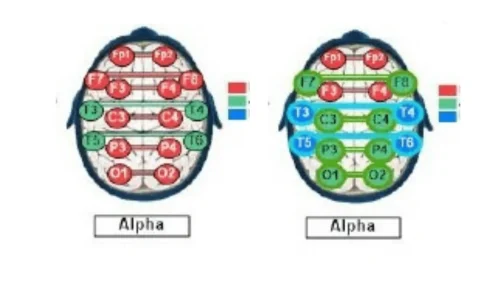
Henry's QEEG Brain Map told us something no behavioral assessment, school report, or psychiatric evaluation had ever captured. His brain showed high levels of Delta and High Beta brainwave activity concentrated around his frontal lobes — a pattern we commonly see in birth trauma and early head injury. It was a neurological imprint of a difficult beginning that had been sitting there, undetected, his entire life.His brain also showed elevated Alpha brainwave activity and excessive Alpha brain communication — patterns we associate with mood regulation difficulties. Taken together, the brain map reflected exactly what Henry's behavior had looked like for twelve years: a brain in a state of high, chronic dysregulation, doing the best it could with what it had.For the first time, Henry's family wasn't just seeing a difficult child. They were seeing a dysregulated brain — and understanding why it had been so hard to reach him.
Henry Came Out Difficult: A Nervous System Under Stress From Birth
Henry's birth was prolonged and complicated. He was born "blue" — no physician concerns were formally documented, but the birth itself was physically stressful. Colic followed. Then sleep problems, constipation, picky eating, and sensory issues that made early childhood a daily management challenge for the whole family.From his earliest years, Henry was easily upset. He struggled to get along with his older sister and younger brother, and conflicts with peers appeared almost as soon as peer interaction began. His emotional thermostat ran hot, and once dysregulated, he was hard to bring back down.Every one of these early details — the difficult birth, the colic, the gut problems, the sensory sensitivities — was a signal. Taken together, they described a nervous system that had never settled. A brain that had been dysregulated from the start and had never found its baseline.
Preschool: The First Label, the First Medication
At age four, Henry's preschool teacher raised concerns about his behavior and recommended a pediatrician visit to discuss ADHD. After the Vanderbilt Rating Scales were completed by both parents and teachers, Henry was diagnosed with ADHD and prescribed Concerta.For the remainder of preschool, the medication helped. Focus improved. Seat work improved. His parents had a brief, welcome window of feeling like things were going to be okay.Then summer arrived.
The Medication Carousel: Weight Loss, Constipation, and Constant Ups and Downs
By the end of the summer before kindergarten, the Concerta side effects had taken hold. Henry's appetite suppressed so severely that he became lethargic and began losing weight. His pediatrician recommended adding PediaSure nutritional supplement to compensate. The weight returned — but his already-struggling gut worsened. Henry was now eliminating only a couple of times a week.Kindergarten brought an IEP under the Other Health Impairment classification. Despite an above-average IQ of 117, Henry's work production was poor. His impulsiveness and mood instability were disrupting transitions, task completion, and peer relationships. School-based interventions were layered in over the years — each one helping a little, none of them resolving the underlying picture.Medication switches brought behavioral ups and downs. Nothing held.
What the Food Was Telling Them: A Family Who Figured Something Out
Henry's parents tried repeatedly to clean up his diet, but Henry found his way around every effort — hoarding cookies, soda, and high-carbohydrate foods, hiding wrappers in his room. The breakthrough came when the whole family committed together. When no one in the house was eating that way, Henry stopped too. And when the diet improved, his parents noticed a real behavioral shift.This was an important signal — one that would become central to his treatment. Henry's gut and his brain were in conversation, and the food he was eating was making the dysregulation worse. His body had been telling the story for years. It just hadn't been heard.
Middle School: Hormones, a Heavier Medication, and Twenty Pounds
Middle school brought adolescence, and with it, a significant worsening of Henry's mood. His pediatrician referred the family to a psychiatrist, who added Risperdal — an antipsychotic — to address the mood dysregulation. Henry's ADHD diagnosis remained unchanged.The effect was swift and alarming. Henry went emotionally flat. He gained twenty pounds in a short period of time. His parents — who had spent years fighting to get through to their son — now found themselves looking at a child who barely seemed present.That was the moment they decided they needed a fundamentally different approach.
Finding the Root: A Brain Map That Explained Twelve Years
Henry's QEEG Brain Map told us something no behavioral assessment, school report, or psychiatric evaluation had ever captured. His brain showed high levels of Delta and High Beta brainwave activity concentrated around his frontal lobes — a pattern we commonly see in birth trauma and early head injury. It was a neurological imprint of a difficult beginning that had been sitting there, undetected, his entire life.His brain also showed elevated Alpha brainwave activity and excessive Alpha brain communication — patterns we associate with mood regulation difficulties. Taken together, the brain map reflected exactly what Henry's behavior had looked like for twelve years: a brain in a state of high, chronic dysregulation, doing the best it could with what it had.For the first time, Henry's family wasn't just seeing a difficult child. They were seeing a dysregulated brain — and understanding why it had been so hard to reach him.
Phase One: Reset the Frontal Lobes — Calm the Brain That's Been Struggling Since Birth
Phase one focused entirely on bringing Henry's overactivated, dysregulated brain into a calmer state — true to the Regulation First® principle that you cannot correct behavior until you calm the brain producing it.
Using CALM PEMF® at intensive frequency (three to seven sessions per week via a mobile unit), brain-based regulatory therapies, dietary supplements, and gut support, we began addressing the neurological dysregulation that had been driving Henry's mood and behavior for over a decade. Parent coaching using the CALMS Dysregulation Protocol® began immediately — giving Henry's parents a structured way to respond to his outbursts and noncompliant behaviors without escalating them further.
Once the frequency and intensity of Henry's outbursts and noncompliant behaviors measurably subsided, one-to-one therapy was added. His brain now had enough regulation to actually receive it.
Using CALM PEMF® at intensive frequency (three to seven sessions per week via a mobile unit), brain-based regulatory therapies, dietary supplements, and gut support, we began addressing the neurological dysregulation that had been driving Henry's mood and behavior for over a decade. Parent coaching using the CALMS Dysregulation Protocol® began immediately — giving Henry's parents a structured way to respond to his outbursts and noncompliant behaviors without escalating them further.
Once the frequency and intensity of Henry's outbursts and noncompliant behaviors measurably subsided, one-to-one therapy was added. His brain now had enough regulation to actually receive it.
Phase Two: Build the Life His Brain Was Too Dysregulated to Access
Phase two shifted the focus toward the lifestyle and relational work that Henry's nervous system had never been stable enough to sustain. Wellness and nutritional coaching supported the family in making and maintaining meaningful dietary changes — building on what they had already discovered on their own — and integrating stress management and lifestyle practices into their daily routines.
The CALMS Dysregulation Protocol® continued to guide Henry's parents throughout this phase, helping them reinforce the behaviors they wanted to see from Henry rather than focusing primarily on the ones they didn't.Phase two focused wellness and nutritional coaching to support Henry and his family in making more dietary changes, as well as integrating lifestyle and stress management changes into their daily routines.
The CALMS Dysregulation Protocol® continued to guide Henry's parents throughout this phase, helping them reinforce the behaviors they wanted to see from Henry rather than focusing primarily on the ones they didn't.Phase two focused wellness and nutritional coaching to support Henry and his family in making more dietary changes, as well as integrating lifestyle and stress management changes into their daily routines.
That last step — support and reinforce — was particularly significant for Henry's family. Years of frustration had shifted the household dynamic toward criticism and correction. Consciously and consistently reinforcing Henry's progress rather than cataloguing his failures was a meaningful part of what changed the dynamic at home.
In therapy, Henry himself began to shift. He developed more insight into his own behavior, became less defensive, and started asking for help in difficult situations rather than escalating them — and began resolving some of those situations on his own.
In therapy, Henry himself began to shift. He developed more insight into his own behavior, became less defensive, and started asking for help in difficult situations rather than escalating them — and began resolving some of those situations on his own.
Before and After: QEEG Brain Map Comparison
The QEEG comparison — from Brain Map #1 to Brain Map #3 — captures the neurological changes that took place over the course of treatment.
[Brain Map comparison image — QEEG #1 vs. QEEG #3 after 47 sessions of brain-based therapy and 3–7x weekly CALM PEMF®, with parent and individual therapy. Henry's excessive Alpha brain communication normalized.]
[Brain Map comparison image — QEEG #1 vs. QEEG #3 after 47 sessions of brain-based therapy and 3–7x weekly CALM PEMF®, with parent and individual therapy. Henry's excessive Alpha brain communication normalized.]
Mood and Behavior Case Study Outcomes
After 47 sessions of brain-based therapy combined with three to seven CALM PEMF® sessions per week, parent coaching, and psychotherapy, Henry's frontal lobe brainwave activity shifted dramatically.
These weren't behavioral adjustments achieved through pressure or reward. They were the natural result of a regulated nervous system — exactly what the Regulation First® approach predicts and produces.

What This Mood and Behavior Case Study Teaches Us
Henry's case carries important lessons for any family who has been told their child is simply difficult — and has started to believe it:Dysregulation has a neurological origin. Henry's brain map showed us birth trauma patterns that had been present — and affecting his behavior — for his entire life. He was never just difficult. He was dysregulated. And dysregulation has causes, not just consequences.
Medication can manage behavior without ever reaching the brain driving it. Over a decade of medication adjustments produced partial, temporary relief at best, and significant side effects at worst. None of them addressed the brainwave patterns that were generating Henry's mood instability and impulsivity.
The gut is part of the brain's story. Henry's chronic constipation, picky eating, medication-induced gut stress, and diet-responsive behavioral shifts were all chapters in the same story. When we addressed the gut, we addressed a piece of the dysregulation. You cannot separate them.
A dysregulated parent cannot regulate a dysregulated child — and years of exhaustion make this harder. The CALMS Dysregulation Protocol® gave Henry's parents not just tools, but a framework for showing up differently in the moments that had historically ended in conflict. That shift in how the adults responded was as clinically important as anything we did with Henry directly.
Regulation First® is a sequence, not just a philosophy. Regulate. Connect. Correct. When Henry's frontal lobes finally had the regulation they needed, the therapy reached him. The insight arrived. He started asking for help. That sequence — calm first, everything else second — is what made the difference.
Medication can manage behavior without ever reaching the brain driving it. Over a decade of medication adjustments produced partial, temporary relief at best, and significant side effects at worst. None of them addressed the brainwave patterns that were generating Henry's mood instability and impulsivity.
The gut is part of the brain's story. Henry's chronic constipation, picky eating, medication-induced gut stress, and diet-responsive behavioral shifts were all chapters in the same story. When we addressed the gut, we addressed a piece of the dysregulation. You cannot separate them.
A dysregulated parent cannot regulate a dysregulated child — and years of exhaustion make this harder. The CALMS Dysregulation Protocol® gave Henry's parents not just tools, but a framework for showing up differently in the moments that had historically ended in conflict. That shift in how the adults responded was as clinically important as anything we did with Henry directly.
Regulation First® is a sequence, not just a philosophy. Regulate. Connect. Correct. When Henry's frontal lobes finally had the regulation they needed, the therapy reached him. The insight arrived. He started asking for help. That sequence — calm first, everything else second — is what made the difference.
A Note on Privacy
The names and some identifying details in this mood and behavior case study have been changed to protect client privacy. Each client's experience and treatment protocol is unique and individually tailored based on their specific clinical profile.
Frequently Asked Questions About Mood and Behavior Treatment in Children
Can I work with Dr. Roseann one on one?
I'm not taking individual clients right now, but that doesn't mean we can't work together! Through my Parent Certification Program, I teach you the exact tools and strategies I use in my practice — including the CALMS Dysregulation Protocol® — so you can apply them with your child at home. So many parents have told me it was the turning point for their family. [Learn more about the Parent Certification Program →]
What is the Regulation First® approach to mood and behavior dysregulation?
Regulation First® means we address the nervous system before we address behavior. Most behavior interventions focus on consequences, reward systems, and skill-building — but none of those work on a brain that is neurologically dysregulated. When we calm the brain first, the behavioral strategies have somewhere to land. That's the sequence Henry's family had been missing for twelve years.
What is the CALMS Dysregulation Protocol®?
The CALMS Dysregulation Protocol® is a five-step framework I developed to help parents respond to their child's dysregulation in a way that supports the nervous system rather than escalating it. It stands for: Co-regulate first, Avoid personalizing, Look for root causes, Model coping strategies, and Support and reinforce. For families who have been in survival mode for years — like Henry's — it also helps shift the household dynamic from correction-focused to connection-focused. That shift matters enormously.
Is a holistic approach right for my child's mood and behavior issues?
In my experience, yes — especially when the difficulties have been present since early childhood and haven't responded fully to medication or behavioral strategies. Those are signs that something neurological is driving the behavior, not just a skill deficit or a choice. A QEEG Brain Map gives us objective information about what's actually happening in the brain, so we're not guessing. With Henry, his brain map revealed a birth trauma pattern that had been affecting him his entire life — information that changed everything about how we approached his care.
How long does it take to see results with mood and behavior dysregulation?
It depends on how long the dysregulation has been present and what's driving it neurologically. What I can tell you is that when families commit to the process and apply the CALMS framework consistently at home, behavioral changes tend to follow the neurological ones. With Henry, the outbursts and noncompliance dropped 50 to 60 percent over the course of treatment — and the shift in his insight and self-awareness was something his family hadn't seen before. It takes time. But when you're addressing the actual root, the changes are real and they hold.The names and some identifying details in this mood and behavior case study have been changed to protect client privacy. Each client's experience and treatment protocol is unique and individually tailored based on their specific clinical profile.
I'm not taking individual clients right now, but that doesn't mean we can't work together! Through my Parent Certification Program, I teach you the exact tools and strategies I use in my practice — including the CALMS Dysregulation Protocol® — so you can apply them with your child at home. So many parents have told me it was the turning point for their family. [Learn more about the Parent Certification Program →]
What is the Regulation First® approach to mood and behavior dysregulation?
Regulation First® means we address the nervous system before we address behavior. Most behavior interventions focus on consequences, reward systems, and skill-building — but none of those work on a brain that is neurologically dysregulated. When we calm the brain first, the behavioral strategies have somewhere to land. That's the sequence Henry's family had been missing for twelve years.
What is the CALMS Dysregulation Protocol®?
The CALMS Dysregulation Protocol® is a five-step framework I developed to help parents respond to their child's dysregulation in a way that supports the nervous system rather than escalating it. It stands for: Co-regulate first, Avoid personalizing, Look for root causes, Model coping strategies, and Support and reinforce. For families who have been in survival mode for years — like Henry's — it also helps shift the household dynamic from correction-focused to connection-focused. That shift matters enormously.
Is a holistic approach right for my child's mood and behavior issues?
In my experience, yes — especially when the difficulties have been present since early childhood and haven't responded fully to medication or behavioral strategies. Those are signs that something neurological is driving the behavior, not just a skill deficit or a choice. A QEEG Brain Map gives us objective information about what's actually happening in the brain, so we're not guessing. With Henry, his brain map revealed a birth trauma pattern that had been affecting him his entire life — information that changed everything about how we approached his care.
How long does it take to see results with mood and behavior dysregulation?
It depends on how long the dysregulation has been present and what's driving it neurologically. What I can tell you is that when families commit to the process and apply the CALMS framework consistently at home, behavioral changes tend to follow the neurological ones. With Henry, the outbursts and noncompliance dropped 50 to 60 percent over the course of treatment — and the shift in his insight and self-awareness was something his family hadn't seen before. It takes time. But when you're addressing the actual root, the changes are real and they hold.The names and some identifying details in this mood and behavior case study have been changed to protect client privacy. Each client's experience and treatment protocol is unique and individually tailored based on their specific clinical profile.
Ready to Find a Path Forward?
If Henry's story sounds like your child — a kid who has always been hard, who has tried everything, and who deserves someone to finally ask the right question — you don't have to keep looking for the next intervention that partially works.
[Learn More About How We Can Help →]
[Learn More About How We Can Help →]
The effectiveness of diagnosis and treatment varies by patient and condition. Dr. Roseann Capanna-Hodge, LLC does not guarantee specific results.