



Estimated reading time: 13 minutes
Emotional regulation is often one of the hardest parts of ADHD: managing how strongly feelings show up, how we respond, and how we recover. ADHD emotional dysregulation can mean intense frustration, impulsive reactions, and difficulty calming down; these reactions do not automatically mean a child is choosing bad behavior. My Regulation First approach starts with calming and connection so we can teach skills when a child is ready to learn.
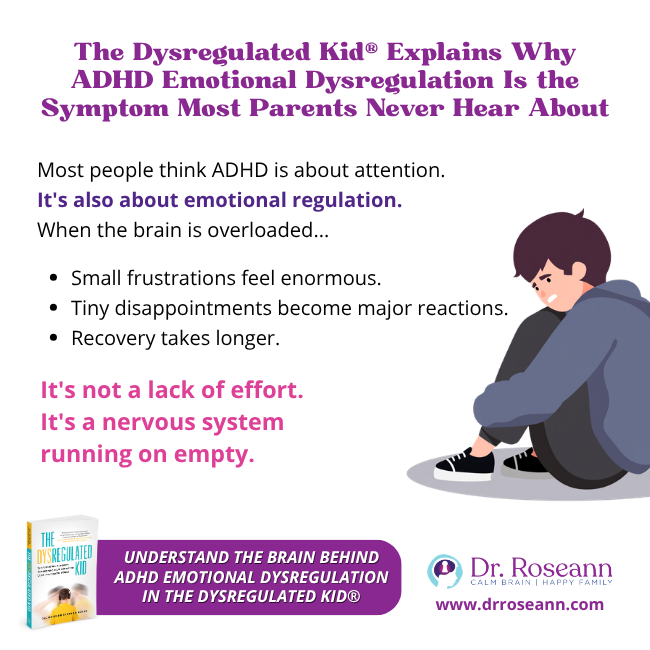
If your child’s emotional reactions feel bigger than the situation warrants, you’re not imagining it. This isn’t just a bad temper or defiance; it’s emotional dysregulation, a common but often misunderstood part of ADHD.
Common ADHD emotional dysregulation examples include:
- Intense reactions: A meltdown over a minor mistake or change in routine.
- Low frustration tolerance: Giving up on a task with tears or anger.
- Rejection sensitivity: Taking neutral feedback as personal criticism.
- Difficulty calming down: Staying upset for hours after a trigger.
- Rapid mood swings: Shifting from happy to furious or sad without a clear reason.
- Impulsive anger: Yelling or slamming doors before thinking.
- Over-the-top excitement: Becoming so excited that behavior is hard to manage.
- Physical aggression: Hitting or throwing objects when overwhelmed.
You might feel exhausted, walking on eggshells, and stuck in a cycle of conflict. You’re not alone, and this isn’t your fault. Understanding why these big emotions happen is the first step toward lasting change. When we calm the brain first, behavior follows.
I’m Dr. Roseann Capanna-Hodge, and for over three decades, I’ve helped families steer emotional dysregulation and ADHD with natural, evidence-based approaches. I’ve seen how the right support can transform family life, and there are solutions that can help your child find the calm they desperately need.
What are Common ADHD Emotional Dysregulation Examples?
Emotional dysregulation in ADHD is an impaired ability to manage emotional responses. It’s when feelings feel “too big” for the situation. Research estimates that 25–45% of children with ADHD and 34–70% of adults with ADHD experience significant emotional dysregulation (Shaw et al., 2014).
This isn’t just feeling things strongly; it’s a persistent pattern of emotions that hit harder, last longer, and are difficult to recover from.
As I always say, “Behavior is communication.” These intense reactions are a sign that the brain is struggling to cope. While not a core diagnostic criterion in the DSM-5, clinicians widely recognize emotional dysregulation as a cardinal symptom of ADHD (Setiawati et al., 2024).
What Does an ADHD Meltdown Look Like?
An ADHD meltdown can look like intense crying, yelling, throwing things, or becoming too overwhelmed to explain what is wrong. For example, a child struggling with homework may crumple the worksheet and continue crying even after you offer a break.
A tantrum may center on wanting something or resisting a limit; a meltdown describes overwhelm that can continue after the immediate problem is removed. The two can overlap, and neither label tells you that a child is deliberately misbehaving.
Start with safety and connection, then teach and problem-solve when calm.

ADHD Emotional Dysregulation Symptoms in Children
For children, whose regulation skills are still developing, ADHD can make things especially challenging.
Common ADHD emotional dysregulation symptoms in children can include:
- Intense mood swings: Moving quickly from joyful to furious or sad.
- Outbursts over small frustrations: Crying or yelling over a lost toy, mistake, or unexpected change.
- Low frustration tolerance: Giving up on challenging tasks with anger or tears.
- Difficulty calming down: Needing considerable time and support to recover after becoming upset.
- Over-the-top excitement: Becoming so excited that managing behavior is difficult.
- Sensitivity to criticism or rejection: Experiencing feedback as deeply upsetting, sometimes described as rejection sensitive dysphoria (RSD).
- Physical aggression when overwhelmed: Hitting, kicking, or throwing objects.
- Impulsive anger: Yelling or slamming a door before pausing to think.
- Shame or withdrawal after perceived criticism: Pulling away or becoming quiet when feelings are overwhelming.
These signs can occur with ADHD, but they do not diagnose ADHD on their own.
Research shows that children with ADHD often know what they’re feeling but struggle with the intensity of the emotion and the ability to calm down (Astenvald et al., 2025).
How Emotional Dysregulation Manifests in Adults
Emotional dysregulation doesn’t disappear with age.
“Emotional and self-regulation problems linked to ADHD often persist into adulthood, affecting personal and professional functioning and frequently being misattributed to personality or everyday stress.”
— Russell A. Barkley, PhD, clinical neuropsychologist and ADHD researcher
Here are some common ADHD emotional dysregulation examples in adults:
- Impulsive anger and road rage: Minor provocations trigger intense, overwhelming anger and regrettable reactions.
- Chronic irritability and mood swings: Persistent irritability or rapid, unpredictable mood shifts without an obvious trigger.
- Relationship turmoil: Intense reactions and rejection sensitivity strain friendships, partnerships, and family bonds.
- Difficulty coping with stress at work: Deadlines or criticism can trigger overwhelming anxiety or frustration, impacting job performance.
- Feeling easily overwhelmed by emotions: Daily stressors feel like impossible challenges, leading to emotional exhaustion.
- Low self-esteem from past emotional reactions: A history of regrettable outbursts leads to feelings of shame and guilt.

The Brain Science Behind Big Emotions
Why do these big emotions happen? It’s not a choice or a character flaw; it’s rooted in brain differences.
ADHD is a disorder of executive functions—the brain’s management system for impulse control, planning, and emotional regulation. Key brain areas function differently.
The amygdala, the brain’s emotional alarm system, can be overactive, leading to stronger, faster reactions. Meanwhile, the prefrontal cortex, the brain’s “braking system” responsible for controlling impulses, often shows decreased activation. This makes it harder to stop and think before reacting.
Imbalances in neurotransmitters like dopamine also play a role.
Understanding this is vital. It shifts the focus from blame to compassion and effective, brain-based strategies. It’s neurological, not a character flaw.
ADHD and Emotional Sensitivity
Some children with ADHD experience emotional sensitivity, reacting strongly to disappointment, correction, or feeling left out. A simple reminder may feel like criticism, bringing tears, anger, or withdrawal.
When perceived rejection causes especially intense distress, people sometimes use the term rejection sensitive dysphoria (RSD); it is not a formal diagnosis, and not every sensitive child experiences it. See the RSD FAQ below for more.
The Ripple Effect on Daily Life
The impact of emotional dysregulation extends far beyond momentary outbursts, affecting nearly every aspect of life.
- Social and family relationships: Frequent outbursts and sensitivity can strain friendships and cause conflict with siblings and parents, leading to isolation.
- School and work performance: The stress of schoolwork or professional demands can lead to meltdowns, “disruptive” behavior, and poor performance.
- Mental health risks: The constant struggle and negative feedback increase the risk for co-occurring anxiety and depression.
- Long-term consequences: Unmanaged dysregulation is linked to greater impairment in peer relationships, family life, and occupational attainment.
- Risky behaviors: Difficulty regulating emotions can lead to impulsive, risky behaviors like substance misuse or dangerous driving.
Recognizing these impacts highlights the critical need to address emotional dysregulation as a core part of ADHD management.
How to Support Your Child and Manage Emotional Dysregulation
Living with emotional dysregulation is challenging, but there is hope. Our approach is to “calm the brain first,” because when we address the underlying neurological issues, behavior improves.
It’s about understanding and empowering, not shaming or blaming. As a parent, you can shift from reactive to proactive, creating a supportive environment where your child can learn to co-regulate their emotions with you.
When emotions are already running high, start with connection and fewer words. My guide to how to calm a dysregulated child walks you through support in the moment.
In my book too, The Dysregulated Kid, I help parents understand what their child’s behavior is communicating and respond with a Regulation First approach. You’ll learn practical ways to calm the nervous system, build connection, and support emotional regulation in everyday family life.
Effective Strategies for Managing ADHD Emotional Dysregulation Examples
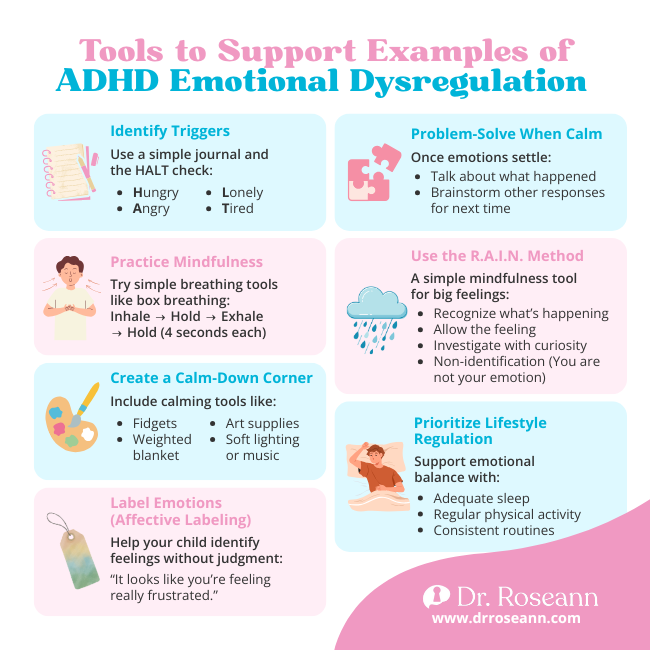
Managing emotional dysregulation is a journey. Here are some actionable strategies to start with:
- Identify triggers: Keep a simple journal to notice patterns. Use the HALT method: Is your child Hungry, Angry, Lonely, or Tired? Addressing these basic needs can prevent overwhelm.
For children with ADHD, hunger and fatigue hit harder than they do for neurotypical kids—a depleted body depletes the prefrontal cortex’s ability to regulate emotion, leaving the amygdala in charge.
- Practice mindfulness: Simple breathing exercises, like box breathing, can calm the nervous system and create a pause between a trigger and a reaction.
This pause matters specifically for ADHD brains because the prefrontal cortex—the part responsible for impulse control—needs a moment to come back online after the amygdala fires; slow breathing activates the vagus nerve and helps make that happen faster.
- Create a “calm-down corner”: Designate a quiet, comfortable space with calming tools like fidgets, a weighted blanket, or art supplies for when your child feels overwhelmed.
Sensory tools like weighted blankets and fidgets work particularly well for ADHD because they provide the proprioceptive and tactile input that helps downregulate an overactive amygdala without requiring the child to use executive function skills they don’t have access to mid-meltdown.
- Label emotions (affective labeling): Help your child name their feelings without judgment. Saying, “It looks like you’re feeling really frustrated,” can reduce the intensity of the emotion.
Neuroscience research shows that naming a feeling activates the prefrontal cortex and reduces amygdala activity—which is especially important for kids with ADHD whose emotional alarm system fires faster and harder than their thinking brain can keep up with.
- Problem-solve when calm: Once the emotion has passed, talk through what happened and brainstorm other ways to respond next time.
Timing matters: an ADHD brain in fight-or-flight literally cannot access working memory or flexible thinking, so any teaching or problem-solving done during or immediately after a meltdown is wasted—waiting until the nervous system has fully reset is what makes the conversation productive.
- Use the R.A.I.N. method: This mindfulness tool helps process emotions.
The steps are:
- Recognize what’s happening.
- Allow the feeling to be there.
- Investigate with curiosity.
- Non-identification: You are not your emotion.
This method was created by meditation teacher Michele McDonald and developed further by psychologist Tara Brach.
The “Recognize” and “Investigate” steps are particularly valuable for ADHD, since impulsivity often means the emotional reaction is over before a child even consciously registers what triggered it—building the habit of noticing slows that cycle down over time.
- Prioritize lifestyle: Ensure adequate sleep, regular physical activity, and a consistent routine. Exercise is a powerful outlet for intense feelings.
For ADHD brains specifically, exercise increases dopamine and norepinephrine—the same neurotransmitters targeted by ADHD medication—which is why consistent physical activity can meaningfully reduce emotional reactivity, not just burn off energy.
For more ways to practice these skills when your child is calm, explore my ADHD self-regulation strategies.

Professional Support and Treatment Options
Sometimes, strategies aren’t enough, and seeking professional help is a sign of strength. If emotional reactions are causing constant stress, impacting school or relationships, or leading to shame, it’s time to reach out.
Therapeutic interventions:
- Cognitive Behavioral Therapy (CBT): Helps identify and change negative thought patterns and behaviors linked to emotional dysregulation.
- Dialectical Behavior Therapy (DBT): Teaches core skills in mindfulness, distress tolerance, emotional regulation, and interpersonal effectiveness.
- Parent training: Equips parents with effective strategies to create a supportive and consistent home environment.
The role of medication: For some, stimulant or non-stimulant medication can be a valuable tool to help stabilize mood and improve the brain’s ability to regulate.
Neurofeedback: This non-invasive treatment trains the brain to self-regulate more effectively. By providing real-time feedback on brainwave activity, individuals learn to shift their brain into a calmer, more focused state. This aligns perfectly with my philosophy to “calm the brain first.”
Dr. Roseann’s unique approach: We combine advanced neurological assessments with personalized, evidence-based interventions like neurofeedback, biofeedback, and targeted cognitive training. Our goal is to address the root causes of dysregulation, helping children and adults in Ridgefield, CT, and worldwide achieve lasting emotional stability.
Is There Medication for ADHD Emotional Regulation?
Medication used to treat ADHD may also improve emotional regulation for some children, but responses vary and a prescriber should monitor benefits and side effects.
A whole-child plan can include medication alongside sleep, parent support, co-regulation, and skills practice. My guide to ADHD emotional dysregulation medication explains what to discuss with your child’s clinician.
Frequently Asked Questions
Is it just a bad temper or emotional dysregulation?
A bad temper is sometimes more than just a bad temper. Emotional dysregulation in ADHD stems from neurobiological differences that make it hard to control emotional intensity. A bad temper is often a learned behavior, while dysregulation is a core challenge of the condition.
Can a child outgrow emotional dysregulation?
A child cannot outgrow emotional dysregulation without the right support. While regulation skills improve with age, ADHD-related dysregulation often persists without support. With the right strategies and interventions, children can learn to manage their emotions effectively, but it requires conscious effort, not just maturation.
How is emotional dysregulation in ADHD different from Bipolar Disorder?
ADHD and emotional dysregulation involves rapid, short-lived, intense reactions to specific triggers, while Bipolar Disorder involves distinct, prolonged episodes of mania or depression lasting days or weeks, which are less directly tied to immediate events.
What is the first step I should take to help my child?
Seek a comprehensive evaluation to understand your child’s specific challenges. In parallel, start with simple home strategies like identifying triggers, practicing deep breathing, and creating a calm-down space. “You’re not alone,” and we’re here to help.
What triggers emotional dysregulation in children with ADHD?
The most common triggers for emotional dysregulation in children with ADHD are transitions away from a preferred activity, being told no, homework demands, hunger or fatigue, sensory overload, and social moments involving criticism or feeling left out.
The key isn’t just knowing the trigger—it’s understanding that your child’s nervous system is already running hot, so even a small stressor can push them over the edge.
Is Rejection Sensitive Dysphoria (RSD) part of ADHD emotional dysregulation?
Yes—Rejection Sensitive Dysphoria is absolutely part of ADHD emotional dysregulation, describing an intense, immediate emotional response to perceived criticism or rejection even when none was intended.
It’s not a separate diagnosis, but it’s very real, very common in ADHD, and very treatable with the right support.
Does ADHD emotional dysregulation look different in girls?
ADHD emotional dysregulation does look different in girls—while boys tend to externalize through outbursts and aggression, girls more often internalize, showing dysregulation as anxiety, sudden tears, people-pleasing, or unexplained withdrawal.
This internalized presentation is missed so often that many girls spend years without an accurate diagnosis, feeling like something is fundamentally wrong with them.
How is ADHD emotional dysregulation different from a mood disorder?
ADHD emotional dysregulation is reactive and fast-moving—triggered by something specific, intense in the moment, and typically resolving within minutes to hours—while mood disorders like depression or bipolar disorder involve more pervasive shifts that last days to weeks and aren’t always tied to a direct trigger.
Many children have both, which is exactly why a thorough evaluation matters rather than assuming one diagnosis explains everything.
Is emotional dysregulation a symptom of ADHD?
Emotional dysregulation is a common difficulty associated with ADHD, although it is not a required diagnostic criterion. It can show up as low frustration tolerance, impulsive emotional reactions, or difficulty recovering after upset.
Because these difficulties can also occur with other conditions, an evaluation helps clarify what support your child needs.
Can a child with ADHD learn emotional regulation?
Yes—children with ADHD can build emotional regulation skills with practice and support tailored to their needs. Start with co-regulation: help your child settle, then practice naming feelings, asking for a break, and solving problems when calm.
My Regulation First reminder is simple: “Calm first, teach second.” Progress takes time, and some children also need professional treatment.
Citations
Astenvald, R., Frick, M., and Isaksson, J. (2025). Reactivity and regulation of negative and positive emotions in child- and adolescent diagnostic and trait-level ADHD: a cross-sectional study. BMC Psychiatry. https://doi.org/10.1186/s12888-025-07708-0
Brach, T. (2019). Radical compassion: Learning to love yourself and your world with the practice of RAIN. Viking.
Setiawati, Y., Hartopo, D., Rabitho, F. D., and Chuanardi, W. (2024). Investigating Attention Deficit Hyperactivity Disorder symptoms, emotional dysregulation and family functioning in children: a community-based study in elementary schools in Surabaya, Indonesia. Journal of the Korean Academy of Child and Adolescent Psychiatry, 35(4), 250–257. https://doi.org/10.5765/jkacap.240015
Shaw, P., Stringaris, A., Nigg, J., and Leibenluft, E. (2014). Emotion dysregulation in attention deficit hyperactivity disorder. American Journal of Psychiatry, 171(3), 276–293. https://doi.org/10.1176/appi.ajp.2013.13070966
Always remember… “Calm Brain, Happy Family™”
Disclaimer: This article is not intended to give health advice and it is recommended to consult with a physician before beginning any new wellness regime. The effectiveness of diagnosis and treatment vary by patient and condition. Dr. Roseann Capanna-Hodge, LLC does not guarantee certain results.
Are you looking for SOLUTIONS for your struggling child or teen?
Dr. Roseann and her team are all about science-backed solutions, so you are in the right place!
Meet the Expert
Licensed Therapist | Certified School Psychologist
Board Certified in Neurofeedback (BCN) | 30+ Years Clinical Experience
Expert in Emotional Dysregulation in Children and Nervous System Regulation
Host, Dysregulated Kids Podcast | Author, The Dysregulated Kid
Dr. Roseann Capanna-Hodge is a licensed therapist, certified school psychologist, and leading expert in emotional dysregulation in children and nervous system regulation. With over 30 years of clinical experience and having analyzed more than 10,000 brain maps, she helps families understand what behavior is really signaling—and how to calm the nervous system first so real change can happen.
She is the creator of Regulation First Parenting® and the CALMS Protocol™, host of the top 1% podcast Dysregulated Kids, and author of The Dysregulated Kid.