

Obsessive-Compulsive Disorder Treatments
What Are Obsessions and Compulsions?
Obsessive Compulsive Disorder (OCD) is a mental health disorder that affects kids and teens everywhere. OCD is characterized by unreasonable thoughts and fears (obsessions) that lead to compulsive behaviors. Compulsions are behaviors an individual engages in to attempt to get rid of the obsessions and/or decrease his or her distress. Most people have obsessive thoughts and/or compulsive behaviors at some point in their lives, but that does not mean that they have OCD. In order to be diagnosed with OCD, it must interfere with one’s daily functioning..
Connect with usOCD, or Obsessive Compulsive Disorder, affects millions of children and young adults worldwide and is considered one of the most treatment-resistant mental health conditions. When a child or teen has OCD, the brain gets stuck in a loop of repetitive thoughts or behaviors.
Compulsions and obsessions get worse for children and teens when they try to get rid of distressful thoughts through behaviors and rituals. It can then become a behavioral habit that is very difficult to break, even with the help of traditional talk therapy or medication. It’s important to address the OCD symptoms early and get the right treatment. There is hope! The best treatment for OCD is Exposure Response Prevention Therapy (ERP).
clinical guide
Clinical Guide:
OCD

Compulsions and obsessions get worse for children and teens when they try to get rid of distressful thoughts through behaviors and rituals.
OCD, or Obsessive Compulsive Disorder, is a pattern of unwanted or intrusive thoughts and fears (obsessions) that lead the person to act out behaviors (compulsions), so much so that they can interfere with day-to-day activities. OCD thoughts and behaviors can look different for each person experiencing them.
CASE STUDY:
Case Study:
OCD
7-year old girl diagnosed with Obsessive Compulsive Disorder (OCD)
Iris is a 7 yr-old-girl with a history of anxiety and obsessive and compulsive behavior. Iris was born via cesarean section after her mother was in labor for more than 24 hours and signs of fetal distress were noted. Her apgar was initially a five but improved to a nine with oxygen. She was placed in the neonatal intensive care for a few hours as a precaution and no other issues were noted.

Signs of OCD
Common compulsions in OCD are washing and cleaning, checking, repeating, intense fear or worrisome thoughts, and mentally obsessing over certain items or actions. Specifically, washing hands excessively, excessively showering, bathing, tooth-brushing, grooming, or toilet routines, and cleaning household items or other objects excessively are frequently seen compulsions. Frequent questioning, need for constant reassurance, looping thoughts, or constant worries that create intense anxiety are indicative of obsessive thinking.
What are the symptoms of OCD in children and teens?
Obsession Symptoms:
Obsession refers to repeated thoughts, urges, or mental images that cause anxiety. Here are some of its symptoms:
- fear of death
- germ and contamination concerns
- cleanliness fixations
- religious over-observation (scrupulosity)
- aggressive or sexual impulses
- symmetrical or organization obsessions
Compulsion Symptoms:
Compulsions are repetitive behaviors that children and teens with OCD feel the urge to do in response to an obsessive thought. Symptoms include:
- Excessive cleaning and/or hand washing.
- Arranging things in a precise way or order.
- Repeatedly checking on things, such as checking and re-checking to see if the door is locked or the oven is off.
- Compulsive counting
- Unable to control his/her thoughts or behaviors.
- Spending at least an hour doing said behaviors and thought.
- Doesn’t get pleasure when performing the behaviors or rituals, but may feel a brief relief from the anxiety the thoughts caused.
- Experiences significant problems daily due to these thoughts or behaviors.
Our Science-backed Solutions
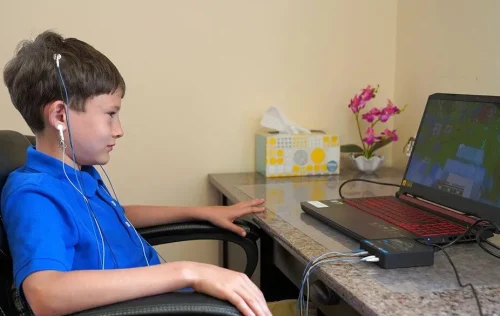
How can Neurofeedback help?
Individuals with OCD are especially prone to overthinking or repetitive thinking, which results in a looping pattern in brain wave functioning. Neurofeedback helps to reduce these overactive brain waves to retrain the brain and therefore reduce obsessions and compulsions. We incorporate brain-based therapy like neurofeedback that directly impacts the subconscious, as well as many others such as biofeedback and BRT which aids in reversing OCD through the calming of the nervous system.
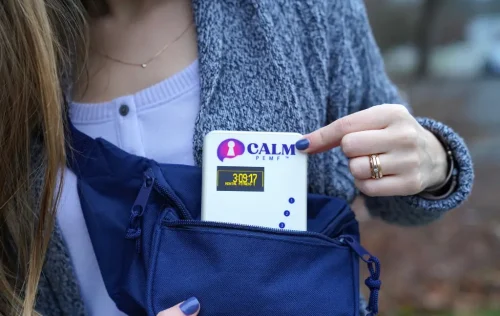
How Can Calm PEMF™ Help?
PEMF and Biofeedback are designed to help the Central Nervous System (CNS) to calm down. "Physiologically, the body is programmed to deal with stress first and healing second", When we get the CNS to calm down, it promotes an environment where the body can heal itself, reduce inflammation, improve sleep, reduce anxiety, obsessive thinking, and compulsive behaviors, as well as increase feelings of well-being.
Get your Calm PEMF™ device here.
How Can Counseling Help?
Our center uses a type of therapy for OCD called Exposure and Response Prevention (also known as ERP Therapy). This therapy combines CBT and Exposure Therapy and it is proven to be the most effective type of therapy in reducing obsessions and compulsions. One of the key features of ERP Therapy that differs from traditional talk therapy and psychiatric medication (that you have already unsuccessfully tried!), is that you understand why your thoughts and behaviors are out of control and learn how to gain that control. You learn to “Talk Back to OCD” and gain control of the triggers and anxiety.


Latest Podcast on OCD

Why Dr. Roseann for OCD?
Dr. Roseann is a Psychologist who supports children, teens, and young adults from all over the U.S. with research-based holistic therapies that are bridged with neuroscience.
Our center uses Exposure and Response Prevention (E/RP) proven through research to be effective in reducing obessions and compulsions.
Dr. Roseann is a Board Certified Neurofeedback (BCN) Practitioner and is a Board Member of the Northeast Region Biofeedback Society (NRBS) and Epidemic Answers.
She is also a member of the International Obsessive Compulsive Disorder Foundation (IOCDF), International Society for Neurofeedback and Research (ISNR) and The Association of Applied Psychophysiology and Biofeedback (AAPB).
Here’s What Children and Families Are Saying About Working With Us!


Need help with OCD for your child and family?
We’ve helped over 10,000+ children, teens, and young adults find relief, calm the brain, and lead healthy lives. If you’re worried that your current path is not getting to the bottom of the issues…all you need to do is fill out our solution matcher. We’ll let you know which of our solutions is right for your child and family.