

Join the Dysregulation Insider get free calm parenting tips straight to your inbox!
YES, I'M IN!Time Blindness: Brain based struggle in ADHD Kids | Emotional Dysregulation in Children | E139





Estimated Reading Time: 6 minutes
If you’re constantly running late with your child, hunting for shoes, backpacks, and homework - it’s not that your child doesn’t care. What looks like laziness or defiance is often time blindness, a brain-based struggle common in kids with ADHD and executive functioning challenges.
In this episode, I break down what time blindness really is, how it affects the prefrontal cortex, and practical strategies to help your child build focus, independence, and self-regulation using Regulation First Parenting®.
How to Stop Yelling When Your Child is Always Late
Time blindness makes five minutes feel like thirty seconds to a dysregulated brain. Yelling only adds stress.
Strategies for parents:
- Name the challenge: “This is time blindness, not disrespect.”
- Reserve a single “hustle” tone for truly urgent moments.
- Use external supports: timers, visual schedules, and alarms.
- Debrief later in calm moments rather than lecturing in the car.
🗣️ “You can’t shame a dysregulated, time-blind brain into behaving—you have to regulate it and then teach it.” — Dr. Roseann
Why Kids Hyperfocus on Fun but Struggle With Work
ADHD and time blindness create extremes: intense focus on preferred activities, and confusion when tasks are boring or difficult.
Practical tips:
- Explain the brain: “Your brain loses track of time when focused.”
- Use short time blocks: 10–15 minutes, then a break.
- Practice estimation: Ask, “How long will this take?” then compare with actual time.
- Celebrate accurate guesses to reinforce internal sense of time.
Parent example: A teen who hyperfocused on video games could not complete homework. Using timed sessions and short breaks helped them finish assignments without tears or arguments.
What to Do When School Consequences Don’t Work
Punishment alone does not teach time awareness. Dysregulated kids need structure, repetition, and consistent tools.
Support strategies:
- Create after-school rituals: snack, movement, then homework at a set time
- Collaborate with teachers on visual schedules and chunked assignments
- Free working memory: reduce cognitive load so your child can focus on time management
Nutrition and Supplements to Support Focus
Supporting the nervous system nutritionally improves regulation and attention.
Helpful options:
- Magnesium to calm the brain
- Protein-rich snacks for sustained energy
- Hydration to maintain focus and prevent fatigue
Time Estimation Games to Strengthen Internal Awareness
Helping kids develop an internal sense of time can be fun and engaging. Simple games and exercises teach them to estimate, track and manage time more accurately.
Try these:
- Beat the timer: Give a task and ask them to guess how long it will take, then compare with the actual time.
- Minute challenges: Use 60-second tasks to practice pacing and awareness.
- Visual countdowns: Hourglass timers or digital timers help kids see time passing.
- Routine rehearsal: Have them “practice” transitioning between chores or homework tasks.
Parent example: A child who struggled to start homework independently learned to estimate time by using a timer and gradually became more accurate in pacing themselves.
Visual Tools to Manage ADHD Transitions
Visual cues and structured routines support the dysregulated brain during transitions, reducing meltdowns and confusion.
Strategies:
- Morning maps: Visual steps for getting dressed, eating, and packing school items
- Color-coded schedules: Assign colors for subjects, breaks, and homework
- Checklist boards: Post-step-by-step instructions for after-school routines
- Calendar cues: Highlight deadlines, appointments, and transitions
Parent tip: Even brief visual reminders can significantly improve compliance, reduce arguments, and help children internalize a sense of time over weeks of consistent use.
Parent Modeling and Co-Regulation
Your nervous system guides your child’s regulation. Modeling calm, structured routines helps children learn to manage time better.
Tips:
- Narrate your own time management: “I have 10 minutes before school, let’s pack.”
- Model countdowns and timers to demonstrate time passing.
- Maintain calm even when the child is stressed or arguing.
Takeaway & Next Steps
Time blindness is a real, brain-based challenge, not a reflection of effort or parenting. When you calm the nervous system, add structure, and teach time estimation step by step, children can build lasting skills and confidence.
For additional strategies for school-day struggles, listen to 5 Best Strategies for Managing ADHD in the Classroom. You’re not alone and support is available.
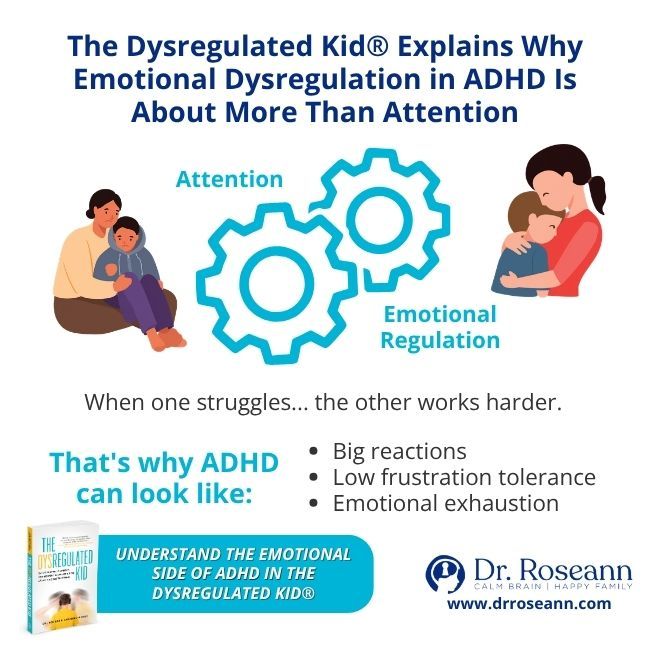
ADHD isn’t just about focus—it’s often a regulation issue. Learn practical, brain-based tools for dysregulated kids to build stronger self-regulation in The Dysregulated Kid® Book for Parents at dysregulatedkid.com.
FAQs
How do I know if my child’s time blindness is part of ADHD?
Look for consistent difficulty estimating time, missing transitions, and poor follow-through on tasks across multiple settings.
Can time blindness improve, or is this just who they are?
With consistent support, structure, and nervous system regulation, kids can improve their internal sense of time.
What if I struggle with time blindness too?
Modeling regulation is key. Practice time estimation, use external cues, and keep calm; your nervous system helps your child learn.
Feel like you’ve tried everything and still don’t have answers?
The Solution Matcher helps you find the best starting point based on your child’s symptoms, behaviors, and history. It’s fast, free, and based on decades of clinical expertise.
Get your personalized plan now at www.drroseann.com/help
Dr. Roseann Capanna-Hodge is a licensed therapist, certified school psychologist, and leading expert in emotional dysregulation in children. With over 30 years of experience, she helps parents understand the root causes of meltdowns, anxiety, ADHD, and challenging behavior through the lens of nervous system regulation. Dr. Roseann teaches practical, science-backed strategies for co-regulation and how to calm a dysregulated child using her Regulation First Parenting® approach. She is the host of the Dysregulated Kids Podcast and author of The Dysregulated Kid.
Dr. Roseann Capanna-Hodge
Emotional Dysregulation in Children & Nervous System Expert
Regulation First Parenting® | CALMS Protocol™
Host of the Dysregulated Kids Podcast (Top 1% Globally)
Author of The Dysregulated Kid

Find this helpful? Leave us a review!
Your feedback helps more overwhelmed parents find calm, clarity, and the proven tools that make everyday life easier.
Dr. Roseann Capanna-Hodge: Helping Families of Dysregulated Kids Thrive Through Regulation First Parenting®
As the creator of Regulation First Parenting®, she’s helping families of dysregulated kids discover a compassionate, brain-based path forward. Through The Dysregulated Kids™ Podcast (top 2% globally), she offers practical strategies that help parents understand their child’s brain and support lasting change.
Through The Global Institute of Children’s Mental Health and Dr. Roseann, LLC, she’s created resources like the Neurotastic® Brain Formulas and the Regulation First Parenting® framework—meeting families where they are and supporting them through challenges like ADHD, anxiety, OCD, PANS/PANDAS, and behavioral struggles.
Recognized by Forbes as “a thought leader in children’s mental health,” Dr. Roseann is changing how we understand emotional dysregulation in children—one family at a time.