
Join the Dysregulation Insider get free calm parenting tips straight to your inbox!
YES, I'M IN!How to Calm a Dysregulated Child | Nervous System Strategies | E158




Estimated Reading Time: 5 minutes
If you’re walking on eggshells and wondering, “What will set my child off today?”—you’re not alone. Dysregulation isn’t bad behavior; it’s a stressed nervous system asking for help.
In this episode, I’ll break down how to calm a dysregulated child with simple, science-backed steps you can use today.
You’ll learn why the parent nervous system regulation comes first. Also, you’ll discover what to do (and not do) in the heat of the moment. And how to build real coping skills over time.
Why does my child melt down after school?
After-school time is a perfect storm—sensory overload, transitions, hunger, and fatigue. Let’s calm the brain first so connection and problem-solving can follow.
Try this:
- Keep it low-demand for 30–60 minutes after school.
- Co-regulate—sit close, breathe slowly, and speak softly.
- Offer a predictable routine: snack, movement, then homework.
Scenario: Your child storms in and snaps. You resist lecturing. You breathe, say, “I’m here,” hand them a crunchy snack, and walk to the trampoline together. Five minutes later, they’re ready to talk.
What actually calms a dysregulated nervous system?
Regulation tools work best when they’re simple and repeatable. My family uses the Calm PEMF® device (FDA-regulated) daily. It’s alongside my approach and targeted nutrients like the Neurotastic Multi-Mag Brain Formula.
Do more of:
- Deep, slow breathing and mindfulness (2–5 minutes)
- Rhythmic movement (walking, rocking, bouncing)
- Consistent sleep, protein, hydration
- Calm PEMF® as a daily nervous-system support
Takeaway: Behavior is communication—children’s brains need regulation first.
Should I argue or explain during a meltdown?
Short answer: no. Arguing keeps the stress response high. Regulate → Connect → Correct.™
In the moment:
- Say less. Use 5–7 word phrases (“I’m here; we can breathe.”)
- Lower your voice and your body.
- Wait for calm before correcting.
When they’re calm: Debrief together and teach one small skill (e.g., asking for a break).
Parent insight: A child yelling at homework calmed faster when the parent regulated first and guided them with a soft voice.
How can I parent calmly when I’m exhausted?
Your nervous system sets the tone. It’s gonna be OK.
Micro-resets for parents (10 minutes/day):
- Box breathing or a short guided meditation
- PEMF session while you sip tea
- Boundaries with screens and bedtime (for everyone!)
- Self-compassion + repair: Apologize when needed and model how to reset
What if my child has ADHD, anxiety, OCD, or is neurodivergent?
Don’t assume they “should know what to do”—skills lag under stress. Kids need more teaching, modeling, and repetition during flares.
Teach like a coach:
- Preview stressors (“Transitions are hard; here’s our plan…”)
- Practice coping scripts when calm
- Problem-solve together to build agency and resilience
If you’re tired of walking on eggshells or feeling like nothing works…Get the FREE Regulation Rescue Kit and finally learn what to say and do in the heat of the moment.
Become a Dysregulation Insider VIP at www.drroseann.com/newsletter and take the first step to a calmer home.
🗣️ “When we calm the brain first, everything gets easier. You don’t have to argue or fix it in the moment—regulate, then connect, then correct.” — Dr. Roseann
Let’s Calm the Brain and Bring Peace Back Home
Calming a dysregulated child starts with your regulation, clear routines, and simple tools that settle the nervous system. As skills grow, meltdowns decrease, and confidence rises.
Keep learning: Read “How to Deal With Emotional Dysregulation.”
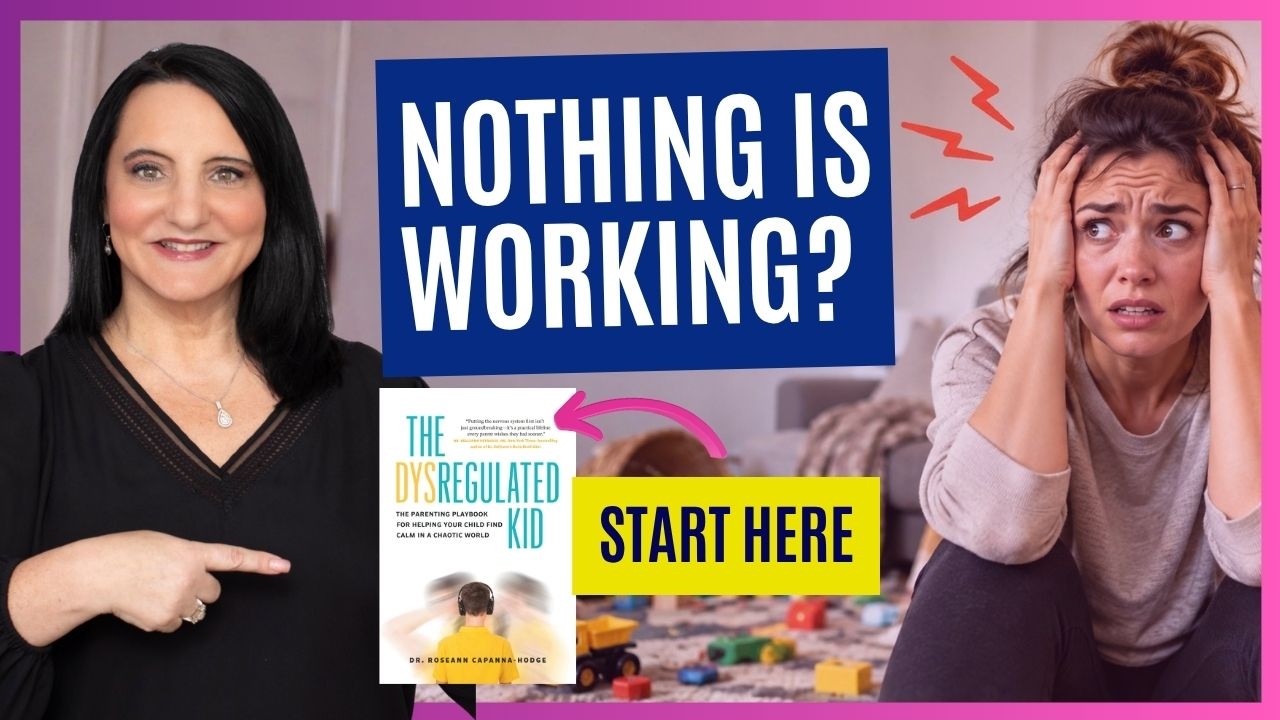
The reason nothing seems to work is that dysregulated kids need regulation before correction. Learn how to do exactly that in The Dysregulated Kid.
FAQs
What should I not do with a dysregulated child?
Don’t argue, threaten, or over-explain. Keep demands low and co-regulate first.
Does PEMF help with dysregulation?
Many families find daily Calm PEMF® sessions support nervous system balance alongside behavioral tools.
How can I stop after-school meltdowns?
Front-load regulation: snack, movement, quiet time, then homework. Keep the routine predictable.
Is this just bad behavior?
No. Behavior is communication. A dysregulated brain needs calming before skills stick.
Every child’s journey is different. That’s why cookie-cutter solutions don’t work.
Take the free Solution Matcher Quiz and get a customized path to support your child’s emotional and behavioral needs—no guessing, no fluff.
Start today at www.drroseann.com/help
You’ve got this. Regulate. Connect. Correct.™
Dr. Roseann Capanna-Hodge is a licensed therapist, certified school psychologist, and leading expert in emotional dysregulation in children. With over 30 years of experience, she helps parents understand the root causes of meltdowns, anxiety, ADHD, and challenging behavior through the lens of nervous system regulation. Dr. Roseann teaches practical, science-backed strategies for co-regulation and how to calm a dysregulated child using her Regulation First Parenting® approach. She is the host of the Dysregulated Kids Podcast and author of The Dysregulated Kid.
When you’re dealing with how to calm a dysregulated child, it’s easy to focus on the behavior or symptom you can see and miss what’s happening underneath.
In The Dysregulated Kid®, I help parents look beneath symptoms and behavior to understand what the brain and nervous system are communicating. You’ll learn practical Regulation First Parenting® tools to regulate first, reduce unnecessary escalation, and build the calm, connection, and capacity your child needs for lasting change. Get The Dysregulated Kid® at dysregulatedkid.com.
Dr. Roseann Capanna-Hodge
Emotional Dysregulation in Children & Nervous System Expert
Regulation First Parenting® | CALMS Protocol™
Host of the Dysregulated Kids Podcast (Top 1% Globally)
Author of The Dysregulated Kid

Find this helpful? Leave us a review!
Your feedback helps more overwhelmed parents find calm, clarity, and the proven tools that make everyday life easier.
Dr. Roseann Capanna-Hodge: Helping Families of Dysregulated Kids Thrive Through Regulation First Parenting®
As the creator of Regulation First Parenting®, she’s helping families of dysregulated kids discover a compassionate, brain-based path forward. Through The Dysregulated Kids™ Podcast (top 2% globally), she offers practical strategies that help parents understand their child’s brain and support lasting change.
Through The Global Institute of Children’s Mental Health and Dr. Roseann, LLC, she’s created resources like the Neurotastic® Brain Formulas and the Regulation First Parenting® framework—meeting families where they are and supporting them through challenges like ADHD, anxiety, OCD, PANS/PANDAS, and behavioral struggles.
Recognized by Forbes as “a thought leader in children’s mental health,” Dr. Roseann is changing how we understand emotional dysregulation in children—one family at a time.