
Join the Dysregulation Insider get free calm parenting tips straight to your inbox!
YES, I'M IN!OCD in School | Emotional Dysregulation in Children | E174





Obsessive-Compulsive Disorder (OCD) is a mental health condition characterized by intrusive thoughts and repetitive behaviors that profoundly impact the daily lives of those affected and disrupt academic performance and learning. The relentless cycle of obsessions, marked by persistent and distressing thoughts, coupled with compulsions, the repetitive actions or rituals performed to alleviate anxiety, creates significant challenges for individuals in educational settings.
As these intrusive thoughts and compulsive behaviors consume valuable time and attention, individuals with OCD often struggle to concentrate on their studies and fully engage in the learning process, leading to academic difficulties and underachievement. By gaining a deeper understanding of the impact of OCD in educational settings, we can better support individuals affected by this disorder and foster environments that promote academic success and well-being.
This episode will discuss OCD’s impact and what we can do as parents.
OCD's impact on perfectionism and academic performance
Perfectionism plays a significant role in how OCD impacts learning and behavior. It's not just about striving for excellence; it's about becoming ensnared in a relentless pursuit of flawlessness. For individuals with OCD, this drive for perfection can manifest in spending excessive amounts of time on tasks, constantly seeking reassurance, and engaging in repetitive behaviors to alleviate anxiety.
This intense focus hampers productivity, contributes to extreme stress, and interferes with the ability to concentrate in academic settings. As a result, tasks may take longer to complete, and the fear of making mistakes can paralyze progress, leading to frustration and negatively impacting overall academic performance.
OCD shares some similarities with ADHD, but it's essential to recognize that they are distinct from each other. In OCD, the primary focus is on intrusive thoughts and compulsive behaviors driven by anxiety. When intrusive thoughts consume your mind, paying attention properly is impossible. It's a slow creep, often starting with what seems like anxiety or avoidance behaviors before fully manifesting.
OCD often goes under the radar of many people, even mental health professionals, because it's mainly about those intrusive thoughts that nobody else sees. People with OCD can usually function without any issues until things start to unravel. And that's where my OCD thought team comes in handy—I've created a resource to help parents and anyone else understand what's happening.
OCD in children and adolescents, accommodations for school
When OCD takes over, you're fully immersed in those rituals—we call it accommodating. Constantly engaging in compulsions temporarily reduces anxiety, providing a sense of relief that reinforces the behavior and perpetuates the cycle of OCD. Accommodating then becomes a way of life, dictating behavior and dominating thoughts, making it challenging to break free from its grip.
Additionally, avoidance behaviors can strengthen the grips of OCD. By avoiding situations or triggers that provoke anxiety, individuals may temporarily feel relief. Still, this avoidance reinforces the idea that the feared consequences are legitimate threats, perpetuating the cycle of anxiety and avoidance.
For kids with OCD at school, there are options like an Individualized Education Plan (IEP) or a 504 plan to support their needs, as these options provide accommodations tailored to the student's specific challenges and requirements. However, it's crucial to approach these plans strategically and thoughtfully.
Collaborating and communicating properly with the school to develop accommodations that address the unique needs of the student while minimizing behaviors that may inadvertently reinforce OCD is crucial. This involves not only highlighting the challenges posed by OCD but also emphasizing the student's potential for success. Many individuals with OCD excel academically and socially when provided with appropriate support and understanding.
By actively engaging with the school team, advocating for effective accommodations, and promoting understanding of OCD, parents, and caregivers can help create an environment where children with OCD can thrive academically and socially.
To download the Natural OCD Thought Tamer Kit, click here.
To learn more about OCD, you may check out the following posts:
- https://drroseann.com/5-surprising-ways-magnesium-helps-adhd-anxiety-ocd-and-depression
- https://drroseann.com/subject/OCD/
- https://drroseann.com/clinical-guide-ocd/
- https://drroseann.com/podcast/overcoming-ocd-a-therapists-perspective-on-parenting-with-michele-bernal/
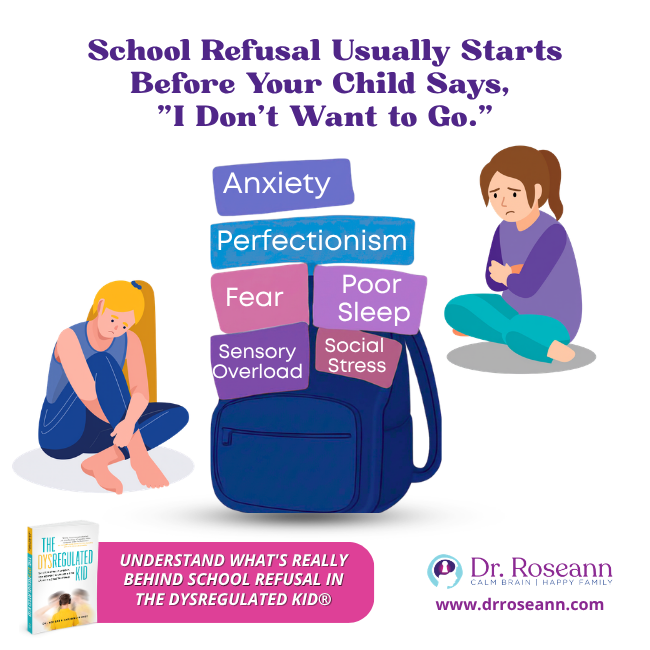
A child with OCD may spend the entire school day managing intrusive thoughts, rituals, perfectionism, or fear while adults only see distraction, slowness, refusal, or emotional reactions. In The Dysregulated Kid®, I help parents understand the brain-behavior connection so you can recognize when a child is struggling rather than simply misbehaving. You’ll learn how regulation affects learning, flexibility, and coping—and how to advocate for support without reinforcing avoidance. When home, school, and treatment providers understand what is underneath the behavior, kids have a stronger foundation for progress. Get The Dysregulated Kid® at dysregulatedkid.com.
FAQs
Can OCD really affect school performance?
Yes. Intrusive thoughts and rituals can steal focus and prevent children from completing tasks efficiently.
Do kids with OCD need an IEP or 504?
Often yes, to provide accommodations like extended time, chunked assignments, or quiet workspaces.
Will therapy alone fix school issues?
Therapy helps, but supports are most effective when combined with nervous system regulation and school accommodations.
How do I know if it’s OCD or ADHD?
Look at attention patterns. OCD hijacks attention with intrusive thoughts; ADHD impacts focus directly.
Can accommodations feed OCD?
Some accommodations unintentionally reinforce compulsions. Always collaborate thoughtfully with specialists and school staff.
Feel like you’ve tried everything and still don’t have answers?
The Solution Matcher helps you find the best starting point based on your child’s symptoms, behaviors, and history. It’s fast, free, and based on decades of clinical expertise.
Get your personalized plan now at www.drroseann.com/help
Dr. Roseann Capanna-Hodge is a licensed therapist, certified school psychologist, and leading expert in emotional dysregulation in children. With over 30 years of experience, she helps parents understand the root causes of meltdowns, anxiety, ADHD, and challenging behavior through the lens of nervous system regulation. Dr. Roseann teaches practical, science-backed strategies for co-regulation and how to calm a dysregulated child using her Regulation First Parenting® approach. She is the host of the Dysregulated Kids Podcast and author of The Dysregulated Kid.
Dr. Roseann Capanna-Hodge
Emotional Dysregulation in Children & Nervous System Expert
Regulation First Parenting® | CALMS Protocol™
Host of the Dysregulated Kids Podcast (Top 1% Globally)
Author of The Dysregulated Kid

Find this helpful? Leave us a review!
Your feedback helps more overwhelmed parents find calm, clarity, and the proven tools that make everyday life easier.
Dr. Roseann Capanna-Hodge: Helping Families of Dysregulated Kids Thrive Through Regulation First Parenting®
As the creator of Regulation First Parenting®, she’s helping families of dysregulated kids discover a compassionate, brain-based path forward. Through The Dysregulated Kids™ Podcast (top 2% globally), she offers practical strategies that help parents understand their child’s brain and support lasting change.
Through The Global Institute of Children’s Mental Health and Dr. Roseann, LLC, she’s created resources like the Neurotastic® Brain Formulas and the Regulation First Parenting® framework—meeting families where they are and supporting them through challenges like ADHD, anxiety, OCD, PANS/PANDAS, and behavioral struggles.
Recognized by Forbes as “a thought leader in children’s mental health,” Dr. Roseann is changing how we understand emotional dysregulation in children—one family at a time.