Join the Dysregulation Insider get free calm parenting tips straight to your inbox!
YES, I'M IN!Should You Medicate Your Child With PANS/PANDAS? | Nervous System Regulation | E279





Estimated Reading Time: 8 Minutes
Should you medicate your child with PANS/PANDAS?
The answer is rarely simple.
While psychiatric medications can sometimes provide short-term symptom relief, they do not address the underlying causes of PANS and PANDAS. Understanding both the benefits and limitations of medication helps parents make informed decisions while continuing to focus on long-term healing.
In this episode, I explain what parents need to know about psychiatric medications, potential risks and side effects, and why addressing root causes remains essential for recovery.
What are PANS and PANDAS?
PANS (Pediatric Acute-onset Neuropsychiatric Syndrome) and PANDAS (Pediatric Autoimmune Neuropsychiatric Disorders Associated with Streptococcal Infections) occur when infections and immune dysfunction trigger inflammation that affects the brain.
Children may suddenly develop:
- OCD
- Anxiety
- Tics
- Rage
- Emotional dysregulation
- School refusal
- Sensory sensitivities
- Behavioral changes
Many parents describe it as:
"My child was fine one day, and then everything changed."
Behavior is communication.
And in PANS and PANDAS, behavior often reflects neuroinflammation and nervous system dysfunction.
Why are psychiatric medications prescribed for PANS/PANDAS?
Psychiatric medications are often prescribed when symptoms become severe.
Common reasons include:
- Intense OCD
- Severe anxiety
- Aggression
- Emotional instability
- Psychosis
- Depression
Common Medications Prescribed
SSRIs (Selective Serotonin Reuptake Inhibitors)
Often prescribed for:
- OCD
- Anxiety
- Depression
Antipsychotic Medications
Sometimes prescribed for:
- Aggression
- Severe behavioral symptoms
- Psychosis
ADHD Medications
Some children are prescribed stimulants when attention difficulties become significant.
Important Consideration
These medications target symptoms.
They do not treat the underlying immune dysfunction, infection, inflammation, or nervous system dysregulation driving the condition.
What are the limitations of psychiatric medication?
One of the most important things parents need to understand is that symptom reduction is not the same as healing.
Medication Does Not Address Root Causes
PANS and PANDAS involve:
- Neuroinflammation
- Immune dysfunction
- Infection triggers
- Nervous system dysregulation
Medication does not remove those underlying drivers.
Real-Life Example
A child's OCD symptoms may decrease temporarily with medication.
But if infections, inflammation, or immune dysfunction remain untreated, symptoms often continue cycling.
This is why many families feel stuck.
The symptoms improve.
Then they return.
The root cause remains.
What side effects should parents know about?
Every medication carries potential risks.
This doesn't mean medication should never be used.
It means parents deserve informed decision-making.
Commonly Reported Side Effects
SSRIs
Potential side effects may include:
- Increased anxiety
- Agitation
- Irritability
- Behavioral activation
- Sleep disturbances
The FDA includes a black box warning regarding increased suicidal thoughts in some children, adolescents, and young adults.
Antipsychotic Medications
Potential side effects may include:
- Weight gain
- Sedation
- Movement disorders
- Metabolic changes
Stimulants
Potential side effects may include:
- Increased anxiety
- Irritability
- Appetite suppression
- Sleep difficulties
Why Monitoring Matters
Children with PANS/PANDAS often have highly sensitive nervous systems.
Because of this, medication responses can be unpredictable.
Close monitoring is essential.
🗣️ "Regulate before you medicate because a dysregulated nervous system can block healing." — Dr. Roseann
If your child is struggling with PANS, PANDAS, OCD, anxiety, or emotional dysregulation, the Regulation Rescue Kit provides practical tools to calm the nervous system and support emotional regulation. Become a Dysregulation Insider VIP and get your FREE kit: www.drroseann.com/newsletter
Why doesn't medication resolve OCD?
One of the most misunderstood aspects of OCD is that medication alone rarely solves it.
How OCD Works
OCD operates through a cycle:
- Anxiety increases.
- The child performs a ritual or compulsion.
- Temporary relief occurs.
- Anxiety returns stronger.
Over time, the brain becomes trapped in this pattern.
The Role of Accommodation
Many families unintentionally strengthen OCD by:
- Providing reassurance
- Helping complete rituals
- Avoiding triggers
This isn't a parenting failure.
It's a natural response to wanting to reduce distress.
But it can unintentionally reinforce OCD.
The Gold Standard Treatment
For OCD, Exposure and Response Prevention (ERP) remains the gold standard therapeutic approach.
ERP helps children learn to tolerate uncertainty and break the OCD cycle.
What should families focus on instead?
Medication may have a role in some cases.
But lasting healing requires addressing root causes.
Areas to Investigate
Infections
Common triggers include:
- Strep
- Mycoplasma
- Lyme disease
- Bartonella
- Babesia
Neuroinflammation
Reducing inflammation often improves symptoms significantly.
Nervous System Regulation
A dysregulated nervous system makes healing more difficult.
Detoxification and Drainage
Supporting the body's natural detoxification pathways may be an important part of treatment planning.
Nutrition
An anti-inflammatory diet often supports recovery.
Many families notice improvements when they reduce inflammatory foods and increase nutrient-dense foods.
Why does nervous system regulation matter so much?
One of the biggest lessons I've learned is this:
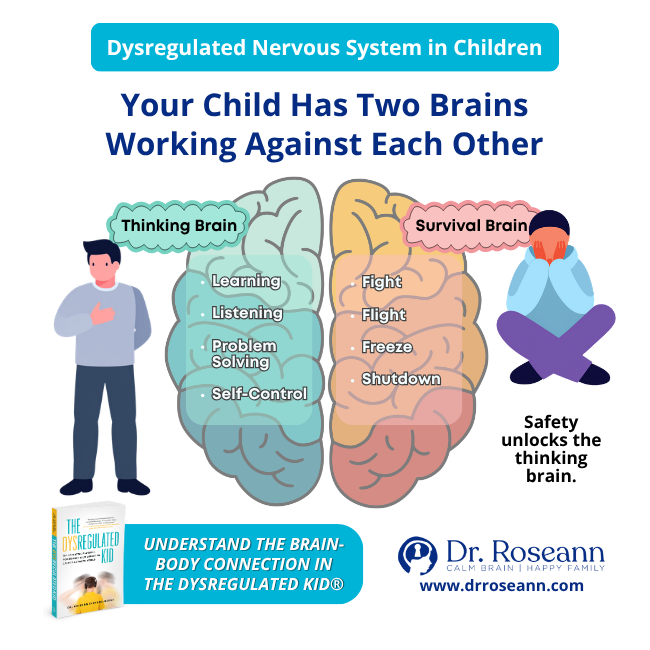
Regulate before you medicate.
A dysregulated nervous system blocks healing.
When children remain stuck in fight, flight, or freeze:
- Anxiety increases
- OCD worsens
- Sleep suffers
- Emotional regulation decreases
Tools That Support Regulation
Many families benefit from:
- Neurofeedback
- PEMF
- Brain mapping
- Co-regulation
- Sleep support
- Nutritional interventions
These tools help calm the brain and create the conditions for recovery.
Real-Life Example
Many families report seeing meaningful improvements in emotional regulation, OCD symptoms, and anxiety once nervous system support becomes part of the treatment plan.
That's because regulation creates a foundation for healing.
Takeaway & What’s Next
Medication is not inherently good or bad.
It's a tool.
For some children, it may provide temporary relief or support during difficult periods.
But medication alone does not resolve PANS or PANDAS.
The goal is not simply reducing symptoms.
The goal is addressing what is driving them.
Your child isn't giving you a hard time.
They're having a hard time.
And when we focus on nervous system regulation, inflammation, infection, and root-cause healing, meaningful recovery becomes possible.
Remember:
- Regulate first.
- Investigate root causes.
- Address inflammation.
- Support the nervous system.
- Stay hopeful.
It's gonna be OK.
Medication decisions for a child with PANS/PANDAS can feel incredibly complicated, especially when symptoms are intense and your family is desperate for relief. The Dysregulated Kid® gives parents a framework for looking beyond any single intervention and understanding the nervous system underneath anxiety, OCD, attention problems, mood changes, and challenging behavior. It isn’t about telling you which treatment decision to make—it’s about helping you understand your child more clearly and giving you practical Regulation First Parenting® tools you can use at home as part of their broader support plan. Get The Dysregulated Kid® at dysregulatedkid.com.
FAQs
Should children with PANS/PANDAS take psychiatric medication?
Some children may benefit from medication, particularly when symptoms are severe. However, medication should be considered as one part of a comprehensive treatment plan rather than a standalone solution.
Do psychiatric medications treat PANS/PANDAS?
No. Psychiatric medications may help manage symptoms, but they do not address the underlying infections, inflammation, immune dysfunction, or nervous system dysregulation associated with PANS/PANDAS.
What is the best therapy for OCD in PANS/PANDAS?
Exposure and Response Prevention (ERP) is considered the gold standard therapy for OCD and is often an important part of treatment.
Can inflammation affect mental health symptoms?
Yes. Neuroinflammation can contribute to anxiety, OCD, emotional dysregulation, aggression, and other neuropsychiatric symptoms.
What should parents do before considering medication?
Parents should work with qualified professionals to investigate root causes, evaluate infections and inflammation, support nervous system regulation, and explore evidence-based treatment options.
Not sure where to start?
The Solution Matcher can help identify the next best step based on your child's symptoms and challenges.
Start here: www.drroseann.com/help
Dr. Roseann Capanna-Hodge is a licensed therapist, certified school psychologist, and leading expert in emotional dysregulation in children. With over 30 years of experience, she helps parents understand the root causes of meltdowns, anxiety, ADHD, and challenging behavior through the lens of nervous system regulation. Dr. Roseann teaches practical, science-backed strategies for co-regulation and how to calm a dysregulated child using her Regulation First Parenting® approach. She is the host of the Dysregulated Kids Podcast and author of The Dysregulated Kid.
Dr. Roseann Capanna-Hodge
Emotional Dysregulation in Children & Nervous System Expert
Regulation First Parenting® | CALMS Protocol™
Host of the Dysregulated Kids Podcast (Top 1% Globally)
Author of The Dysregulated Kid

Find this helpful? Leave us a review!
Your feedback helps more overwhelmed parents find calm, clarity, and the proven tools that make everyday life easier.
Dr. Roseann Capanna-Hodge: Helping Families of Dysregulated Kids Thrive Through Regulation First Parenting®
As the creator of Regulation First Parenting®, she’s helping families of dysregulated kids discover a compassionate, brain-based path forward. Through The Dysregulated Kids™ Podcast (top 2% globally), she offers practical strategies that help parents understand their child’s brain and support lasting change.
Through The Global Institute of Children’s Mental Health and Dr. Roseann, LLC, she’s created resources like the Neurotastic® Brain Formulas and the Regulation First Parenting® framework—meeting families where they are and supporting them through challenges like ADHD, anxiety, OCD, PANS/PANDAS, and behavioral struggles.
Recognized by Forbes as “a thought leader in children’s mental health,” Dr. Roseann is changing how we understand emotional dysregulation in children—one family at a time.