

Join the Dysregulation Insider get free calm parenting tips straight to your inbox!
YES, I'M IN!When Teachers and Family Misread Your Child's Behavior | Emotional Dysregulation in Children | E439





Estimated reading time: 4 minutes
When your child seems fine at school but falls apart at home, it’s easy to wonder, Am I doing something wrong? You’re not alone. When others don’t see what you see, understanding your child’s behavior can become even harder.
Let’s explore why dysregulated kids may hold it together at school and release their stress at home. You’ll learn how to trust your instincts and better understand what your child’s behavior is communicating.
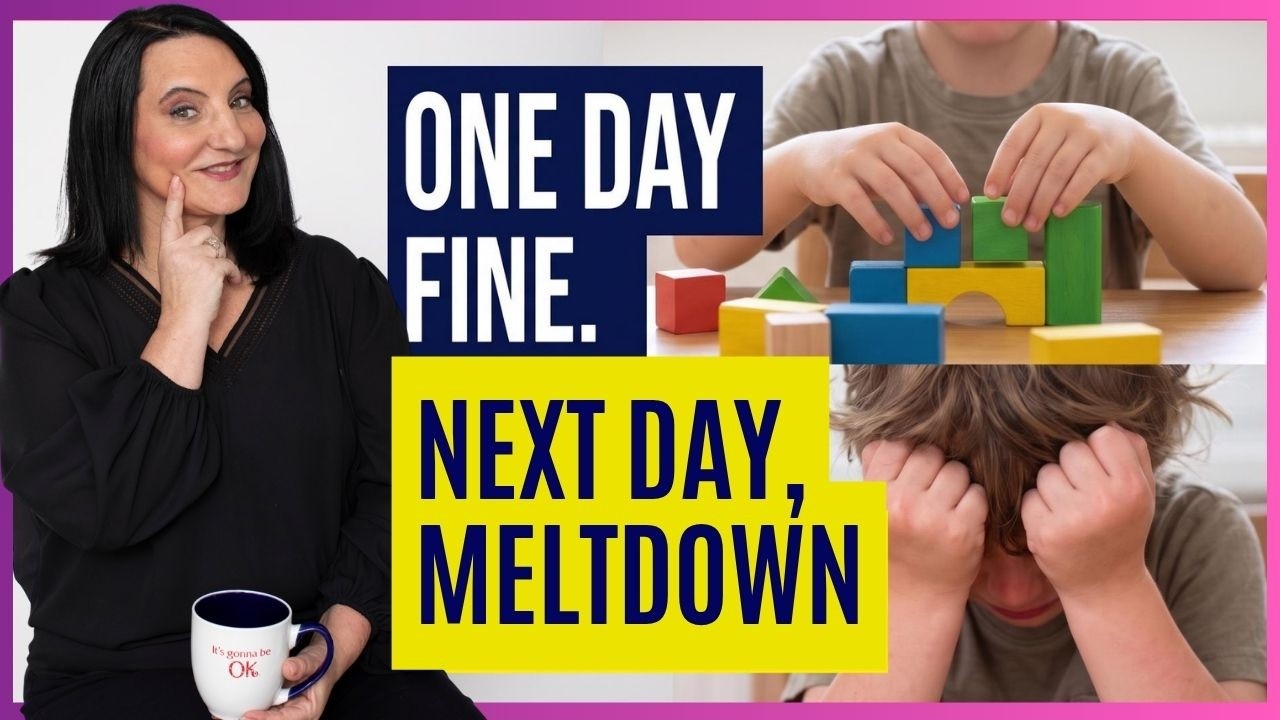
Why does my child melt down after school but seem fine for teachers?
A child can be struggling and still look completely fine to everyone else. Many dysregulated kids spend their school day managing noise, friendships, transitions, directions, anxiety, big emotions, and the effort of sitting still.
Their stress cup may be filling all day, even when nobody notices. Then, when they reach the safety of home, their nervous system finally runs out of capacity.
Remember:
- Home isn’t necessarily the problem. It may be where your child finally feels safe enough to let go.
- Meltdowns, shutdowns, and freakouts can signal an overwhelmed nervous system.
- Behavior is communication.
Real-life example: Amy’s son was repeatedly described as having a “great day” at school, only to completely fall apart in the car. She began wondering if she was too soft or a bad parent. The reality? He had been holding it together all day.
Why do teachers and family members think my child is fine?
Teachers, grandparents, and family members may each see only one piece of the puzzle. A teacher may see your child’s best effort at school, while you see what happens when their nervous system has no capacity left.
Instead of trying to convince others that your child is struggling, become a nervous system educator.
- Explain what happens after your child runs out of capacity.
- Invite curiosity instead of defensiveness.
- Remember that teachers are with your child all day and often do incredible things that naturally support regulation.
“You’re seeing my kid’s best effort, and I’m seeing what happens after when their nervous system runs out of capacity.” — Dr. Roseann
How can I advocate for my dysregulated child without feeling dismissed?
You don’t have to convince everyone. You are the expert on your own child. When anxiety is high, other people’s opinions can make you question your instincts, but learning to understand nervous system signals can help you become calmer and clearer.
Try asking yourself:
- What happens before the behavior?
- What happens after school or difficult transitions?
- Is my child’s stress cup overflowing?
- What might this behavior be communicating?
Let’s calm the brain first. When you regulate, you can often hear your intuition more clearly and advocate from a place of confidence rather than overwhelm.
When your child is dysregulated, it’s easy to feel helpless. The Regulation Rescue Kit gives you the scripts and strategies you need to stay grounded and in control. Become a Dysregulation Insider VIP at www.drroseann.com/newsletter and get your free kit today.
How can I help my child regulate before behavior escalates?
Start looking for micro moments to regulate rather than waiting for a major meltdown. Regulation first can support parenting, therapy, occupational therapy, and your child’s ability to absorb what they’re learning.
Your child’s behavior may be telling you something important about their nervous system—not that you’re failing as a parent. You’re not alone, and it’s gonna be OK.
Explore nervous system dysregulation and developing emotional regulation for related guidance.
Takeaway & What’s Next
When your child holds it together at school but falls apart at home, it doesn’t mean you’re doing something wrong. Their behavior may be communicating that their nervous system has reached its limit.
Instead of questioning yourself, look for patterns and clues. Regulate first, understand the behavior, and trust what you know about your child.
If you need practical support, Quick Calm™ can help you build regulation strategies into everyday moments. You can also explore the Regulated Child Summit for additional guidance.
School struggles aren’t always about effort, motivation, or behavior; a dysregulated nervous system can make learning, transitions, and coping much harder.
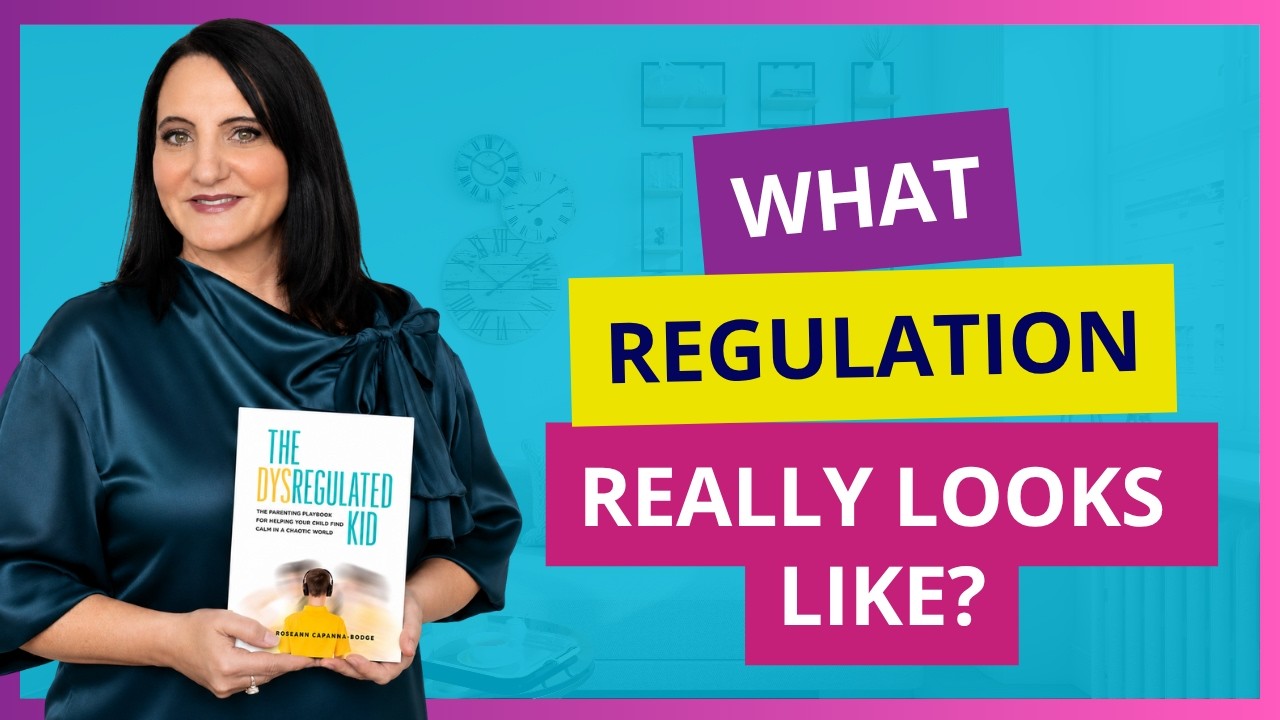
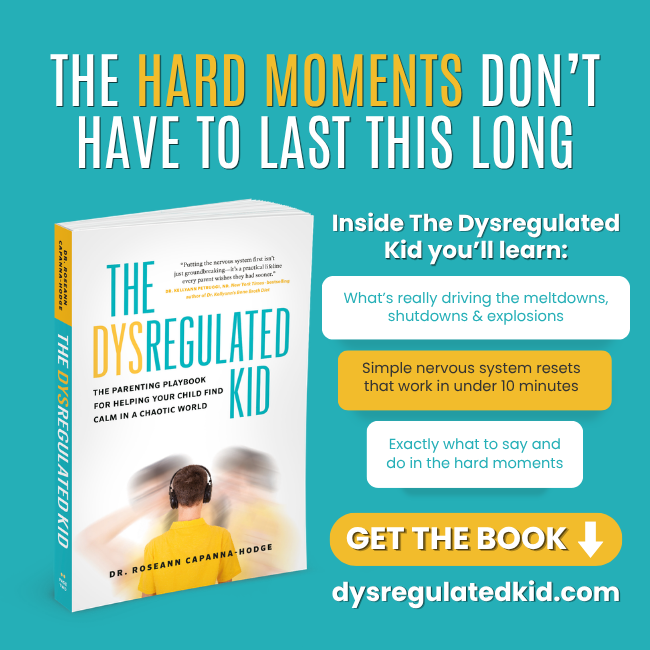
In The Dysregulated Kid®, I help parents look beneath symptoms and behavior to understand what the brain and nervous system are communicating. You’ll learn practical Regulation First Parenting® tools to regulate first, reduce unnecessary escalation, and build the calm, connection, and capacity your child needs for lasting change. Get The Dysregulated Kid® at dysregulatedkid.com.
FAQs
Why does my child hold it together at school and melt down at home?
They may be using enormous nervous system energy to manage school stress and releasing it once they feel safe at home.
Is my child pretending to behave at school?
No. A child can genuinely be struggling while appearing regulated. Their stress may simply become visible later when their capacity is depleted.
What should I tell my child’s teacher about dysregulation?
Explain that the teacher may be seeing your child’s best effort, while you are seeing what happens after their nervous system runs out of capacity.
How do I stop doubting my parenting instincts?
Learn to observe behavior as communication, regulate yourself, and become more confident in recognizing your child’s patterns and nervous system needs.
What is the first step when my child is dysregulated?
Start with regulation. Regulate first, then connect and correct. A regulated brain is better able to absorb support, learning, and connection.
Feel like you’ve tried everything and still don’t have answers? The Solution Matcher™ helps you find the best starting point based on your child’s symptoms, behaviors, and history. It’s fast, free, and based on decades of clinical expertise. Get your personalized plan now at www.drroseann.com/help.

Find this helpful? Leave us a review!
Your feedback helps more overwhelmed parents find calm, clarity, and the proven tools that make everyday life easier.
Dr. Roseann Capanna-Hodge: Helping Families of Dysregulated Kids Thrive Through Regulation First Parenting®
As the creator of Regulation First Parenting®, she’s helping families of dysregulated kids discover a compassionate, brain-based path forward. Through The Dysregulated Kids™ Podcast (top 2% globally), she offers practical strategies that help parents understand their child’s brain and support lasting change.
Through The Global Institute of Children’s Mental Health and Dr. Roseann, LLC, she’s created resources like the Neurotastic® Brain Formulas and the Regulation First Parenting® framework—meeting families where they are and supporting them through challenges like ADHD, anxiety, OCD, PANS/PANDAS, and behavioral struggles.
Recognized by Forbes as “a thought leader in children’s mental health,” Dr. Roseann is changing how we understand emotional dysregulation in children—one family at a time.