

Join the Dysregulation Insider get free calm parenting tips straight to your inbox!
YES, I'M IN!30 Years. Thousands of Kids. Here's What Real Nervous System Regulation Looks Like | Nervous System Regulation | E450





Estimated reading time: 7 minutes
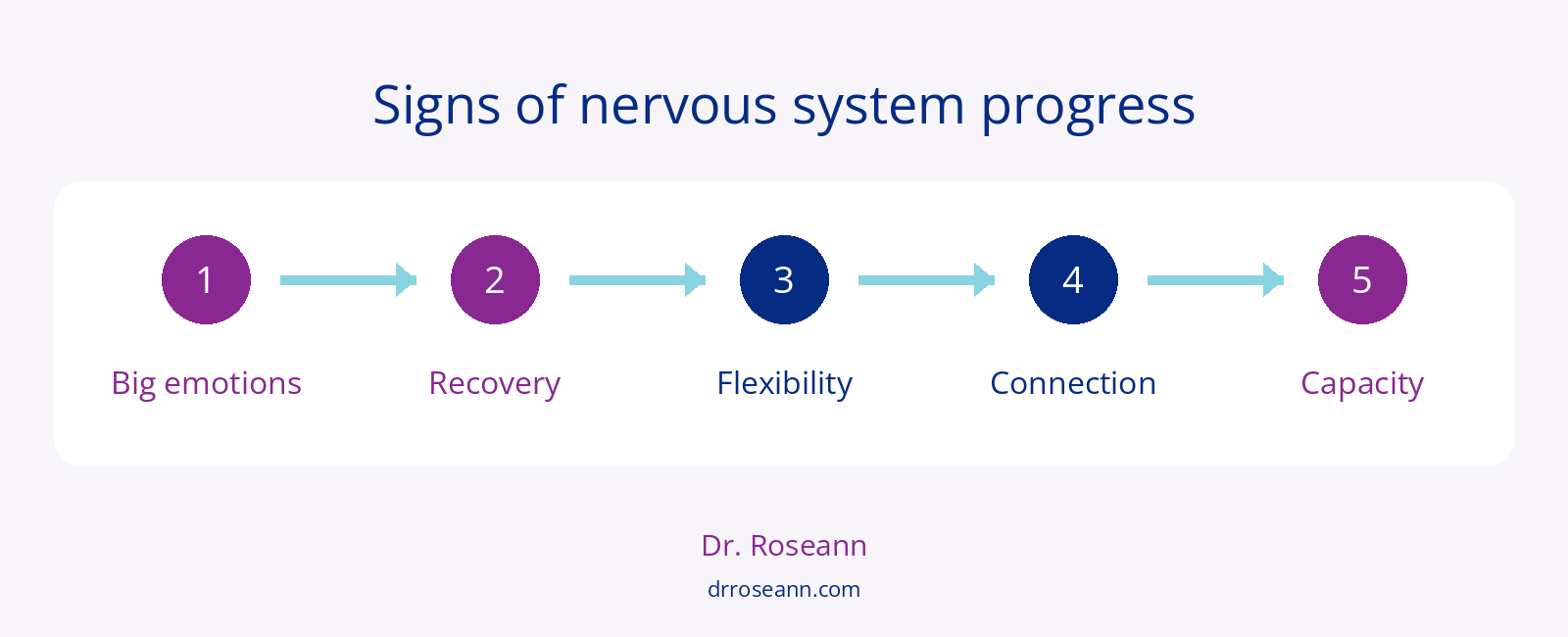
After 30 years of working with thousands of children and families, I can tell you this: What real nervous system regulation looks like is not a perfect child with perfect behavior. It’s a child who has more capacity to handle frustration, recover from hard moments, connect with others, and enjoy their life again.
If you’re parenting a dysregulated child, you may be exhausted from measuring progress by whether the meltdowns have stopped. But real change often looks much quieter than that. The nervous system becomes more flexible.
Recovery gets faster. A child starts laughing again. Parents stop walking on eggshells. That’s the kind of change that matters.
Why This Matters More Than You Think
Real nervous system regulation isn’t about raising a child who never struggles. It’s about building the capacity to handle frustration, recover from hard moments, and experience more flexibility, connection, and joy.
When a child becomes more regulated, the whole family can change. Parents stop walking on eggshells, siblings can relax, and home can begin to feel like home again.
What does real nervous system regulation in children actually look like?
Nervous system regulation isn’t about eliminating big emotions. Kids are supposed to have emotions. They’re supposed to get frustrated, disappointed, overwhelmed, silly, excited, and sometimes angry.
The difference is capacity. A regulated nervous system gives a child more ability to experience those emotions without becoming completely overwhelmed by them.
When you calm the brain first, you’re helping your child build the capacity to:
- Tolerate frustration without immediately falling apart
- Shift gears when plans change
- Recover after a difficult moment
- Wait, problem-solve, connect, and learn
- Experience joy without constantly being stuck in threat mode
Real-life example: A child expects their cup to be orange, but it’s blue. Instead of a 30-minute battle, they’re disappointed, need some support, and eventually grab the green cup. That may look small.
It isn’t. That is flexibility.
How do you know if a dysregulated child is actually getting better?
One of the clearest signs of progress is not that meltdowns disappear. They become shorter, less intense, and easier to recover from.
A child who once stayed upset for 90 minutes may eventually recover in 15. A child who used to spend the entire day stuck after a difficult transition may begin returning to baseline and rejoining the family.
That recovery matters because regulation is about the nervous system’s ability to move out of a stress response.
For parents, look for changes like:
- Shorter recovery time after meltdowns
- Fewer battles around everyday transitions
- More flexibility when plans change
- More willingness to reconnect after conflict
Real-life example: Your child may still have a meltdown when you say screen time is over. But instead of the meltdown taking over dinner, bedtime, and the rest of the evening, they recover and move on.
That is progress.
Can nervous system regulation help a child stop living in survival mode?
Yes—and sometimes one of the most powerful signs is that a child starts experiencing joy again.
Imagine a child who used to arrive at school already overwhelmed. Sounds, demands, and transitions were enough to push his nervous system beyond capacity.
Months later, his teachers told his mother, “We’re seeing that he’s smiling again.”
School hadn’t magically become easier.
His nervous system had developed enough capacity for him to experience something beyond survival.
This is why parenting a dysregulated child requires looking beyond behavior.
Behavior is communication. A child who is constantly overwhelmed may not need more consequences or more correction. They may need support getting their nervous system out of threat mode.
When the brain feels safer, there is more room for:
- Learning
- Connection
- Play
- Curiosity
- Joy
And yes, sometimes even a birthday party or exciting trip can overwhelm a dysregulated nervous system. The nervous system responds to stimulation, not simply whether an experience is “good” or “bad.”
What changes when families stop walking on eggshells?
Real regulation changes more than the child.
It changes the family system.
Parents often spend enormous energy trying to predict what might trigger the next meltdown: Should we go? Should we say no? Will this cause an argument? Is it worth it?
Eventually, the whole family starts organizing life around avoiding reactions.
When regulation improves, families can begin breathing again.
- Parents stop anticipating every crisis
- Siblings feel more relaxed
- Family activities become possible again
- Home starts feeling like home
- Parents can enjoy their children instead of constantly managing behavior
Real-life example: A father once described realizing that he was actually looking forward to coming home again. That may not sound like a dramatic clinical outcome, but it is enormous.
Because the goal isn't simply a quieter child.
It’s a healthier family.
Yelling less and staying calm isn’t about being perfect—it’s about having the right tools.
Join the Dysregulation Insider VIP list and get your FREE Regulation Rescue Kit, designed to help you handle oppositional behaviors without losing it.
Download it now at www.drroseann.com/newsletter
What does confidence look like after a child becomes more regulated?
A child who constantly believes “I’m bad,” “I’m stupid,” or “I can’t do this” is likely to avoid situations where they might fail.
Regulation can create something incredibly important: the safety to try.
As children become better able to tolerate discomfort and recover from mistakes, they may begin taking healthy risks. They might make a new friend, try an activity, answer a question in class, or attempt something without needing to know they’ll succeed first.
That’s where confidence grows.
A regulated nervous system doesn't guarantee confidence, but it creates more room for a child to experience themselves as capable.
For parents, that means looking for:
- More willingness to try
- Less catastrophizing
- Greater tolerance for mistakes
- More independence
- A stronger sense of “I can”
This is one of the reasons real nervous system regulation is about so much more than behavior.
It gives kids capacity for life.
“Change isn’t loud. It doesn’t happen all at once. It happens in ordinary moments.”— Dr. Roseann
How does a regulated parent help a dysregulated child?
Here’s the part many parents don’t expect: you change, too.
When you stop living in fight, flight, or freeze, you may find yourself pausing instead of reacting. You may stop replaying every parenting mistake at night. You may become less consumed by what other people think.
That matters because your child is borrowing your nervous system.
Co-regulation comes before self-regulation. Your calm becomes part of the environment your child uses to find their own calm.
Try focusing on micro-moments:
- Pause before correcting
- Slow down before solving
- Regulate yourself first
- Connect before you correct
A calm bedtime where everyone ends up laughing may seem ordinary. A family dinner without yelling may seem small. A parent who pauses instead of reacting may not feel like a breakthrough.
But these moments add up.
That is how patterns change.
Explore the CALMS Dysregulation Protocol, a framework designed to help interrupt the stress cycle and build regulation capacity.
What Real Regulation Looks Like—and Why Capacity Matters
After decades of helping children and families, I have seen that real change is about more than reducing difficult behavior—it’s about building capacity.
A child develops more capacity to tolerate frustration, recover, connect, learn, solve problems, and experience joy. Parents develop more capacity to respond instead of react. Families create more moments where everyone’s nervous system feels safe enough to settle.
That is what Regulation First Parenting™ is about.
Not perfect kids.
Not perfect parents.
Not homes where nobody ever gets upset.
It’s about creating enough regulated moments that the entire family begins to function differently. And when those patterns change, they can help interrupt the cycle being passed from one generation to the next.
The Dysregulated Kid gives parents practical strategies to understand what’s happening beneath the behavior, support nervous system regulation, and create more of those small, regulated moments that help children recover, connect, learn, and thrive.
If you’re ready to start with 1% and build from there, The Dysregulated Kid is a helpful place to begin.
FAQs
How do I know if my child is becoming more regulated?
Look for shorter recovery times, greater flexibility, more connection, and more moments of joy. Recovery is one of the clearest signs of growing regulation.
How do I calm a dysregulated child?
Start by regulating yourself, lowering the intensity, and connecting before correcting. Your child borrows your nervous system, so your calm can help create the safety they need to regulate.
Is my child being defiant or dysregulated?
What looks like defiance can sometimes be a stress response. Ask, “What is my child’s nervous system communicating right now?”
Can a dysregulated child really get better?
Yes. Progress can look like greater flexibility, faster recovery, more confidence, and more capacity to handle everyday life.
When your child is struggling, time matters.
Don’t wait and wonder—use the Solution Matcher to get clear next steps, based on what’s actually going on with your child’s brain and behavior.
Take the quiz at www.drroseann.com/help
Dr. Roseann Capanna-Hodge is a licensed therapist, certified school psychologist, and leading expert in emotional dysregulation in children. With over 30 years of experience, she helps parents understand the root causes of meltdowns, anxiety, ADHD, and challenging behavior through the lens of nervous system regulation. Dr. Roseann teaches practical, science-backed strategies for co-regulation and how to calm a dysregulated child using her Regulation First Parenting™ approach. She is the host of the Dysregulated Kids Podcast and author of The Dysregulated Kid.
Dr. Roseann Capanna-Hodge
Emotional Dysregulation in Children & Nervous System Expert
Regulation First Parenting™ | CALMS Protocol™
Host of the Dysregulated Kids Podcast (Top 1% Globally)
Author of The Dysregulated Kid

Find this helpful? Leave us a review!
Your feedback helps more overwhelmed parents find calm, clarity, and the proven tools that make everyday life easier.
Dr. Roseann Capanna-Hodge: Helping Families of Dysregulated Kids Thrive Through Regulation First Parenting®
As the creator of Regulation First Parenting®, she’s helping families of dysregulated kids discover a compassionate, brain-based path forward. Through The Dysregulated Kids™ Podcast (top 2% globally), she offers practical strategies that help parents understand their child’s brain and support lasting change.
Through The Global Institute of Children’s Mental Health and Dr. Roseann, LLC, she’s created resources like the Neurotastic® Brain Formulas and the Regulation First Parenting® framework—meeting families where they are and supporting them through challenges like ADHD, anxiety, OCD, PANS/PANDAS, and behavioral struggles.
Recognized by Forbes as “a thought leader in children’s mental health,” Dr. Roseann is changing how we understand emotional dysregulation in children—one family at a time.