Join the Dysregulation Insider get free calm parenting tips straight to your inbox!
YES, I'M IN!Why I Wrote The Dysregulated Kid—And Who It’s Really For | Regulation First Parenting® | E441





Estimated reading time: 5 minutes
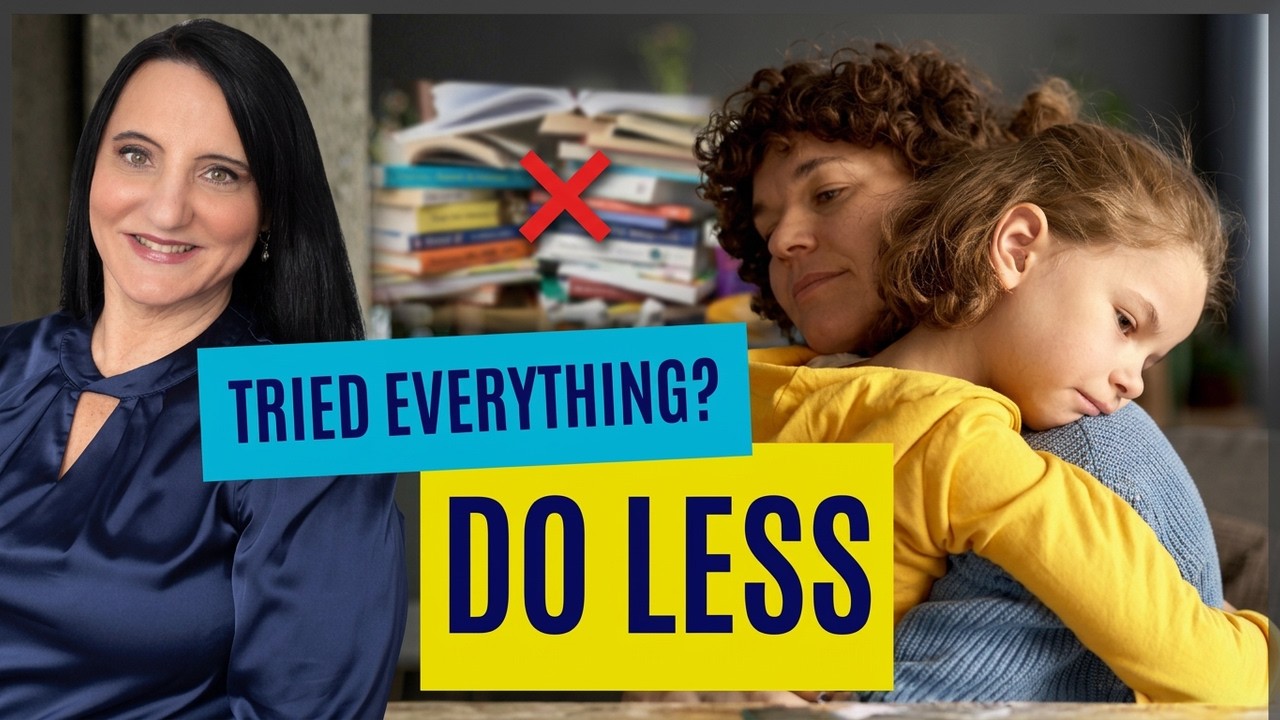
When you’ve tried therapy, school supports, behavior charts, diets, books, and countless strategies—and your child still struggles—you may wonder, What am I missing? You’re not alone.
The reason why I wrote The Dysregulated Kid is about seeing behavior through the lens of nervous system dysregulation and finding a path forward.
Why does it feel like nothing I try is working with my child?
Many parents reach a point where they’ve tried everything but still feel stuck. They’re up at 2 a.m. Googling, worrying, and wondering how to help their child regulate—and sometimes wondering how to regulate themselves, too.
The problem may not be a lack of parenting strategies. It may be that the nervous system is too dysregulated for those strategies to work.
- Look beyond behavior alone.
- Consider what is happening inside your child’s nervous system.
- Remember: It’s not bad parenting—it’s a dysregulated brain.
- Start with regulation before expecting change.
What should I do when my child is so dysregulated that school becomes a crisis?
I remember the story of a child whose distress became so intense that school wanted him out. His family had tried therapy, reward charts, IEP meetings, occupational therapy, medication, books, and different schools.
The shift came when they stopped chasing behavior and started addressing regulation.
They changed the demands around him, worked on regulation, and focused on getting out of crisis before expecting bigger improvements.
“We’re solving the wrong problem because we’re coming in with behavioral plans and behavior charts and all this other stuff.” — Dr. Roseann
How can I tell if my child needs regulation instead of another parenting strategy?
A child may look defiant, resistant, shut down, or unable to cooperate when their nervous system is overwhelmed. As I recall in the story I mentioned, the child wasn’t simply refusing school—he was so distressed that he could barely eat during the school day.
Behavior is communication. Instead of immediately asking, How do I stop this behavior? ask, What is my child’s nervous system telling me?
- Look for patterns of overwhelm.
- Notice when demands become too much.
- Reduce unnecessary stress during a crisis.
- Regulate first, then teach and correct.
If you’re ready for practical tools to help yourself stay calm when your child is dysregulated, Quick CALM can help you build those skills.
How can I stop worrying that my child will never learn to regulate?
One of the biggest fears parents carry is, Will my child ever regulate? Stay hopeful: regulation is a skill that can be developed.
You don’t need to become a perfect parent. You need to become an “80% awesome” regulating parent who has a plan. The goal isn’t to eliminate stress. It’s to help the nervous system learn how to handle it.
- Regulate yourself first.
- Create more regulated spaces.
- Focus on connection and capacity.
- Stop catastrophizing the future.
- Remember: It’s gonna be OK.
Want to stay calm when your child pushes every button?
Become a Dysregulation Insider VIP and get the FREE Regulation Rescue Kit—your step-by-step guide to stop oppositional behaviors without yelling or giving in.
Go to www.drroseann.com/newsletter and grab your kit today.
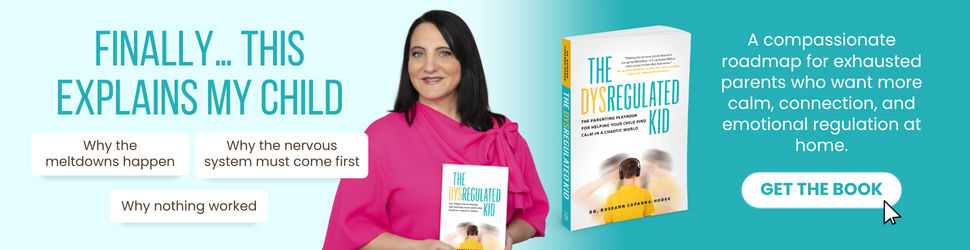
Why did I write The Dysregulated Kid?
The Dysregulated Kid was written for the parent reading parenting books at midnight, crying in the bathroom or car, and wondering what they’re doing wrong.
It’s a simple, science-based playbook designed to help parents understand dysregulation and create more calm, confidence, hope, joy, and connection.
The message is simple: you don’t have to do this alone. When we calm the brain first, the strategies we already know can finally become more effective.
Takeaway & What’s Next
Why I wrote The Dysregulated Kid is ultimately about giving overwhelmed parents a different lens. You’re not failing your child, and you don’t need to have every answer—you need a plan for regulation.
And if you’ve tried everything and still feel stuck, The Dysregulated Kid gives you a new way to understand your child’s behavior. You’re not alone, and it’s gonna be OK.
FAQs
Is The Dysregulated Kid for parents of all children?
Yes. All kids dysregulate, and the book is designed for parents who want practical ways to understand and support regulation.
What if I’ve already tried everything?
Start by asking whether you’ve been addressing the nervous system or only the behavior. When dysregulation is driving the behavior, regulation needs to come first.
Can parents learn to regulate too?
Yes. The episode emphasizes that parents carry stress in their own brains and bodies, too. Regulating yourself first can help change the cycle.
Does my child need another diagnosis?
Not necessarily. Avoiding over-pathologizing children and looking at what is happening with their nervous system and accumulated stress.
When your child is struggling, time matters.
Don’t wait and wonder—use the Solution Matcher™ to get clear next steps, based on what’s actually going on with your child’s brain and behavior.
Take the quiz at www.drroseann.com/help.

Find this helpful? Leave us a review!
Your feedback helps more overwhelmed parents find calm, clarity, and the proven tools that make everyday life easier.
Dr. Roseann Capanna-Hodge: Helping Families of Dysregulated Kids Thrive Through Regulation First Parenting®
As the creator of Regulation First Parenting®, she’s helping families of dysregulated kids discover a compassionate, brain-based path forward. Through The Dysregulated Kids™ Podcast (top 2% globally), she offers practical strategies that help parents understand their child’s brain and support lasting change.
Through The Global Institute of Children’s Mental Health and Dr. Roseann, LLC, she’s created resources like the Neurotastic® Brain Formulas and the Regulation First Parenting® framework—meeting families where they are and supporting them through challenges like ADHD, anxiety, OCD, PANS/PANDAS, and behavioral struggles.
Recognized by Forbes as “a thought leader in children’s mental health,” Dr. Roseann is changing how we understand emotional dysregulation in children—one family at a time.