
Join the Dysregulation Insider get free calm parenting tips straight to your inbox!
YES, I'M IN!Why Your Child’s Behavior Triggers You So Much And How to Stop Reacting | Co-Regulation Parenting | E448




Estimated reading time: 4 minutes
Have you ever snapped at your child and immediately wondered, “Why did that upset me so much?” Their behavior may be activating your own nervous system before your thinking brain has a chance to respond.
In this episode, let me explain how to break the reactivity cycle. You’ll learn how to pause, regulate, and respond with more calm and connection instead of reacting from overwhelm.
Why does my child’s behavior trigger me so much?
When your child rolls their eyes, talks back, melts down, or completely loses it, your nervous system may interpret the behavior as disrespect, danger, manipulation, or failure. Suddenly, you’re flooded—and responding from your own dysregulation.
This doesn’t mean you’re a bad parent. Your reactions may be connected to old stress patterns, childhood experiences, beliefs about how children “should” behave, or simply being completely maxed out.
- Notice what your child’s behavior brings up in you.
- Ask, “Is this actually a threat, or does it feel like one?”
- Remember: behavior is often a signal of dysregulation.
Why does my child melt down at home but behave at school?
Some children hold everything together at school because they are coping, masking, or trying hard to appear “fine.” Then they come home to the place where they feel safest—and everything falls apart.
That can feel personal. But your child isn’t necessarily doing this to you. They may be releasing an overloaded nervous system in the environment where they finally feel safe enough to let go.
- Look at patterns instead of taking the behavior personally.
- Notice what happens before the meltdown.
- Remember that home may be your child’s safe place, not the cause of the problem.
How can I stop reacting when my child is dysregulated?
You cannot effectively co-regulate your child while your own nervous system is highly activated. The goal isn’t to never get triggered. It’s to create space between the trigger and your reaction.
I want to emphasize the importance of love pause: a simple three-second pause to breathe or regulate before responding. You might use a heart hug, humming, tapping, or another calming strategy that works for you.
- Pause before yelling or lecturing.
- Notice: “My body is activated right now.”
- Take three seconds—or longer if you need it.
- Then connect, teach, and correct from a calmer state.
Real-life example: Your child starts melting down over something that seems tiny. Instead of matching their intensity, you pause, breathe, regulate, and then respond. That small pause can change what happens next.
Yelling less and staying calm isn’t about being perfect—it’s about having the right tools.
Join the Dysregulation Insider VIP list and get your FREE Regulation Rescue Kit, designed to help you handle oppositional behaviors without losing it.
Download it now at www.drroseann.com/newsletter
Can I break the cycle of reactive parenting?
Yes. The nervous system learns through repetition. Every time you interrupt an automatic reaction and practice regulation, you create a different response pattern.
Calm is contagious. Dysregulation is contagious, too. When parents become calmer, children have more opportunity to feel safe and regulate themselves.
“The pause creates the space between the trigger and the reaction, and that’s where change happens.” — Dr. Roseann
How can I stop passing stress patterns to my child?
Breaking the reactivity cycle isn’t only about getting through the next meltdown. It’s about changing the patterns that can be passed from one generation to the next.
When you learn to regulate instead of react, you create a different experience for your child. Over time, those calmer responses can build more safety, connection, and healthier patterns for your whole family.
Takeaway & What’s Next
Your child’s behavior may trigger you, but you are not broken and you are not stuck. The love pause gives you a practical way to interrupt automatic reactions and return to regulation.
You will still get triggered. That’s human. What matters is learning what to do next—and with one pause at a time, things can change. You have more power than you realize.
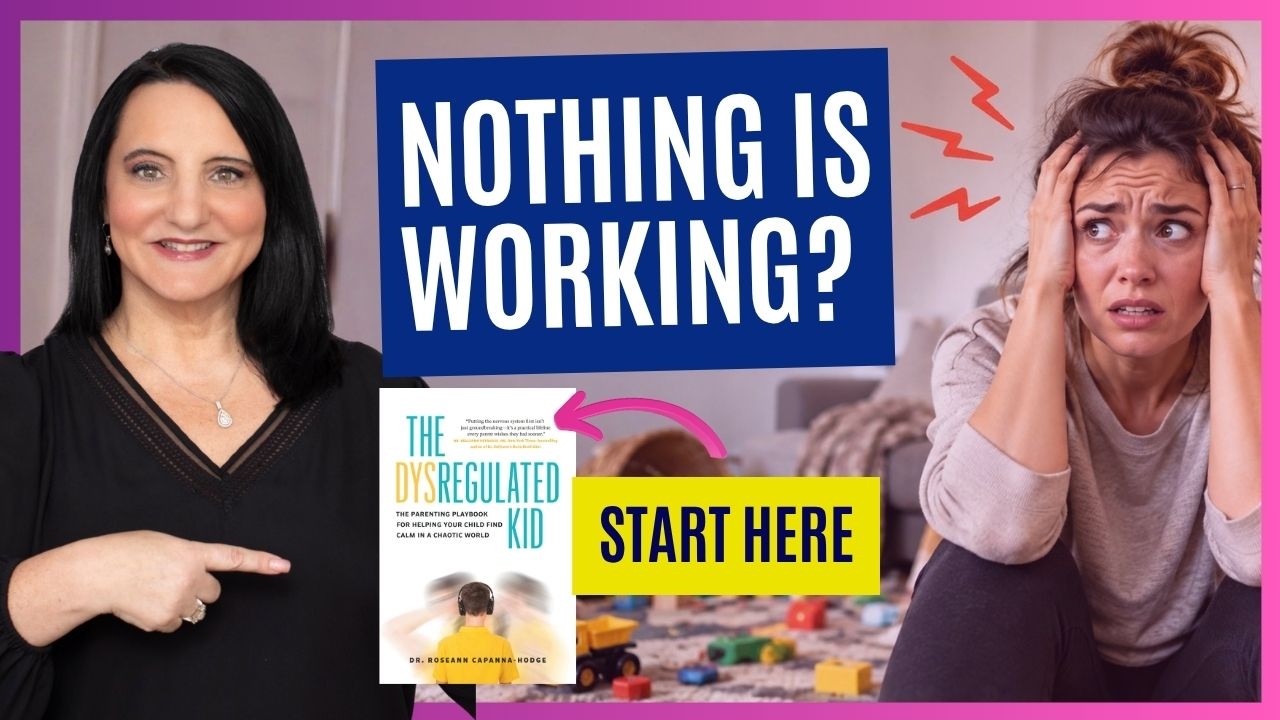
The Dysregulated Kid connects directly to this work, helping parents understand what is happening beneath behavior and giving them practical strategies for regulating themselves and their children. It’s a parenting playbook for moving from constant reaction toward Regulation First Parenting™.
FAQs
Why do I get so angry when my child misbehaves?
Your child’s behavior can activate your own stress response, especially when you’re already overwhelmed or carrying old patterns. Your nervous system may react before your thinking brain can step in.
How do I stop yelling at my child?
Start with a pause. Take three seconds to breathe or regulate before responding. If you need longer, take it. Regulate first, then connect and correct.
Why does my child behave worse with me?
Children may hold themselves together outside the home and release their emotions with the parent they feel safest with. Their behavior isn’t necessarily a deliberate attempt to make your life harder.
What is the love pause?
The love pause is a brief pause before reacting. Dr. Roseann teaches parents to take at least three seconds to breathe or regulate, creating space between the trigger and the response.
Can reactive parenting patterns change?
Yes. With consistent practice, you can interrupt automatic reactions and build new regulation patterns. You don’t have to be a perfect parent to create meaningful change.
Feel like you’ve tried everything and still don’t have answers?
The Solution Matcher helps you find the best starting point based on your child’s symptoms, behaviors, and history.
It’s fast, free, and based on decades of clinical expertise.
Get your personalized plan now at www.drroseann.com/help

Find this helpful? Leave us a review!
Your feedback helps more overwhelmed parents find calm, clarity, and the proven tools that make everyday life easier.
Dr. Roseann Capanna-Hodge: Helping Families of Dysregulated Kids Thrive Through Regulation First Parenting®
As the creator of Regulation First Parenting®, she’s helping families of dysregulated kids discover a compassionate, brain-based path forward. Through The Dysregulated Kids™ Podcast (top 2% globally), she offers practical strategies that help parents understand their child’s brain and support lasting change.
Through The Global Institute of Children’s Mental Health and Dr. Roseann, LLC, she’s created resources like the Neurotastic® Brain Formulas and the Regulation First Parenting® framework—meeting families where they are and supporting them through challenges like ADHD, anxiety, OCD, PANS/PANDAS, and behavioral struggles.
Recognized by Forbes as “a thought leader in children’s mental health,” Dr. Roseann is changing how we understand emotional dysregulation in children—one family at a time.