




Estimated reading time: 8 minutes
The brain depends on a steady supply of eight essential nutrients to grow, communicate, and regulate emotions effectively:
- omega-3 fatty acids
- vitamin D
- Magnesium
- Iron
- Zinc
- B vitamins
- Protein
- Probiotics
When children don't get enough of these key nutrients, they may struggle with focus, energy, mood, sleep, immune function, and overall cognitive performance.
Unfortunately, many families fall short without realizing it.
A 2018 study in the Journal of Child Psychology and Psychiatry found that vitamin-mineral supplementation improved emotional regulation and reduced aggression in children with ADHD: 41% of kids on micronutrients showed meaningful improvements in severe mood dysregulation compared to just 20% on placebo. That’s powerful evidence that when we give the brain the raw materials it needs, it can finally do its job.
I'm Dr. Roseann Capanna-Hodge, and over the past 30+ years I've helped families uncover nutritional factors that influence brain function alongside ADHD, anxiety, autism, OCD, and other neurological concerns.
In this guide, I’ll walk you through the 8 essential brain nutrients that calm emotional reactivity, sharpen focus, and strengthen your child’s nervous system—along with food sources, safe dosing ranges, and practical strategies for even the pickiest eaters.
Which 8 Brain Nutrients Does My Child's Nervous System Need Most?
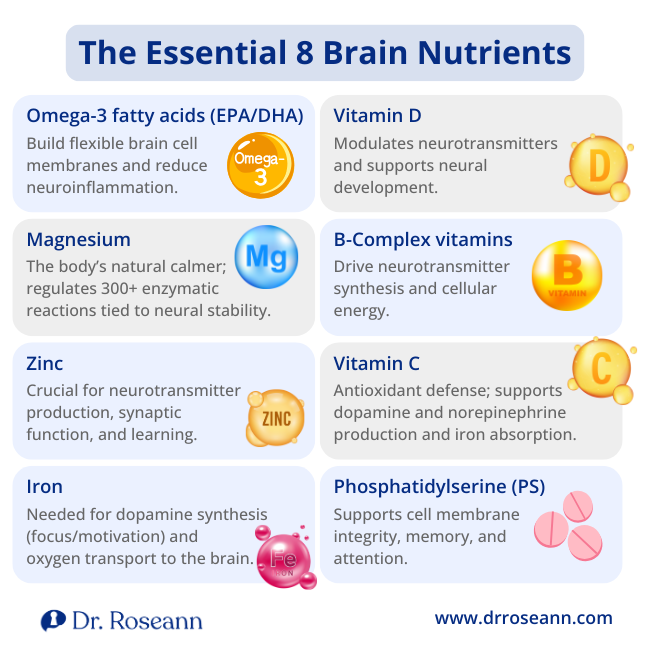
Your child’s nervous system is an electrical-chemical network. These are the high-impact nutrients that keep signals balanced and flowing:
- Omega-3 fatty acids (EPA/DHA): Build flexible brain cell membranes and reduce neuroinflammation.
- Magnesium: The body’s natural calmer; regulates 300+ enzymatic reactions tied to neural stability.
- Zinc: Crucial for neurotransmitter production, synaptic function, and learning.
- Iron: Needed for dopamine synthesis (focus/motivation) and oxygen transport to the brain.
- Vitamin D: Modulates neurotransmitters and supports neural development.
- B-Complex vitamins: Drive neurotransmitter synthesis and cellular energy.
- Vitamin C: Antioxidant defense; supports dopamine and norepinephrine production and iron absorption.
- Phosphatidylserine (PS): Supports cell membrane integrity, memory, and attention.
Parent story: “After three months focusing on these eight, my son’s panic attacks went from twice weekly to one mild episode a month,” Sandra shares about her 9-year-old. Nutrients don’t work in isolation—they synergize.
How Do These Nutrients Support My Child's Nervous System Function?
| Nutrient | Key Nervous System Benefits |
|---|---|
| Omega-3s (EPA/DHA) | • Maintain flexible membranes for faster signaling • Lower neuroinflammation • Support cross-talk between brain regions and steadier moods |
| Magnesium | • Calms overactive neurons and boosts GABA (the brain’s “brake pedal”) • Helps regulate stress hormones • Aids restorative sleep so the brain can reset |
| Zinc | • Essential for neurotransmitter synthesis and release • Supports synaptic plasticity (learning) • Regulates dopamine and serotonin activity |
| Iron | • Delivers oxygen for brain energy production • Enables dopamine synthesis (focus/motivation) • Supports myelin formation for efficient signaling |
| B-Complex | • Powers cellular energy • Builds neurotransmitters • Supports methylation (detox and gene expression) |
| Vitamin C | • Guards neurons from oxidative stress • Assists dopamine and norepinephrine production • Enhances iron absorption |
| Phosphatidylserine (PS) | • Stabilizes neuron membranes • Supports memory, attention, and processing speed |
What Are the Signs My Child's Brain Needs More Nutrient Support?
Brain nutrient gaps often show up as behavior and learning challenges before any obvious physical symptoms.Nervous system overload:
- Frequent meltdowns; difficulty switching tasks
- Sensory sensitivities (light, noise, textures)
- Restless or disrupted sleep
Cognition and learning:
- Inattention, forgetfulness, trouble following directions
- Working-memory struggles; avoidant learning behaviors
Emotional regulation:
- Big mood swings; trouble calming when upset
- Heightened anxiety or worry
- Impulsivity or aggression
Physical clues:
- Fidgeting, headaches, frequent stomachaches
- Low energy or chronic fatigue
Brain Science Spotlight
Research from OHSU’s MADDY trial and Dr. Joel Nigg shows that broad-spectrum micronutrients can improve in attention and emotional regulation within 8–10 weeks in some children with ADHD.Nutrients aren’t a cure, but when the brain lacks building blocks for neurotransmitters like dopamine and serotonin, focus, flexibility, and emotional control all become harder. That’s why my Regulate → Connect → Correct™ framework always starts with regulation—you can’t connect or correct until the brain has the fuel to calm. One mom, Janet, once thought her 10-year-old’s behavior was defiance. Testing revealed nutrient deficiencies. After targeted support, she said, “We realized he wasn’t being bad—his nervous system was crying out for help. Once his brain had what it needed, we finally got our kid back.”Takeaway: Behavior is communication—and often it’s the body saying, “I need better fuel.”
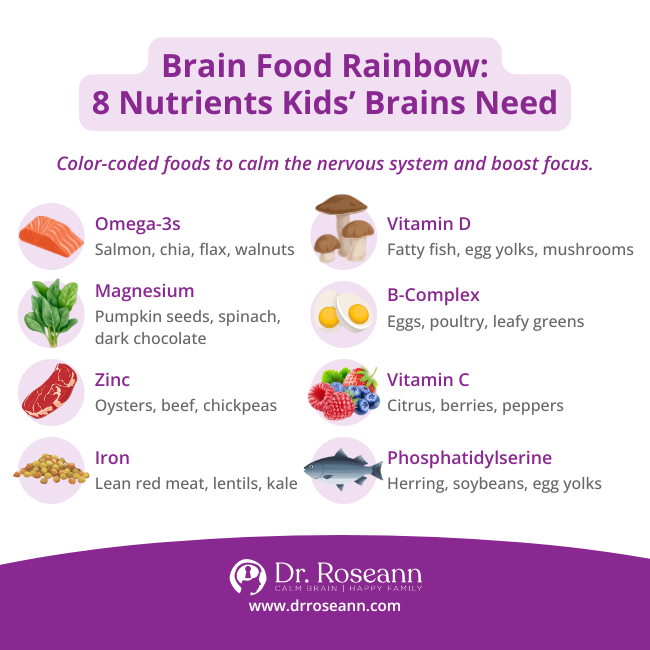
Want help making this easier at the grocery store? Download my free Calm Brain Diet™ Anti-Inflammatory Grocery List—a simple guide that highlights the foods most supportive to your child’s nervous system (and the hidden ones that can stir up inflammation).

Dr. Roseann’s Therapist Tip
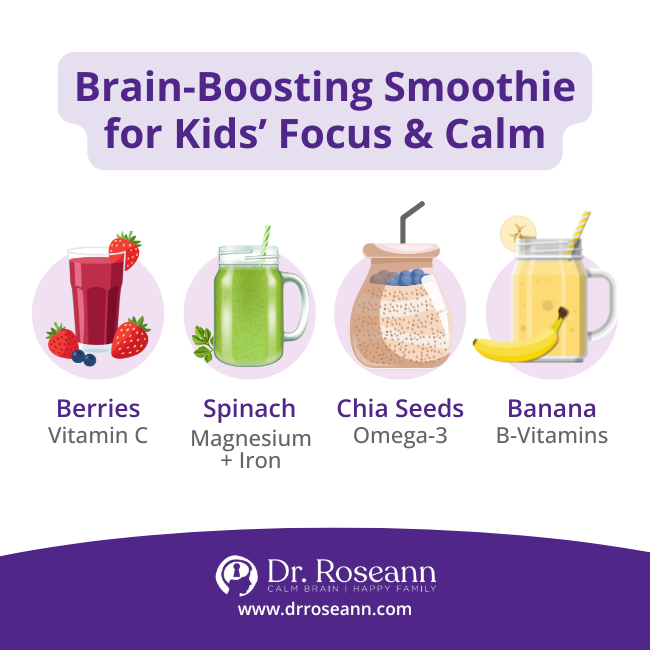
In over 30 years of practice, I’ve seen how powerfully a child’s nervous system responds to the right fuel. Your child’s brain is literally built from the nutrients you provide.Try this today: Make a morning smoothie with berries (vitamin C), spinach (magnesium + iron), chia seeds (omega-3), and a banana (B-vitamins). Add protein powder for steady energy.Why it works: This blend delivers brain nutrients in an easy-to-absorb form, helping your child start the day calmer and more focused.And remember—this isn’t about bad parenting. It’s about giving a developing nervous system the support it needs. You’re literally feeding your child’s potential.
How Much of Each Brain Nutrient Should My Child Take Daily?
Dosing brain nutrients for nervous system support requires precision—too little won't be effective, but too much can cause imbalances. Your child's individual needs depend on their age, weight, current nutrient status, and the severity of their symptoms.
| Nutrient | Ages 4–8 | Ages 9–13 | Timing & Absorption Notes |
|---|---|---|---|
| Omega-3 (EPA/DHA) | 500–1000 mg | 1000–1500 mg | Take directly with meals to optimize fatty acid absorption. |
| Magnesium | 130–200 mg | 240–350 mg | Administer in the evening to support physical relaxation and sleep. |
| Zinc | 5–8 mg | 8–12 mg | Take away from iron or calcium supplements to prevent mineral competition. |
| Iron | 10 mg | 8–10 mg | Take alongside Vitamin C to significantly enhance bioavailability. |
| Vitamin D | 1000–2000 IU | 1000–2000 IU | Fat-soluble; administer alongside healthy dietary fats. |
| B-Complex | Standard Child Dose | Standard Teen Dose | Administer in the morning to support daytime cellular energy. |
| Vitamin C | 200–400 mg | 400–600 mg | Utilize split doses throughout the day to maintain stable plasma levels. |
| Phosphatidylserine | 100 mg | 100–200 mg | Administer alongside regular meals to support cognitive processing. |
When Will I See Nervous System Improvements in My Child?
Every brain is unique, but many parents observe:
- Weeks 1–2 (Foundation): Sleep starts to settle; energy steadies as availability of nutrients rises.
- Weeks 3–6 (Integration): Fewer/less intense meltdowns; focus gradually improves; headaches or stomach issues may ease first.
- Weeks 7–12 (Optimization): Clearer emotional regulation, improved stress recovery, more frustration tolerance.
- 3–6 months (Maintenance): Gains consolidate—more consistent mood/behavior and better learning stamina.
Research by Dr. Bonnie Kaplan and colleagues on broad-spectrum micronutrients shows benefits for emotional regulation and attention often appear by 8–12 weeks and may sustain with ongoing support.
Are Brain Nutrient Supplements Safe for My Child's Developing System?
When it comes to kids’ developing brains, quality and personalization matter most. The goal isn’t “more” nutrients—it’s the right ones, in the right forms, at the right doses.Choose premium quality:
- Look for third-party tested supplements free from heavy metals, dyes, and artificial additives.
- Pick bioavailable forms (like methylated B-vitamins or chelated minerals) so your child’s body can actually use them.
Start low and go slow:
- Introduce one nutrient at a time.
- Keep a simple log of sleep, appetite, digestion, and behavior changes.
Coordinate care:
- Work with providers who understand pediatric nutrition.
- Consider labs for iron and vitamin D, and always review with your child’s healthcare team.
Special notes:
- Iron: Test first—too much can build up.
- B-vitamins: High doses may overstimulate sensitive kids.
- Omega-3: Can thin blood—mention before procedures.
- Magnesium: Excess may cause loose stools; try glycinate if needed.
Remember: It’s not about piling on supplements—it’s about calming the nervous system with safe, steady support.
What's the Best Way to Get These Nutrients Into My Resistant or Sensory-Sensitive Kid?
If your child resists new foods or supplements, you’re not failing—their nervous system is just more sensitive. The key is to work with their preferences, not against them.
Make it appealing: Use powders blended into smoothies or yogurt, flavored chewables, or liquid forms for kids who dislike pills.
Stealth nutrition: Mix magnesium into cocoa, stir ground flax or chia seeds into pasta sauce, or blend spinach into fruit smoothies.
Sensory tweaks: Serve foods cold if smells are overwhelming, stick to familiar flavors, and change only one variable at a time.
Environment matters: Involve your child in choosing flavors, keep routines consistent, celebrate small wins, and frame nutrients as “brain helpers,” not medicine.
Parent story: Kevin’s autistic daughter once ate only six foods, and every new supplement felt like a battle. We began with just a tiny sprinkle of Neurotastic® Magnesium in her favorite drink—no pressure, no stress. Over time, her nervous system responded, and months later she was taking a full protocol in forms she actually enjoyed. It’s a reminder that small, gentle steps can create real change for sensitive kids.
FAQs
Which nutrients are children most commonly missing?
Children commonly fall short on vitamin D, magnesium, omega-3 fatty acids, iron, zinc, B vitamins, calcium, and fiber, depending on their diet, health conditions, and stage of growth.
Can nutrients replace my child's ADHD or anxiety medication?
No. Nutrients cannot replace ADHD or anxiety medication, but they can support healthy brain function and emotional regulation. In some cases, optimizing nutrition may improve treatment outcomes, but any medication changes should be made only with your child's healthcare provider.
How can I tell if my child has a nutrient deficiency, and when should they be tested?
Signs of a nutrient deficiency may include fatigue, poor focus, mood changes, frequent illness, slow growth, or brittle hair and nails. If these symptoms persist or your healthcare provider suspects a deficiency, laboratory testing may help identify underlying nutritional gaps.
Why do nutrient deficiencies affect my child's behavior?
Nutrient deficiencies can affect your child's behavior because the brain relies on vitamins and minerals to produce neurotransmitters, regulate emotions, support attention, and maintain healthy nervous system function.
Can picky eating lead to nutrient deficiencies?
Yes. Picky eating can lead to nutrient deficiencies when children regularly avoid entire food groups or eat a very limited variety of foods over time.
Should my child get nutrients from food, supplements, or a multivitamin?
Whole foods should be your child's primary source of nutrients because they provide vitamins, minerals, fiber, and other beneficial compounds that work together. Supplements or multivitamins may help fill nutritional gaps, but targeted supplements are sometimes recommended when a specific deficiency or increased need is identified.
How long should my child take nutritional supplements, and how will I know they're working?
Many children benefit from nutritional supplements for several months or longer, depending on their individual needs. Improvements in sleep, focus, mood, stress recovery, or emotional regulation often become noticeable after 8 to 12 weeks of consistent use, and your healthcare provider can help determine when supplements should be adjusted.
Are there any supplement interactions I should know about?
Yes. Some supplements can affect how others are absorbed. For example, iron and zinc are often best taken at different times, magnesium is commonly taken in the evening, B vitamins earlier in the day, and omega-3 fatty acids with meals. Review all supplements and medications with your healthcare provider before starting a new regimen.
Do nutrient needs change as children grow?
Yes. Children's nutrient needs change throughout infancy, childhood, adolescence, and puberty to support rapid growth, brain development, hormone production, and increasing physical activity.
Citations:
Rucklidge, J. J., Eggleston, M. J., Johnstone, J. M., Darling, K., & Frampton, C. M. (2018). Vitamin–mineral treatment of ADHD in adults: A randomized, placebo-controlled trial. Journal of Child Psychology and Psychiatry, 59(3), 232–246. https://doi.org/10.1111/jcpp.12817
Kaplan, B. J., Rucklidge, J. J., Romijn, A. R., & Mc Leod, K. (2015). The emerging field of nutritional mental health: Inflammation, the microbiome, oxidative stress, and mitochondrial function. Clinical Psychological Science, 3(6), 964–980.
https://doi.org/10.1177/2167702614555413
Nigg, J. T., Lewis, K., Edinger, T., & Falk, M. (2012). Meta-analysis of attention-deficit/hyperactivity disorder or attention-deficit/hyperactivity disorder symptoms, restriction diet, and synthetic food color additives. Journal of the American Academy of Child & Adolescent Psychiatry, 51(1), 86–97. https://doi.org/10.1016/j.jaac.2011.10.015
©Roseann Capanna-Hodge
Always remember… “Calm Brain, Happy Family™”
Disclaimer: This article is not intended to give health advice and it is recommended to consult with a physician before beginning any new wellness regime. The effectiveness of diagnosis and treatment vary by patient and condition. Dr. Roseann Capanna-Hodge, LLC does not guarantee certain results.
Are you looking for SOLUTIONS for your struggling child or teen?
Dr. Roseann and her team are all about science-backed solutions, so you are in the right place!
Meet the Expert
Licensed Therapist | Certified School Psychologist
Board Certified in Neurofeedback (BCN) | 30+ Years Clinical Experience
Expert in Emotional Dysregulation in Children and Nervous System Regulation
Host, Dysregulated Kids Podcast | Author, The Dysregulated Kid
Dr. Roseann Capanna-Hodge is a licensed therapist, certified school psychologist, and leading expert in emotional dysregulation in children and nervous system regulation. With over 30 years of clinical experience and having analyzed more than 10,000 brain maps, she helps families understand what behavior is really signaling—and how to calm the nervous system first so real change can happen.
She is the creator of Regulation First Parenting® and the CALMS Protocol™, host of the top 1% podcast Dysregulated Kids, and author of The Dysregulated Kid.