




Estimated reading time: 10 minutes
Ever stared at your child mid-meltdown and thought, Maybe this storm passes, maybe not? That wondering sits in a parent's chest like fog that never quite lifts until finally someone whispers, Do we need help as a family?
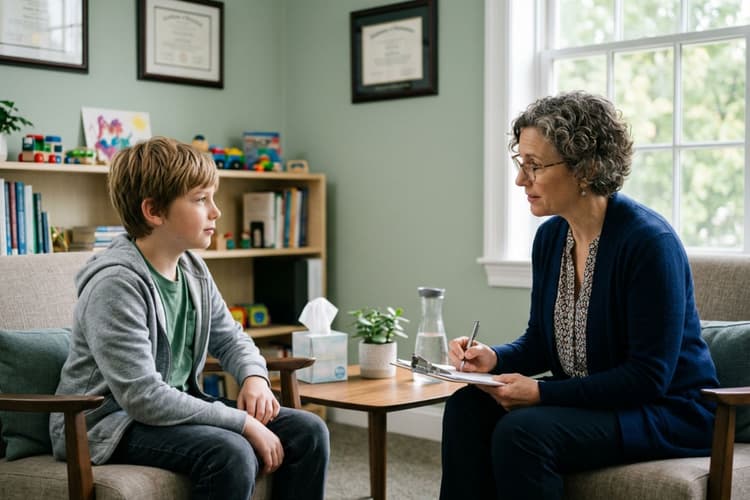
Family therapy for children is a form of counseling that brings parents, caregivers, siblings, and the child together to improve communication, strengthen relationships, and solve problems as a team.
Rather than focusing only on the child, family therapy recognizes that a child's behavior, emotions, and stress are shaped by the family system—and that lasting change happens when the entire family learns new ways to connect, communicate, and support one another.
I'm Dr. Roseann Capanna-Hodge, and for more than 30 years I've helped families strengthen connection while supporting children through emotional, behavioral, and neurological challenges.
What You'll Learn:
• How family therapy works and when it may benefit your child.
• The role parents and caregivers play in the therapeutic process.
• How family therapy strengthens communication and emotional regulation at home.
What is Family Therapy for Children?
Family therapy for children looks at the whole system, not just the child. Instead of asking, "What's wrong with my child?" the better question is, "What in our family dynamic is keeping my child stuck in dysregulation?"
Sometimes sessions include everyone, sometimes smaller groups, and other times one-on-one before circling back together. The format shifts, but the purpose stays steady: building connections that change how your family handles daily stress.
Unlike individual therapy that zooms in on a child's inner world, family counseling pans wide. It looks at:
- Communication – Do we open up or shut down?
- Emotional regulation – How do we ride out stress?
- Problem-solving – Do conflicts explode or get avoided?
- Boundaries and roles – Who carries the weight, and is it shared fairly?
Research shows that when families shift patterns together, children are more likely to regulate, cope, and thrive (Carr, 2019). When the family system calms, your child's nervous system finally has the space to do the same.
When is Family Therapy Needed?

Parents ask me all the time: "How do I know when it's time for help?" Truth is, most families wait until they feel wrung out and worn thin. By the time they land in my office, they've often tried a dozen things that just didn't stick.
Here are some signs family counseling may be needed:
- Outbursts, worry, or school refusal run the day.
- Sibling fights turn into rivalry or aggression.
- Parents can't agree on rules or discipline.
- Stress from divorce, illness, or money spills into daily life.
- Individual therapy helps a little but stalls without family involvement.
For kids with ADHD, anxiety, or mood issues, home life shapes how intense symptoms feel.
- Research shows that when families shift patterns together, kids regulate better and symptoms ease (Diamond, Diamond, & Levy, 2021).
- And here's the hopeful part: when parents bring calm and consistency, children get the space to grow and heal (Gershoff et al., 2019).
Your child's brain can calm. Your household can breathe lighter. With small, steady changes, you'll uncover the potential hidden under chaos.
Calm brain, happy family—because once the nervous system settles, everything else begins to follow.
The Benefits of Family Therapy for Children
Family therapy isn't about "fixing" a child—it's about creating healing shifts for everyone at home. Families often find:
- Communication improves — children feel heard while parents feel understood.
- Problem-solving changes — reactive cycles soften into calmer, cooperative strategies.
- Emotional regulation spreads — when adults model calm, kids learn to follow.
- Connection deepens — daily routines become grounding instead of overwhelming.
- Progress accelerates — family involvement strengthens the impact of individual therapy (Henderson et al., 2019).
When families shift together, kids don't just cope—they thrive.
Family Counseling Approaches That Work for Kids
Every family's counseling journey looks a little different, right? Still, the heart of it stays the same—less stress, more connection, and stronger bonds.
- Structural (Strategic–Structural) Therapy – Families often slip into patterns that feel heavy or unbalanced.
Jiménez, Hidalgo, Baena, León, and Lorence (2019) found that reorganizing family roles helps parents reclaim leadership while setting steadier boundaries—shifts that can transform daily life in powerful ways.
- Family Systems Therapy – Think of a mobile above a crib: when one piece wobbles, the whole thing shakes.
Christensen and Jacobson (2024) explain how this approach steadies that balance by creating healthier interaction patterns throughout the family unit.
- Cognitive-Behavioral Family Therapy (CBFT) – Old habits can run the show until someone notices them. This method interrupts unhelpful loops and replaces them with practical coping tools that families can actually use in tough moments.
- Emotion-Focused Family Therapy – Emotions that stay bottled up often explode later in unhealthy ways. Here, families practice sharing feelings openly in safer spaces, which strengthens trust and mends attachment wounds.
- Psychoeducation – Honestly, knowledge changes everything. When parents understand the "why" behind behaviors, they stop reacting from frustration and start responding from compassion.
When families heal together, children don't just get by—they begin to thrive with a stronger foundation for growth. Family therapy isn't about fixing what's broken; it's about building healthier connections that last.
How Family Therapy Sessions Typically Work
Ever wonder what happens in family therapy for children? Think of it less like talking and more like finding a new rhythm together—everyone has a part.
- Assessment – Parents, then the child, sometimes the whole family, reveal hidden stress points and patterns.
- Goal-Setting – Families pick priorities:
-
- Less arguing over chores
- Calmer mornings
- Managing anxiety without meltdowns
-
- Interactive Sessions – Act out tricky moments, play games, or try problem-solving exercises rooted in real life.
- Skill-Building – Practice communication, stress management, and conflict resolution, turning small stumbles into aha moments.
- Homework – Try strategies at home, notice what works, revisit for guidance.
Family therapy isn't about fixing what's broken; it's about building healthier connections that last. When patterns shift, households breathe easier—and children truly thrive.
Family Therapy for Children with ADHD and Anxiety
Many families seek therapy for ADHD or anxiety because daily life can feel overwhelming. Here's how family counseling helps:
| Condition | Challenges | Family Therapy Focus | Outcome / Evidence |
|---|---|---|---|
| ADHD | Impulsivity, distractibility, low frustration tolerance | Structured routines, positive reinforcement, calm parental responses | Babinski etc: Behavior improves, families feel more secure |
| Anxiety | Withdrawal, school refusal, emotional outbursts | Understanding triggers, gradual exposure, modeling calm coping | Herres alt: Resilience grows faster, fears managed without reinforcement |
Takeaway: Family therapy builds stronger connections. When patterns shift, households breathe easier.
Common Family Therapy Techniques You May Encounter
Ever feel like nothing seems to work? These tools can actually change that.
- Genograms – Map family ties and emotional loops across generations.
- Role-Plays – Act out tough moments and practice new responses until they stick.
- Reframing – See behavior as stress, not defiance, and respond differently.
- Communication Games – Strengthen listening, turn-taking, and connection with some fun.
- Relaxation Training – Breathing, mindfulness, or playful stretches calm nervous systems faster than arguments.
These tools move families from frustration toward teamwork, creating lighter homes where kids can truly thrive (Kazdin & Blase, 2011). When patterns shift, children flourish.

Read about: Therapy for Kids: Complete Guide to Child Mental Health Treatment
What Parents Should Know Before Starting Child Family Therapy
Walking into family therapy can feel scary. Here's what I always tell parents:
- No blame. Therapy isn't about pointing fingers; it's about changing patterns and building connection.
- Practice matters. The real magic happens at home, between sessions, when families try new strategies.
- Progress takes time. Communication and regulation skills grow slowly, like learning a new instrument or rhythm.
- Consistency counts. Showing up and staying open makes the biggest difference for lasting change.
If you're wondering whether therapy could help, trust your gut. High stress and shaky regulation are signals that support can make a real difference.
Remember: behavior is communication. By working together, you can decode what your child's brain is really saying—and give them the tools to thrive.
©Roseann Capanna-Hodge
FAQs
Can family therapy help improve sibling relationships?
Yes. Family therapy can help improve sibling relationships by teaching siblings how to communicate more effectively, understand each other's emotions, resolve conflict in healthy ways, and build stronger connections. As the entire family learns healthier interaction patterns, sibling rivalry often decreases and cooperation grows.
Do parents need to participate in family therapy sessions?
Yes, parent participation is an important part of family therapy. While parents may not attend every session from beginning to end, their involvement helps reinforce new skills at home, strengthens parent-child relationships, and creates lasting changes in communication, emotional regulation, and family dynamics.
How long does family therapy for children usually take?
The length of family therapy depends on your family's goals, challenges, and progress. Some families notice meaningful improvements within a few sessions, while others benefit from longer-term support. The goal of family therapy is not just to solve immediate problems but to build healthier communication, stronger relationships, and skills that last well beyond therapy.
When should a family consider family therapy?
A family may benefit from family therapy when ongoing conflict, stress, behavior challenges, mental health concerns, or major life changes are affecting family relationships.
How does family therapy help children?
Family therapy helps children by improving communication, strengthening family support, and creating healthier ways to solve problems together.
Who participates in family therapy sessions?
Family therapy sessions may include parents, siblings, caregivers, and the child, depending on the family's goals and the therapist's recommendations.
Can family therapy improve parent-child relationships?
Yes. Family therapy can improve parent-child relationships by helping families build trust, communicate more effectively, and respond to challenges with greater understanding.
Always remember… “Calm Brain, Happy Family™”
Disclaimer: This article is not intended to give health advice and it is recommended to consult with a physician before beginning any new wellness regime. The effectiveness of diagnosis and treatment vary by patient and condition. Dr. Roseann Capanna-Hodge, LLC does not guarantee certain results.
Are you looking for SOLUTIONS for your struggling child or teen?
Dr. Roseann and her team are all about science-backed solutions, so you are in the right place!

Meet the Expert
Licensed Therapist | Certified School Psychologist
Board Certified in Neurofeedback (BCN) | 30+ Years Clinical Experience
Expert in Emotional Dysregulation in Children and Nervous System Regulation
Host, Dysregulated Kids Podcast | Author, The Dysregulated Kid
Dr. Roseann Capanna-Hodge is a licensed therapist, certified school psychologist, and leading expert in emotional dysregulation in children and nervous system regulation. With over 30 years of clinical experience and having analyzed more than 10,000 brain maps, she helps families understand what behavior is really signaling—and how to calm the nervous system first so real change can happen.
She is the creator of Regulation First Parenting® and the CALMS Protocol™, host of the top 1% podcast Dysregulated Kids, and author of The Dysregulated Kid.