




Estimated reading time: 10 minutes
Helping your child feel calmer, sleep more comfortably, or move through the day with less struggle can involve exploring different kinds of support. Pulsed electromagnetic field therapy, or PEMF, is one option families may discuss with their healthcare provider. Clinical trials have reported promising findings for particular uses, including adult insomnia and back-related function, while a small pediatric study explored balance in children with cerebral palsy (Liao et al., 2023; Lisi et al., 2019; Pulay et al., 2025).
Then comes the practical parenting question: “What should I do if my child feels different after a session?” Maybe they mention a headache. Maybe they seem unusually tired. Or maybe you get the wonderfully specific, “Mom, I feel weird.” We can work with that—your child doesn’t need to deliver a medical presentation before you listen.
Understanding PEMF detox symptoms starts with noticing what changed, without assuming the cause. Your observations can help your child’s provider assess what happened and guide the next steps.
I’m Dr. Roseann Capanna-Hodge, a licensed therapist, certified school psychologist, and author of The Dysregulated Kid. For more than 30 years, I’ve helped families understand their children’s brain and behavior needs. Let’s walk through PEMF research, practical CALM PEMF® guidance, and the safety questions that can help you approach this tool with clearer expectations.
What you’ll learn:
- What people mean by detox symptoms after PEMF.
- What primary research tells us about PEMF.
- How to respond to changes after a session.
- What to discuss before using PEMF with a child.
- How to approach CALM PEMF programs and device instructions.
What Do People Mean by Detox Symptoms After PEMF?
“PEMF detox symptoms” is a term sometimes used to describe discomfort noticed after PEMF use, such as a headache, tiredness, nausea, or feeling foggy.
It helps to separate two things: what someone feels and what caused it. Describing a symptom is useful. Calling it detoxification adds an explanation that needs its own evidence.
The clinical trials discussed in this article examined sleep, back-related function, and balance. They did not establish symptoms as evidence that PEMF was removing toxins (Liao et al., 2023; Lisi et al., 2019; Pulay et al., 2025).
That distinction gives parents a better starting point. Instead of trying to decide whether a reaction is “good detox” or “bad detox,” ask:
- “What exactly feels different?”
- “When did it start?”
- “What program and settings were used?”
- “Should we pause and check with the provider?”
You can be open to PEMF’s potential benefits while paying close attention to your child’s comfort.
What Is PEMF, and What Does the Research Show?
PEMF stands for pulsed electromagnetic field. Devices deliver electromagnetic pulses using particular settings, which researchers can evaluate for specific health outcomes.
The details matter. A study’s findings belong to the device, treatment schedule, participants, and condition tested. Keeping those details in view helps families understand where the evidence is promising and where more research would be useful.
Promising Findings From Primary Clinical Studies
| Area studied | What the study found | How to understand the finding |
|---|---|---|
| Adult insomnia | A randomized, sham-controlled trial involving 153 adults reported greater improvement in sleep outcomes with the tested pulsed magnetic therapy system over four weeks (Liao et al., 2023). | Encouraging evidence for that system and adult study population. |
| Adult nonspecific low back pain | A pilot trial involving 42 adults reported preliminary improvements in back-related function. Twenty-five participants completed the study (Lisi et al., 2019). | A promising early finding, with participant dropout and the pilot design limiting certainty. |
| Balance in children with cerebral palsy | A pilot study involving 12 children aged 6–12 reported improvement in one balance outcome, while other outcomes did not show significant differences (Pulay et al., 2025). | An early pediatric research finding that needs confirmation in larger studies. |
These are useful examples of PEMF research, rather than a complete list of its studied applications. They also do not directly establish CALM PEMF outcomes for children’s ADHD, anxiety, emotional regulation, or detoxification.
For a broader introduction, visit PEMF Therapy Devices: What You Need to Know About Electromagnetic Healing.
What Does This Mean for Parents?
Start with the goal that matters to your family.
Perhaps bedtime is the hardest part of the day. Perhaps your child struggles to settle into homework. Bring that specific concern to the clinician and ask what evidence supports the device and program you are considering.
A useful question is:
“What do we know about this particular device for my child’s age and needs?”
You can also explore our resources on PEMF for attention and learning and PEMF for anxiety, OCD, and depression. Use them to organize questions for your child’s healthcare team.
Do Changes After PEMF Mean the Body Is Detoxing?
A change after a session does not, by itself, identify its cause. The studies cited here did not demonstrate that discomfort was a sign of toxin clearance.
The same principle applies when someone uses the word “herxing” to explain a reaction. Before accepting that explanation, ask the healthcare provider what supports it in your child’s situation.
Let’s look at a hypothetical example.
Your child uses a device after school and later mentions a headache. Rather than immediately assigning a cause, note the program, session length, timing, and other circumstances that day. Share those details with the provider.
You might say:
“They developed a headache about 20 minutes into the session. We stopped the device. What should we do before trying it again?”
That gives the clinician something concrete to assess. Careful observation supports thoughtful use of a tool—it does not require you to assume the tool caused the symptom or that the symptom signals a benefit.
What Should You Do If Your Child Feels Different After a Session?
Pause the session when your child reports new or concerning discomfort. Listen, write down what happened, and seek guidance about whether and how to resume.
A simple response is enough:
“Thank you for telling me. Let’s take a break and check how you’re feeling.”
That keeps the conversation calm and lets your child know their feedback matters.
Keep a Brief Record
A few clear notes can be more useful than trying to remember everything at the next appointment.
| What to record | Example | Why it helps |
|---|---|---|
| Device and program | Model, selected program, placement, and session duration. | Helps the provider review how the device was used. |
| Symptoms and timing | “Headache began during the session and continued afterward.” | Describes the sequence clearly. |
| Other circumstances | Sleep, meals, illness, medication changes, or activities. | Gives the provider additional context. |
These are illustrative examples, not a diagnostic checklist.
Keep it manageable. Your notes can live on your phone—no color-coded parenting spreadsheet required.
Focus on Comfort and Follow-Up
Offer a comfortable place to rest, an ordinary drink, or a meal or snack when appropriate. There is no need to add a detox regimen to address an unexplained symptom.
Ask the provider about persistent, recurring, or worsening symptoms and whether your child needs an assessment before using the device again.
For severe symptoms, such as trouble breathing, fainting, a seizure, or sudden severe pain, seek urgent medical care. This applies regardless of the suspected cause.

What Safety Questions Should You Ask Before Using PEMF With a Child?
A thoughtful safety plan considers your child’s medical history and the exact device instructions.
Before starting, share the product information with your child’s healthcare provider and discuss what you hope to achieve.
Review Medical History and Implanted Devices
Raise any history of seizures, implanted electronic devices, or relevant metal implants.
The adult back-pain trial excluded participants with implanted electronic devices, including pacemakers and insulin pumps, and certain spinal implants. The adult insomnia study excluded people with epilepsy or metal or magnetic implants. The pediatric cerebral-palsy study also excluded children with epilepsy (Liao et al., 2023; Lisi et al., 2019; Pulay et al., 2025).
Those exclusions describe the boundaries of the research; they are not a universal contraindication list. Follow the warnings for the particular product and consult the clinician responsible for an implanted device when applicable.
Agree on a Goal
Make the goal specific enough to discuss at follow-up.
For example:
- Tracking how bedtime is going.
- Recording how often homework is interrupted.
- Noting your child’s own reports of comfort and well-being.
These are examples of observations to discuss, not promises of PEMF results.
Ask:
“What change would be meaningful, and when should we review whether this approach is helping?”
Keep the Care Team Involved
Discuss PEMF as a possible addition to your child’s care plan. Continue prescribed medication, therapy, and other treatment unless the treating clinician recommends a change.
A coordinated plan makes it easier to understand what is helping and how to respond when something needs adjusting.
How Can Families Approach CALM PEMF®?
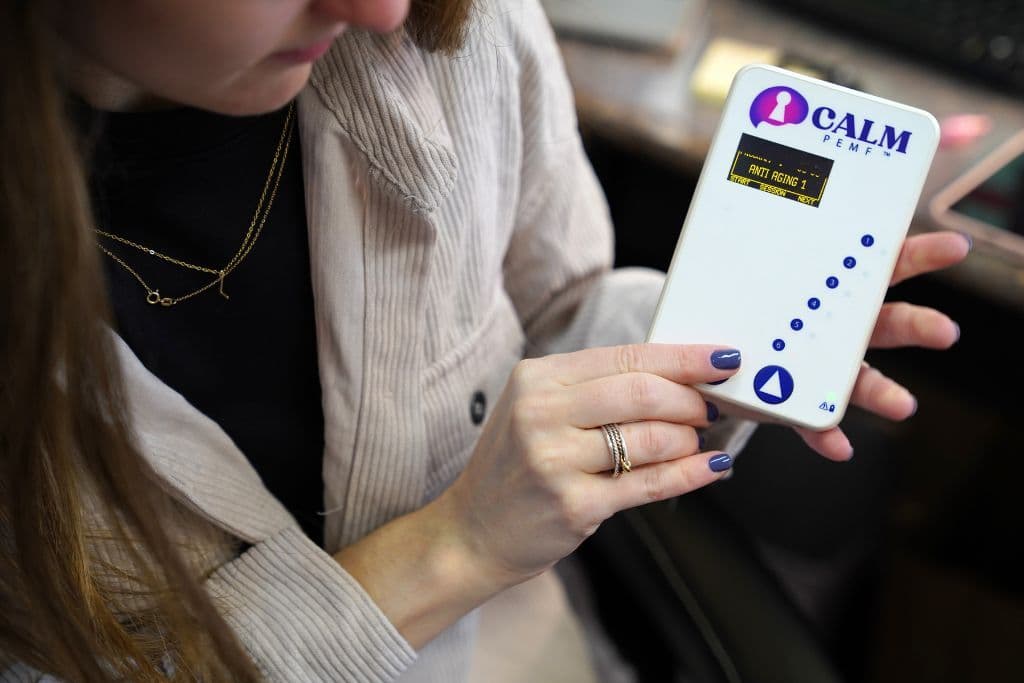
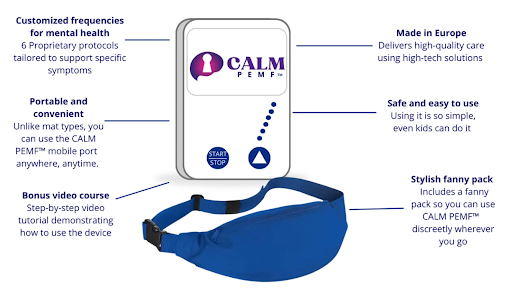
CALM PEMF® is Dr. Roseann’s portable device offering. Its product resources explain available programs, operation, and family-use support.
For parents considering CALM PEMF, the next step is to understand the exact model, its instructions, and how it fits your child’s needs. Bring that information to the healthcare provider so you can discuss suitability and realistic goals.
Practical Steps Before Use
- Read the instructions for your model. Review charging, operation, program selection, placement, and warnings.
- Discuss suitability with your child’s clinician. Include medical history, current treatments, and implanted devices.
- Confirm the appropriate program and schedule. Ask which instructions apply to your child’s situation.
- Supervise your child. Make sure they know how to tell you when something feels uncomfortable.
- Keep a brief record. Track the agreed goal and any changes worth discussing.
- Use the available support resources. Contact the CALM PEMF team for product-operation questions and your clinician for medical concerns.
How Do You Choose a Program?
Review the current program options with the CALM PEMF team and your child’s provider. Ask what each program involves and what evidence informs its intended use.
Helpful questions include:
- “Which program is appropriate for the goal we discussed?”
- “What session length does its instruction guide specify?”
- “Are there precautions relevant to my child?”
- “Who should we contact if we need help?”
Clear instructions help turn an unfamiliar device into a more manageable routine. You should know what to do before pressing start.
How Long Should a Session Last?
Use the instructions for your selected model and program, together with individualized guidance from the provider.
Avoid borrowing a schedule from another PEMF device or research study. Different devices and protocols are not interchangeable.
Can CALM PEMF Be Used Overnight?
Check whether the specific program includes overnight use and discuss whether that schedule is appropriate for your child. An overnight option should be considered individually rather than treated as the starting point for every family.
There is no parenting prize for the longest session. Follow the appropriate instructions and review your observations.
What Support Resources Are Available?
Check the current CALM PEMF product information for details about carrying accessories, instructional videos, portal access, and other included resources.
Product support can help with operating the device. Your healthcare provider remains the right contact for assessing symptoms and making medical decisions.
Keep Connection at the Center of the Plan
Whatever tools become part of your child’s care, keep checking in with the person using them.
Ask:
“How did that feel?”
“Was anything uncomfortable?”
“What would you like me to know?”
Some children give detailed answers. Others need time, simpler questions, or help finding words. Leave room for their experience alongside your own observations.
In The Dysregulated Kid, I help parents make sense of challenging behavior and approach difficult moments with more clarity and connection. That parenting support can sit alongside the care plan you build with your child’s healthcare team.
You do not have to have every answer. A clear plan, attentive observation, and a provider you can turn to give you a practical way forward.
Frequently Asked Questions
Do Symptoms After PEMF Mean Treatment Is Working?
Symptoms alone do not establish detoxification or treatment success. The trials discussed here did not measure discomfort as evidence of toxin removal. Record changes and ask your provider how to interpret them.
Can Headaches or Dizziness Occur During PEMF Use?
Headache or dizziness was reported in both active and sham groups in the adult insomnia trial, with fewer reports in the active group. That finding applies to the tested system and does not establish the likelihood of symptoms in a child using CALM PEMF (Liao et al., 2023).
Is PEMF Safe for Children?
Safety depends on the device, instructions, medical history, and circumstances of use. The pediatric pilot discussed here involved children aged 6–12 with cerebral palsy and reported no adverse events. Its small size means it cannot answer safety questions for every child or device (Pulay et al., 2025).
Can Toddlers Use CALM PEMF?
Discuss the exact product instructions and your toddler’s needs with their healthcare provider. The pediatric study cited here did not include toddlers, so it does not establish safety for that age group (Pulay et al., 2025).
How Long Can Symptoms After PEMF Last?
The cited research does not establish how long PEMF detox symptoms last. Ask the provider about symptoms that persist, recur, or worsen rather than assuming they will pass within a set number of days.
How Soon Should We Expect Results With CALM PEMF?
Agree on a specific goal and review point with your child’s provider. The studies discussed here do not establish a pediatric CALM PEMF results timeline, so expectations should be individualized.
Can PEMF Be Used Alongside Therapy or Medication?
Discuss its role with the clinician managing your child’s care. Continue prescribed treatment unless that clinician recommends a change.
What Should I Do If My Child Feels Uncomfortable?
Pause use, listen to your child, and record what happened. Contact the healthcare provider for guidance about resuming. Seek urgent care for severe symptoms.
References
Liao, J., Wang, S., Zhou, B., Liang, W., Ma, P., Lin, M., Lin, W., Li, C., Zhang, X., Li, H., Cui, Y., Hu, J., Qin, Y., Deng, Y., Fu, A., Zhu, T., Zhang, S., Qu, Y., Xing, L., … Pan, J. (2023). Efficacy and safety of pulse magnetic therapy system in insomnia disorder: A multicenter, randomized, double-blind, placebo-controlled trial. Psychiatry Investigation, 20(6), 559–566. https://doi.org/10.30773/pi.2022.0362
Lisi, A. J., Scheinowitz, M., Saporito, R., & Onorato, A. (2019). A pulsed electromagnetic field therapy device for non-specific low back pain: A pilot randomized controlled trial. Pain and Therapy, 8(1), 133–140. https://doi.org/10.1007/s40122-019-0119-z
Pulay, M. Á., Kornis, K., Bednárikné Dörnyei, G., Feketéné Szabó, É., Horváth, M., Matiscsák, A., Nyakas, C., Tenk Miklósné Zsebe, A., Vissi, T., Mayer, Á., & Túri, I. (2025). Feasibility of using pulsed electromagnetic field therapy to improve the dynamic postural balance of children with cerebral palsy: A randomized, sham-controlled pilot study. Journal of Clinical Medicine, 14(1), Article 192. https://doi.org/10.3390/jcm14010192
Always remember… “Calm Brain, Happy Family™”
Disclaimer: This article is not intended to give health advice and it is recommended to consult with a physician before beginning any new wellness regime. The effectiveness of diagnosis and treatment vary by patient and condition. Dr. Roseann Capanna-Hodge, LLC does not guarantee certain results.
Are you looking for SOLUTIONS for your struggling child or teen?
Dr. Roseann and her team are all about science-backed solutions, so you are in the right place!
Meet the Expert
Licensed Therapist | Certified School Psychologist
Board Certified in Neurofeedback (BCN) | 30+ Years Clinical Experience
Expert in Emotional Dysregulation in Children and Nervous System Regulation
Host, Dysregulated Kids Podcast | Author, The Dysregulated Kid
Dr. Roseann Capanna-Hodge is a licensed therapist, certified school psychologist, and leading expert in emotional dysregulation in children and nervous system regulation. With over 30 years of clinical experience and having analyzed more than 10,000 brain maps, she helps families understand what behavior is really signaling—and how to calm the nervous system first so real change can happen.
She is the creator of Regulation First Parenting® and the CALMS Protocol™, host of the top 1% podcast Dysregulated Kids, and author of The Dysregulated Kid.