




Estimated reading time: 20 minutes
Emotional dysregulation in children is difficulty managing emotional responses and returning to a calmer state, especially when those reactions interfere with everyday life.
One minute, your child is doing okay. The next, a changed plan, an uncomfortable shirt, or a simple request brings tears, yelling, or a complete shutdown. And you’re standing there thinking, “What just happened—and how do I help?”
I’m Dr. Roseann Capanna-Hodge, a licensed professional counselor, certified school psychologist, board-certified neurofeedback practitioner, and author of The Dysregulated Kid. For more than 30 years, I’ve helped families understand what’s underneath these reactions. What looks like dysregulated behavior in kids often signals that a child is overwhelmed and needs support—not another lecture. Especially not the extended director’s cut.
My Regulation First Parenting® approach starts with understanding the child’s needs and helping them regulate before teaching skills or addressing behavior. You don’t have to figure everything out today. Let’s start with what you’re seeing and what can help.
What You’ll Learn in This Guide
- What emotional dysregulation really is—and what it’s not
- The most common signs of dysregulated behavior in kids
- Why emotional dysregulation happens (the root causes most parents miss)
- Simple, science-backed ways to support your child’s nervous system
Key Takeaways
- Emotional dysregulation in children is characterized by intense mood swings, communication struggles, and can be linked to mental health issues like anxiety and depression.
- Common signs include excessive emotional outbursts, withdrawal from social interactions, and difficulty concentrating, which can manifest differently depending on whether a child is overstimulated or under stimulated.
- Early intervention is key, as emotional dysregulation can persist into adulthood; developing coping skills and a supportive environment can help children better manage their emotions.

What is Emotional Dysregulation?
When we talk about emotional dysregulation, we’re talking about difficulty managing and regulating emotions in a healthy and adaptive way. Your child may have intense emotional responses, mood swings, and difficulty returning to a state of emotional balance. A frustration that seems manageable to you can feel enormous to them—and once those feelings take over, finding their way back to calm can be hard.
You may see this affect your child’s daily life, relationships, and overall well-being. Getting ready for school becomes a battle. A disagreement with a friend feels unbearable. Homework ends in tears before the pencil even touches the paper.
Emotional dysregulation can affect people of all ages. It may occur alongside mental health disorders, including borderline personality disorder, bipolar disorder, and post-traumatic stress disorder, but difficulty regulating emotions can also occur during child and teen development. What I want you to pay attention to is the pattern: how often it happens, how intense it becomes, and how much it interferes with your child’s life.
Definition and Explanation of Emotional Dysregulation
Emotional dysregulation can feel like an emotional rollercoaster that your child can’t seem to get off—and you’re along for the ride without having bought a ticket.
There may be several psychological, neurological, and environmental factors making it harder for your child to manage their feelings. You might notice them moving quickly from anger to sadness or anxiety, especially around everyday stress, past trauma, or difficult social interactions.
If you’re feeling overwhelmed and unsure of how to respond, I understand. Start by noticing what happens before, during, and after those reactions. Recognizing these patterns is the first step toward helping your child develop healthier emotional regulation skills.
Importance of Understanding Emotional Dysregulation in Kids
Emotional dysregulation in children is a critical issue, but understanding it doesn’t mean you need to become a walking psychology textbook.
You may notice behavioral problems, social difficulties, or a dip in academic performance. Perhaps your child is struggling with friendships, refusing activities they once enjoyed, or coming home completely undone after holding it together at school.
Here’s what I want you to hear: emotional dysregulation isn’t a reflection of your child’s character or your parenting skills. It tells us your child needs help navigating their emotional world. Understanding that changes how we respond.
Guiding Children’s Emotions Starts with Knowing the Signs
Recognizing the signs of emotional dysregulation early on gives you an opportunity to offer support before the struggles become more entrenched. Children who have ongoing difficulty regulating emotions may be at increased risk for mental health disorders later in life, which is one reason I encourage parents to take persistent concerns seriously.
That doesn’t mean your child’s future is already written. With appropriate support and interventions, you can help them develop healthier emotional responses, strengthen relationships, and feel more capable of handling everyday life.
Remember, we’re working toward emotional regulation, not perfection. Your child can have big feelings and still learn healthier ways to move through them.

Emotional Dysregulation in Children and Teens
When your child struggles to regulate emotions, you may feel as though you never know which version of the day you’re going to get. A routine request goes smoothly one afternoon and brings erratic mood swings and intense emotions the next.
Our mental health and our ability to manage emotional responses are closely connected. When those skills are difficult for your child, I want us to get curious about what support is missing—not assume they should simply try harder.
Challenges of Disruptive Mood Dysregulation Disorder
When your child has disruptive mood dysregulation disorder, you may notice persistent irritability and intense outbursts that make friendships, school, and everyday family life harder. Even a simple conversation can become difficult when emotions are running high—and you may find yourself wondering, “How do I reach my child without this turning into another argument?”
I want you to know that connection is still possible, even when communicating feels hard. Start with a calm presence and fewer words, then come back to the conversation when your child can participate. You don’t have to resolve everything in the middle of an outburst.
These communication barriers can create conflicts and strain trust over time. A qualified child mental-health professional can help you understand the diagnosis and build a plan that supports your child’s relationships, academic performance, and overall well-being.
Emotional Dysregulation and Mental Health Disorders
Sometimes emotional dysregulation is part of a bigger picture. Anxiety disorders, depressive conditions, and experiences of childhood trauma can make emotional control harder.
If you’re noticing frequent emotional outbursts alongside anxiety or depression symptoms, I encourage you to bring those observations to a professional. You don’t have to decide which diagnosis fits before asking for help.
Seeking professional advice early on can help clarify what’s happening and guide emotional dysregulation treatment that addresses your child’s needs.
Social Impacts of Emotional Dysregulation
You may see emotion dysregulation show up most clearly around other people. Your child might react quickly to a disagreement, misunderstand a friend’s intentions, or say something hurtful in the heat of the moment.
These reactions can disrupt communication and lead to misunderstandings or impulsive behavior. Afterward, your child may feel embarrassed, lonely, or unsure how to repair what happened.
I want us to help with both parts: supporting regulation in the moment and teaching communication and repair skills when your child is calmer. Relationships need practice, too.
Benefits of Early Intervention and Support
You don’t have to wait until every part of your child’s life is affected before seeking appropriate therapeutic support. If you’re seeing a repeated pattern that concerns you, that is enough reason to start a conversation.
Early support gives your child more opportunities to practice managing emotions and gives you guidance about how to respond. Compassion and the right strategies can make a meaningful difference for your whole family.
Manifestations of Emotional Dysregulation in Children
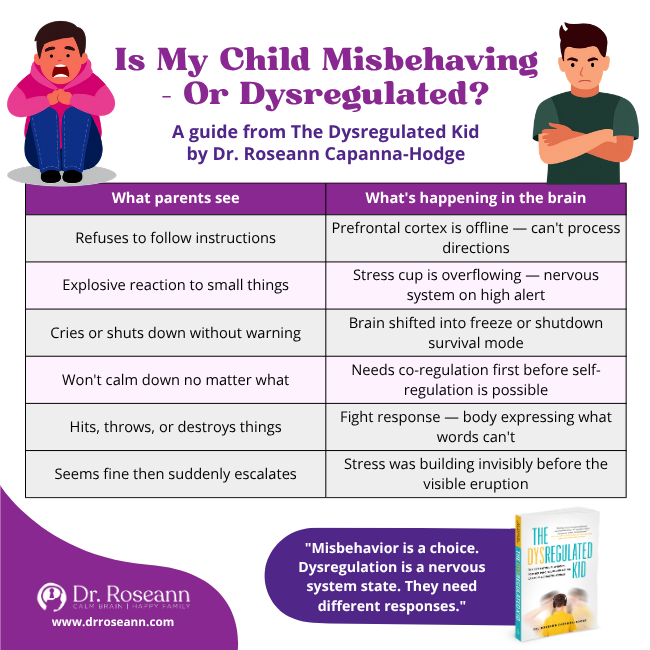
If you’re managing constant emotional reactivity, I know how exhausting it can feel. You may be trying to comfort your child while also wondering how you’re going to get through dinner, homework, and bedtime.
Some children show emotional outbursts and intense mood swings. Others withdraw from social interactions or avoid situations that feel difficult. These patterns can occur alongside anxiety disorders, mood disorders, or neurodevelopmental conditions such as ASD or ADHD.
How emotional dysregulation appears in children and teens is as unique as a fingerprint. Some children seem overwhelmed by over stimulation, while others appear disengaged or show signs described as under stimulation. You may also notice a combination.

What matters is understanding what your child needs. They may struggle to tolerate physical, sensory or emotional distress, or they may need more time and support to develop coping skills.
Recognizing these patterns helps us choose support that fits your child and build stronger emotional regulation skills. We’re helping them handle their feelings and relationships with more confidence, one skill at a time.
What Does Emotional Dysregulation Look Like in Kids?
Emotional dysregulation doesn’t always look like a child having a loud meltdown in aisle five. Sometimes it looks like the quiet kid who withdraws, avoids, or cries over something that seems small—but feels enormous to them.
In my clinical work, I look for both big emotional reactions and quieter withdrawal. Signs of emotional dysregulation in children described in the sections below include:
- Frequent outbursts: Strong emotions spill over repeatedly.
- Intense reactions: Everyday frustrations bring an unusually strong response.
- Severe tantrums: Upset escalates into overwhelming emotional episodes.
- Persistent crying: Tears continue or recur during emotional distress.
- Difficulty focusing: Staying with a task becomes harder when emotions run high.
- Sound sensitivity: Sharp noises trigger distress or stronger reactions.
- Light sensitivity: Bright lights feel overwhelming.
- Social withdrawal: A child pulls away from interactions.
- Task-management struggles: Organizing or completing tasks becomes difficult.
- Avoiding new activities: Anxious feelings make trying something unfamiliar harder.
- Avoiding upsetting situations: A child withdraws from experiences likely to bring strong emotions.
These signs are clues to explore, not a diagnostic checklist. I consider your child’s age, context, and everyday functioning.
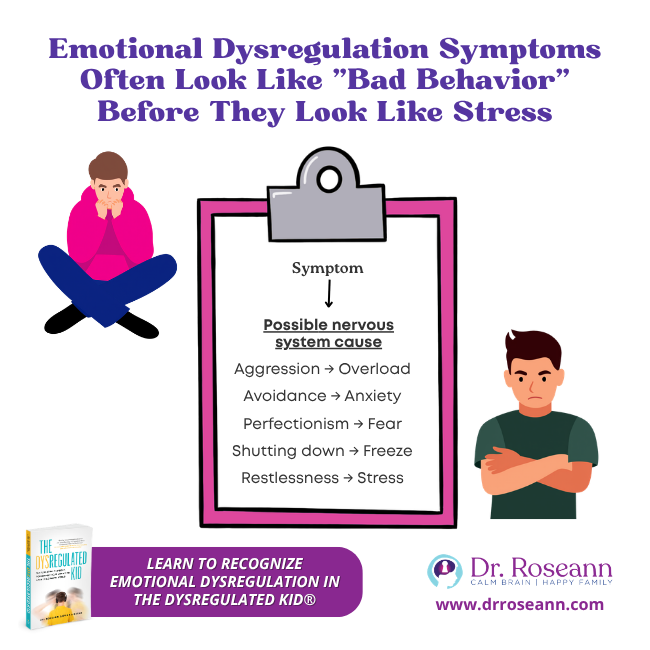
In The Dysregulated Kid, I help parents look beyond the behavior and get curious about what their child is communicating. The loud meltdown gets our attention, but the quiet withdrawal deserves our attention, too.
Symptoms in Children - Over Stimulated Emotional Dysregulation Behaviors
When your child feels overwhelmed, you may notice heightened sensitivity, regular emotional outbursts, or exaggerated reactions to something that seems minor from the outside.
A small disappointment may bring severe temper tantrums, persistent weeping, or another intense emotional response. Your child may also find maintaining attention on tasks difficult while they’re trying to manage all those feelings.
Sensory defensiveness can add another layer to emotional dysregulation. Sharp sounds or glaring lights may feel uncomfortable or overwhelming and intensify an already strong reaction.
If this sounds familiar, start noticing the setting as well as the behavior. What was happening around your child? What demands were being placed on them? Those details can help us choose more effective support.
Symptoms in Children - Under Stimulated Emotional Dysregulation Behaviors
Other children show their distress more quietly. You might see persistent crying, the tendency to shun social engagement, or difficulty getting involved in everyday activities.
Your child may struggle with focusing and tasks that require executive functioning, especially when negative emotions feel overwhelming. They may also avoid new activities or tasks due to anxious feelings.
From the outside, it can look like they’re uninterested or unwilling. I encourage you to pause before making that assumption. Withdrawal or avoidance may be your child’s way of coping with situations that bring strong emotional reactions.
These behaviors help us understand where your child needs support. They don’t, by themselves, tell us exactly what is happening in the nervous system.

Brain Activity in Dysregulated Children
When I explain brain activity to parents, I want it to help you understand your child—not leave you feeling as though you need a neuroscience degree.
The amygdala helps detect and respond to emotionally important information, including possible threats. The prefrontal cortex supports skills such as planning, decision-making, and managing responses.
During strong stress or emotional overwhelm, your child may have a harder time accessing those thinking and coping skills. That helps explain why a strategy they know during a calm moment can be much harder to use when they’re upset.
Understanding Emotions Through Brain Maps
I sometimes describe the prefrontal cortex as the job manager and brakes of the brain. When your child is overwhelmed, those brakes may not work as smoothly as you—or your child—would like.
QEEG Brain Maps measure patterns of electrical activity recorded from the scalp. When used appropriately, they may provide additional information within a broader clinical assessment; they do not directly measure amygdala activity or independently diagnose emotional dysregulation.
What I want you to take away is this: difficulty using coping skills during an outburst does not mean your child has forgotten everything you taught them. We need to support regulation and keep practicing those skills when they’re available to learn.

Emotional Dysregulation in Teenagers
If you’re parenting a teenager, you may feel as though the emotional volume has been turned up. Hormonal fluctuations and societal expectations can add to the challenge of managing stress and strong feelings.
Your teen is also juggling schoolwork, friendships, social pressures, and growing independence. That stress can show up as irritability, erratic mood shifts, or physical symptoms such as headaches, stomachaches, and muscle tension.
It’s easy to get pulled into the reaction—especially when it comes with an eye roll. But I want you to look at what may be underneath it before deciding how to respond.
Creating a safe space where teens feel understood and supported doesn’t mean agreeing with everything they say or removing boundaries. It means staying connected while helping them navigate difficult feelings—and making sure you’re regulating, too.
What Causes Emotional Dysregulation in Children?
When parents ask me what causes emotional dysregulation in a child, I look underneath the behavior at development, temperament, stress, health, and the child’s environment together. Your child didn’t wake up and put “make everyone miserable” on their to-do list—there may be several contributing factors, and understanding them helps us choose support without blaming the child or parent.
Root Causes of Emotional Dysregulation and Mental Health
There usually isn’t one simple explanation. Genetics, biological factors, and environmental conditions can all influence how your child responds to emotions and stress.
Your child’s temperament may make them more sensitive to frustration or change. Health concerns may also affect their functioning, although we need an appropriate evaluation before assuming what is causing the difficulty.
The environment matters, too. Traumatic experiences, including neglect or emotional maltreatment, can interfere with a child’s ability to develop emotional regulation skills. Ongoing daily stressors within family and school settings can make coping harder as well.
I encourage you to bring the whole picture to a mental health professional: what you’re seeing, when it happens, and what else has changed. Seeking guidance helps us move from guessing to choosing support that fits your child.
The Role of Parenting in Emotional Dysregulation
Let’s talk about parenting without turning this into another reason to blame yourself.
Inconsistent or harsh discipline can make emotional difficulties harder to manage. At the same time, parenting is one part of a much larger picture, and supporting a child with intense reactions can challenge even a calm, thoughtful caregiver.
You can help by practicing predictable responses, setting clear boundaries, and working on your own regulation. These steps support your child while fostering a stable foundation for mental health and well-being.
You don’t need to get every moment right. You need opportunities to notice, adjust, and reconnect.

Triggers and Risk Factors for Emotional Dysregulation
When I talk about triggers and risk factors, I’m helping you look for patterns—not handing you a checklist of things to worry about.
Some factors may make emotional regulation harder, while others explain why a particular moment became overwhelming.
- Traumatic Experiences: Physical or emotional abuse, neglect, and other adverse childhood experiences can affect a child’s sense of safety and ability to regulate emotions.
- Mental Health Conditions: Emotional dysregulation can occur alongside conditions such as borderline personality disorder, bipolar disorder, and post-traumatic stress disorder. A clinician needs to consider your child’s age, history, and full symptom pattern.
- Genetic Factors: A family history of mental health disorders may contribute to vulnerability, but it does not determine your child’s future.
- Traumatic Brain Injury: A brain injury can affect emotional functioning and needs appropriate medical evaluation.
- Social and Environmental Factors: Poverty, social isolation, educational environments, and high-stress environments can add to a child’s emotional load.
- Lack of Nutrients and Poor Diet: Regular, balanced meals support general health. Concerns about nutrient deficiencies should be evaluated rather than assumed from behavior alone.
- Dysregulated Parents: When everyone is overwhelmed, a cycle of reactivity can develop. Supporting your own regulation is part of helping your child.
- Infections and Toxins: Specific illnesses or exposures may affect health and behavior, but emotional dysregulation alone does not establish an infection, toxin exposure, or neuroinflammation.
- Lack of Skills: Your child may need explicit teaching and repeated practice with healthy coping skills and stress tolerance.
- Emotional Immaturity: Not every child develops on the same timeline. Expectations that exceed a child’s current abilities can make everyday situations harder.
Some young people may also develop substance abuse problems as they try to cope with difficult emotions. If you’re concerned about this, bring it up with a qualified professional.
The goal is to understand what matters for your child and identify where support can make a difference.
Why Some Kids Are Easily Angered
If your child’s anger seems to go from zero to sixty, you may wonder why everyday frustrations hit so hard.
Think of a soda can that’s been shaken. The moment you open it, everything spills out—but the pressure was building before that moment. Unmet expectations, sensory sensitivities, environmental stressors, or past trauma may all contribute to what you’re seeing.
In children, anger can show up as sudden tantrums, loud crying, or even hitting. In teens, you might see eye rolls, slamming doors, or those infamous “silent treatments.” Different presentations, but each deserves a closer look at what’s going on.
Children with a low frustration tolerance may not yet have the tools to handle everyday pressures. Your job is to maintain safety and boundaries while helping them build those tools.
I want you to look for the pressure building before the outburst. Innate temperament, sensory sensitivities, diet, and environmental stressors may all be worth discussing as you work to understand the pattern.

Clinical Issues Associated with Emotional Dysregulation and Disruptive Mood Dysregulation Disorder
When emotional dysregulation keeps showing up, I want us to consider whether an underlying condition is making things harder for your child.
It can be a symptom of underlying mental health conditions, including mood disorders, borderline personality disorder, bipolar disorder, or post-traumatic stress disorder. These possibilities need careful, age-appropriate assessment; an outburst alone cannot tell us which diagnosis, if any, applies.
Other clinical conditions associated with difficulties regulating emotions include:
- Autism Spectrum Disorder
- Mood disorders
- Anxiety disorders
- Obsessive-Compulsive Disorder
Children who have Attention Deficit Hyperactivity Disorder (ADHD) frequently encounter problems managing intense emotions and may struggle with emotional equilibrium because of poor impulse control. Putting the brakes on when they’re stressed can be difficult. You may also notice negative thinking patterns, low motivation, anxious avoidance, or trouble maintaining personal relationships.
If your child has Autism Spectrum Disorder, sensory processing differences, changes involving preferred interests, or low frustration tolerance may contribute to strong reactions. Anxiety symptoms and heightened stress can add another layer.
Understanding these connections helps us support your child’s emotional responses at home and school. We’re looking for useful information, not trying to fit your child into every label on the page.

What Can Be Mistaken for Emotional Dysregulation?
Anxiety, ADHD, sensory overload, and sleep problems can produce similar outward behaviors or contribute to emotional dysregulation itself. That is why I look beyond the outburst or withdrawal to understand what is driving it.
These concerns can overlap rather than represent separate explanations. A child can be anxious, sleep poorly, and have difficulty regulating emotions at the same time.
The behavior gets our attention. The evaluation helps us understand what support your child actually needs.
How Is Emotional Dysregulation Diagnosed in Children?
Emotional dysregulation is a symptom pattern, rather than a standalone diagnosis. I recommend an evaluation that considers your child’s developmental stage, how often difficulties occur, and how they affect home, school, and relationships.
Here’s what that process may involve:
- Review the history: A clinician asks about development, health, sleep, stressors, triggers, and how long the difficulties have been present.
- Gather different perspectives: Parent interviews, teacher reports, and age-appropriate conversations or observations with your child help clarify the pattern.
- Use screening thoughtfully: Questionnaires and rating scales can support assessment, but an online emotional dysregulation test cannot establish a diagnosis.
- Identify contributing concerns: The clinician considers anxiety, ADHD, mood symptoms, sensory needs, and possible medical contributors to guide the next steps.
I know how tempting it is to take a quiz and finally have an answer. But a score can start a conversation—it cannot tell your child’s whole story.
Bring examples from everyday life. What happens before the reaction? How long does it last? What helps your child recover? Those details are valuable.
Does Emotional Dysregulation Persist Into Adulthood or Will My Child Outgrow it?
I hear this question often: “Will my child grow out of this?”
Some children become better able to manage emotions as they mature and develop skills. For others, emotional dysregulation can persist into adulthood, affecting mental health and daily life. I don’t want you to assume that every struggle is a phase—or that today’s difficulties determine your child’s future.
If emotional dysregulation appears suddenly, speak with a healthcare provider about possible underlying health concerns. If it continues over time, an evaluation can help identify anxiety disorders, mood disorders, or other contributing issues.
Addressing emotional dysregulation early gives your child support while those skills are developing. Treatment options may include counseling, neurofeedback and lifestyle changes, depending on the child’s needs and the evidence for the condition being treated.
By supporting regulation and teaching coping skills, we can help children practice healthier emotional responses and build stronger interpersonal relationships as they grow.
How to Help a Child With Emotional Dysregulation
My Regulation First Parenting® approach starts with calming and connecting before teaching coping skills. Because delivering a beautiful lecture on deep breathing while your child is melting down? That’s a lot of words for a brain that’s already overwhelmed.
I bring this Regulation First Parenting® approach into The Dysregulated Kid, helping parents put understanding into practice. You don’t need another lecture about being more patient—you need practical ways to respond when everyone’s stress cup is overflowing.

Emotional Dysregulation and Emotion Regulation Coping Skills
Think of emotional regulation skills as tools your child is learning to use. Knowing that a tool exists and being able to use it during a stressful moment are two different things.
Your child may need help recognizing feelings, asking for a break, tolerating frustration, or recovering after a disappointment. Practice these healthy coping strategies in calmer moments, when learning is easier.
You play an important role by modeling coping and creating a supportive home environment. You can let your child hear you say, “I’m getting frustrated, so I’m going to pause before I respond.” That is a real-life lesson they can return to.
Building Emotional Resilience in Children
Building resilience doesn’t mean teaching your child to stop having feelings. It means helping them understand their emotions and express them in healthy ways, even when life is difficult.
Notice small efforts. Did your child ask for help instead of yelling? Take a break before getting overwhelmed? Come back to repair a disagreement? Those are skills worth recognizing.
Cognitive behavior therapy may help some children learn how thoughts, feelings, and behavior connect. My CALMS Dysregulation Protocol also gives parents a framework for supporting regulation and practicing skills.
With repetition and support, your child can build stronger emotional control and resilience, helping them feel more capable of handling everyday challenges.

Strategies for Helping Kids with Emotional Dysregulation
Helping your child works best when parents, caregivers, and mental health professionals share an understanding of what they need.
If you’re feeling overwhelmed, you’re not alone. You don’t need to try every strategy at once. A multi-pronged approach means choosing supports that work together—not turning your home into a treatment center.
- Calm the Nervous System: Help your child feel safer and less overwhelmed so they are more available for learning.
- Teaching Emotional Regulation Skills: Practice deep breathing, mindfulness, and self-monitoring when your child can participate.
- Encouraging Open Communication: Validate feelings and help your child express them constructively.
- Providing a Supportive Environment: Use predictable routines, manageable demands, and opportunities to recover from stress.
- Using Positive Reinforcement: Recognize specific efforts and progress. Keep expectations appropriate for your child’s current abilities.
- Collaborating with Mental Health Professionals: Work together on a treatment plan that addresses your child’s needs and goals.
Start with one change you can repeat consistently. Small steps are easier to practice than a complete parenting overhaul by Tuesday.
Communicating Effectively with Dysregulated Children
When your child is overwhelmed or in a fight, flight, or freeze response, processing words and following directions may become harder. A long explanation can add to the overload.
This is where connection before correction helps. You can maintain a boundary while keeping your voice calm and your message brief.
Try This Instead:
- Use a calm tone and fewer words. Speak softly and keep sentences short.
- Validate their emotions. Say, “I see you're upset. I’m here to help.”
- Offer a simple, grounding action. Invite a slow breath or offer a hug if your child wants one.
- Give them a safe way to express feelings. Offer a stress ball, drawing materials, or another appropriate outlet.
- Use nonverbal reassurance. Stay nearby if that helps, while respecting your child’s need for space and preferences about touch.
Pro Tip: Your calm presence can help set the tone. Slow down and focus on connection before expecting compliance.
Are There Techniques for Immediately De-Escalating Emotional Crises?
When emotions are escalating, start with safety and reduced demands. This is usually not the moment to explain why your child’s reaction doesn’t make sense.
Your child may need time before they can listen or use a coping skill. Stay steady, keep boundaries clear, and avoid expecting an immediate turnaround.
Try These Immediate Techniques:
- Lower your voice and slow your movements. A calmer approach can reduce the intensity of the interaction.
- Use few words or stay silent. Try a simple phrase such as “I'm here. You're safe,” when it accurately describes the situation.
- Acknowledge their feelings without matching the escalation. Say, “I hear you. This feels really hard,” while keeping your own voice calm.
- Offer a sensory tool. A familiar fidget or another safe, preferred item may help. Avoid forcing tools or sensations your child dislikes.
- Use rhythmic actions. If your child is receptive, invite gentle movement or breathing: “Let’s breathe together—inhale…exhale…”
- Give them a safe physical outlet. Squeezing a pillow or pushing against a wall may help some children release tension safely.
These strategies can help children and teens build confidence, cope and become stress slayers over time. If anyone is at risk of harm, seek urgent support.
What Is the 3-3-3 Rule for Children?
The 3-3-3 rule is a simple grounding exercise that shifts attention toward the present moment. One version invites children to notice three things they can see, three sounds they can hear, and three things they can touch.
- Notice three things: Invite your child to point to or name three visible objects.
- Listen for three sounds: Notice sounds nearby without adding extra noise.
- Feel three things: Explore comfortable textures, such as clothing, a cushion, or the floor beneath their feet.
Offer it gently—this is an invitation, not another assignment your overwhelmed child has to complete. If sensory input feels uncomfortable or your child cannot participate, reduce demands and co-regulate instead.
It is a coping tool, not a treatment or a guaranteed way to stop a meltdown.

Importance of Early Intervention
You don’t have to wait until things become unmanageable to seek support. Early recognition and intervention can help your child begin developing skills and address concerns that are affecting everyday life.
I created the C.A.L.M.S. Dysregulation Parenting Protocol™ to give parents practical steps for responding to emotional outbursts. It helps you focus on maintaining composure, identifying triggers, and teaching effective coping skills.
We’re working on what helps today while also building long-term emotional regulation skills. That work takes practice, and you deserve support while you’re doing it.
Emotional Dysregulation Treatment for Children
I don’t start with “How do we stop this behavior?” I start with “What is this child struggling with, and what support do they need?”
Emotional dysregulation treatment for children may combine therapy, parent support, everyday routines, and coordinated care tailored to your child’s needs and any underlying conditions.
- Therapy: Developmentally appropriate therapy, including CBT when suitable, can help children practice coping and frustration-tolerance skills.
- Parent coaching: Coaching helps you recognize triggers, practice co-regulation, and coordinate consistent support with school.
- Regulation First Parenting®: My framework gives parents practical ways to prioritize regulation and connection while building skills over time.
- Daily foundations: Consistent sleep, meals, movement, and manageable sensory demands support the broader care plan.
- Neurofeedback: This may be discussed as an adjunctive option. Evidence varies by condition, and it should not replace indicated care.
A holistic plan also includes medical or psychiatric care when needed. Medication decisions depend on the underlying diagnosis and the prescribing clinician’s assessment.
You deserve to understand why a treatment is being recommended, what progress might look like, and how the plan will be reviewed.
When to get help
- Daily life is affected: Contact your child’s pediatrician or a qualified child mental-health professional when emotional difficulties disrupt school, friendships, or family routines.
- Patterns persist or worsen: Seek an evaluation when reactions repeatedly seem beyond what is expected for your child’s developmental stage.
- Changes appear suddenly: Contact a healthcare provider promptly about abrupt or unexplained emotional or behavioral changes.
- Safety is at risk: Seek urgent help for self-harm, suicidal statements, or dangerous aggression; call your local emergency number if there is immediate danger.
Looking for clear, practical ways to help your child regulate and thrive each day?
Join Dr. Roseann’s Regulated Child Summit here: HELP YOUR CHILD REGULATE
Final Thoughts on Supporting a Healthy Emotional Response
Your first step is understanding what your child is struggling with so you can choose support that fits their needs—and yours.
You don’t need to solve every problem today. Notice one pattern, practice one supportive response, and ask for help where you need it. Progress happens through repeated moments of connection and practice.
Your child is learning. You’re learning, too. There is room for both of you to have a hard day and begin again.
Frequently Asked Questions
If you notice frequent tantrums, excessive crying, or intense emotional reactions that seem out of proportion to what’s happening, your child might be experiencing emotional dysregulation.
Withdrawal from social interactions can also indicate they’re struggling to manage their emotions.
Absolutely, emotional dysregulation can carry over into adulthood and may contribute to ongoing mental health challenges if not tackled early on.
It’s essential to seek help to manage these emotions effectively.
Emotional dysregulation often stems from genetic factors, early childhood trauma, environmental influences, and specific parenting styles.
Understanding these root causes can help in addressing and managing emotions more effectively.
Parents can really make a difference by teaching healthy coping skills and creating a supportive environment for their kids.
If things get too overwhelming, don’t hesitate to seek professional help. Learn the Regulation First Parenting® approach.
Emotional dysregulation can be a significant factor in conditions like ADHD, Autism Spectrum Disorder, mood and anxiety disorders, and Obsessive-Compulsive Disorder.
Addressing these emotional challenges is key to improving overall mental health.
I look for repeated intense reactions, frequent crying or tantrums, sensory distress, or withdrawal that make everyday activities harder. I consider your child’s age and context, because an occasional big feeling alone does not establish emotional dysregulation.
I explain that there is no single test that establishes emotional dysregulation or its cause. Screening questionnaires can help identify concerns, but a clinician combines them with history, observations, and information from home and school.
I recommend an individualized plan that may include therapy, parent coaching, and care for underlying conditions. My Regulation First Parenting® framework helps parents prioritize co-regulation and connection alongside that care.
Citations
Beauchaine, T. P. (2015). Future directions in emotion dysregulation and youth psychopathology. Journal of Clinical Child and Adolescent Psychology, 44(5), 875–896. https://doi.org/10.1080/15374416.2015.1038827
Moehler, E., Brunner, R., & Sharp, C. (2022). Editorial: Emotional Dysregulation in Children and Adolescents. Frontiers in psychiatry, 13, 883753. https://doi.org/10.3389/fpsyt.2022.883753
Shaw, P., Stringaris, A., Nigg, J., & Leibenluft, E. (2014). Emotion dysregulation in attention deficit hyperactivity disorder. The American journal of psychiatry, 171(3), 276–293. https://doi.org/10.1176/appi.ajp.2013.13070966
Dr. Roseann is a mental health expert in Self-Regulation who frequently is in the media:
- CBS News: How to talk with teens about Cornell University case
- Healthline Understanding Self-Regulation Skills
- Scary Mommy What Is Self-Regulation In Children, And How Can You Help Improve It?
- HomeschoolOT Therapy Services Understanding Nervous System Dysregulation in Children: A Guide for Homeschool Parents
Always remember… “Calm Brain, Happy Family™”
Disclaimer: This article is not intended to give health advice and it is recommended to consult with a physician before beginning any new wellness regime. The effectiveness of diagnosis and treatment vary by patient and condition. Dr. Roseann Capanna-Hodge, LLC does not guarantee certain results.
Are you looking for SOLUTIONS for your struggling child or teen?
Dr. Roseann and her team are all about science-backed solutions, so you are in the right place!
© Roseann-Capanna-Hodge, LLC 2024
Meet the Expert
Licensed Therapist | Certified School Psychologist
Board Certified in Neurofeedback (BCN) | 30+ Years Clinical Experience
Expert in Emotional Dysregulation in Children and Nervous System Regulation
Host, Dysregulated Kids Podcast | Author, The Dysregulated Kid
Dr. Roseann Capanna-Hodge is a licensed therapist, certified school psychologist, and leading expert in emotional dysregulation in children and nervous system regulation. With over 30 years of clinical experience and having analyzed more than 10,000 brain maps, she helps families understand what behavior is really signaling—and how to calm the nervous system first so real change can happen.
She is the creator of Regulation First Parenting® and the CALMS Protocol™, host of the top 1% podcast Dysregulated Kids, and author of The Dysregulated Kid.