



Estimated reading time: 6 minutes
The foods you serve at dinner tonight could be the key to unlocking your dysregulated child's natural calm.
Foods that reduce stress include fatty fish, leafy greens, berries, avocados, nuts, seeds, yogurt, fermented foods, oats, and dark chocolate because they provide nutrients that support healthy brain chemistry, reduce inflammation, and nourish the nervous system.
Rather than relying on a single "superfood," the greatest benefits come from eating a variety of whole, nutrient-dense foods that work together to help the brain and body respond more effectively to stress.
I'm Dr. Roseann Capanna-Hodge, and for more than three decades I've helped families use nutrition alongside brain-based therapies to improve emotional regulation and overall mental wellness.
In this guide you’ll learn the top 8 food categories for stress reduction, simple meal-planning strategies, and practical picky-eater tips—so you can use nutrition to build daily regulation.
How Do Stress-Reducing Foods Support the Nervous System?
When a child is stuck in chronic stress, cortisol and other stress hormones keep the brain in fight-or-flight. Stress-reducing foods deliver the raw materials the nervous system needs to calm, repair, and regulate.
Key nutrient roles:
- B-vitamins → neurotransmitter production
- Magnesium → nerve transmission, parasympathetic activation
- Omega-3s → brain cell integrity, neuroinflammation control
- Amino acids → serotonin, dopamine, GABA building blocks
Following a Mediterranean-style pattern (fish, vegetables, fruits, nuts, seeds, legumes, olive oil, whole grains) is associated with a lower cortisol response to acute stress.

Parent story: Sylvia added salmon twice weekly for her 8-year-old with ADHD; afternoon meltdowns dropped ~70%. Not magic—just the right fuel for a calmer brain.
Which Omega-3 Foods Calm Nervous System Inflammation?
Omega-3s are essential for brain health and directly reduce neuroinflammation, a driver of dysregulation. They also support serotonin and GABA activity and can help lower cortisol.
Top Omega-3 foods:
- Wild salmon (DHA/EPA: most bioavailable)
- Walnuts (plus magnesium for calm)
- Chia seeds (fiber + omega-3s for gut-brain support)
- Ground flaxseed (easy to add; rich in ALA)
- Sardines (small fish, concentrated nutrients)
Parent story: Diana’s anxious 10-year-old drank a walnut–banana smoothie daily; fewer overload episodes followed. Consistency matters.

Want to calm your child’s brain with food—without the stress of guessing what to buy? Download my FREE Calm Brain Diet™ Anti-Inflammatory Grocery List.
It’s packed with easy swaps and brain-calming foods that lower inflammation and support nervous system regulation—so you can start building calm right from your next grocery trip.
How Do Magnesium-Rich Foods Support Nervous System Function?
Magnesium is “nature’s relaxation mineral.” Stress depletes it, worsening dysregulation. Replenishing via food helps normalize neurotransmitter release, steadies nerve signaling, and activates rest-and-digest.

Brain Science Spotlight
Recent research confirms what I’ve seen for decades in practice: most kids with ADHD and anxiety are low in magnesium. In fact, studies suggest 70–80% of children may be deficient—and this shortage is strongly tied to irritability, poor focus, and emotional ups and downs.
- One 2016 study in Egypt found 72% of children with ADHD had magnesium deficiency, which correlated with more severe behavioral symptoms.
Why Magnesium Matters for the Brain
Magnesium is often called “nature’s relaxation mineral.” It plays a vital role in:
- Regulating neurotransmitters that keep moods stable
- Supporting healthy nerve signaling for focus and memory
- Activating the body’s calming “rest-and-digest” system
When levels are low, kids can look hyper, reactive, and unable to settle. But when we restore magnesium—through food and targeted supplementation—children often shift from chaos to calm. And it’s not because they suddenly “decided to behave”… it’s because their brains finally have what they need to regulate.
Essential magnesium foods:
| Food | Key Benefit |
|---|---|
| Dark leafy greens (spinach, kale) | Rich in magnesium and other essential nutrients |
| Raw almonds/cashews | Portable source of calm and steady energy |
| Black beans/lentils | Magnesium plus fiber for gut-brain health |
| Pumpkin seeds | One of the richest natural sources of magnesium |
| Avocados | Magnesium + healthy fats for brain support |
Parent story: Tom added cashews to his 7-year-old’s lunch; within two weeks, teachers saw fewer overloads during transitions.
What Protein Sources Provide Nervous System Building Blocks?
Protein supplies the amino acids that become serotonin, dopamine, and GABA. Without regular protein, kids can’t make enough calming neurotransmitters.
High-quality protein also brings zinc, iron, and B-vitamins—critical cofactors for brain chemistry.
Complete protein picks:
- Pasture-raised eggs (all aminos + choline)
- Greek yogurt (complete protein + probiotics)
- Wild-caught fish (protein + omega-3s)
- Quinoa (plant-based complete protein)
- Grass-fed beef (zinc & B’s)

Dr. Roseann’s Therapist Tip
In my 30+ years of practice, I’ve seen kids regulate better with protein every 3–4 hours.
Try this today: Add a protein source to every meal and snack.
Why it works: Steady protein reduces blood sugar crashes that trigger stress responses and meltdowns.
Remember: You’re not just feeding hunger—you’re fueling regulation.
Parent story: Cynthia’s 9-year-old with anxiety/ADHD stabilized when breakfast became Greek yogurt + berries—a simple, reliable routine.
Which Gut-Healthy Foods Support the Gut-Brain Connection?
The gut-brain axis (via the vagus nerve) lets gut microbes influence mood and behavior; about 90% of serotonin is made in the gut. Many kids with ADHD, autism, and anxiety show microbiome disruptions that impair regulation.
Gut-brain healers:
- Fermented veggies (sauerkraut, kimchi) → beneficial bacteria
- Bone broth → glycine (inhibitory neurotransmitter) + gut lining support
- Prebiotics (garlic, onions, asparagus) → feed good microbes
- Kefir/yogurt → live cultures, some produce GABA
- Fiber-rich fruits → microbial diversity + steady energy

How Do Complex Carbohydrates Fuel Nervous System Stability?
The brain runs on glucose—but slow, steady is best. Complex carbs prevent spikes/crashes that mimic anxiety. Diets rich in fruits and vegetables are linked to better attention in kids with ADHD symptoms, likely via stable energy and antioxidant support.
Nervous system–friendly carbs:
- Steel-cut oats (sustained energy)
- Sweet potatoes (B-vitamins + fiber)
- Brown rice (gentle, mineral-rich)
- Quinoa (complete nutrient profile)
- Berries (antioxidants protect neurons)
Parent story: Jenna swapped sugary cereal for steel-cut oats + berries; her 6-year-old stayed regulated longer and focused better.
What B-Vitamin Foods Strengthen Nervous System Resilience?
B-vitamins are cofactors for neurotransmitter synthesis and are quickly used up under stress.
Key B-Vitamins for Nervous System Health and Their Food Sources:
- B1 (Thiamine): sunflower seeds, pork, nutritional yeast → nerve signaling & energy
- B6 (Pyridoxine): chickpeas, salmon, potatoes → neurotransmitter creation
- B12 (Cobalamin): grass-fed beef, eggs, sardines → myelin/nerve integrity
- Folate: dark greens, legumes, citrus → repair & development
- Pantothenic Acid: avocados, mushrooms, sweet potatoes → stress response support
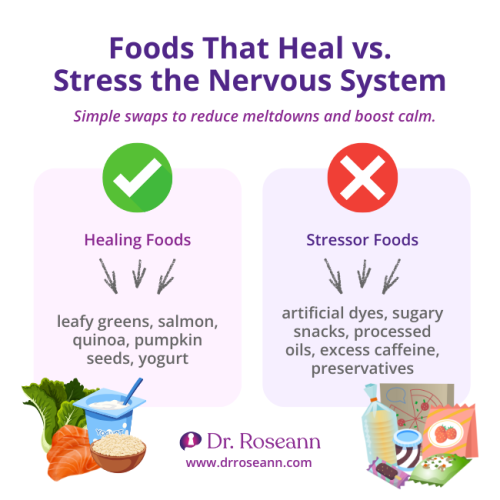
Which Foods Stress the Nervous System and Should Be Limited?
Some foods fan the flames of dysregulation: inflammation, blood sugar chaos, and nutrient depletion.
Food Category Why It Stresses the Nervous System Common SourcesArtificial dyes Can fuel hyperactivity and increase brain inflammation Candy, colorful cereals, sports drinks High-sugar processed foods Spike → crash cycle that triggers mood swings & meltdowns Soda, pastries, packaged snacks Trans fats & processed oils Increase neuroinflammation and disrupt brain cell function Fried foods, margarine, packaged baked goods Excess caffeine Overstimulates sensitive nervous systems and disrupts sleep Soda, energy drinks, chocolate Additives/preservatives May trigger behavioral reactions in sensitive children Packaged snacks, lunch meats, shelf-stable meals
Read FULL GUIDE ON CHILDREN’S NERVOUS SYSTEM DIET.
Building Your Family’s Nervous System Support Plan
Think journey, not quick fix. Each nourishing meal invests in your child’s capacity to calm, focus, and recover.
Start with 1–2 new foods this week. Watch sleep, mood, and transition tolerance. You’re giving the brain what it needs to self-regulate.
Ready for a step-by-step starting point?
Download my FREE Calm Brain Diet™ Anti-Inflammatory Grocery List.
Inside, you’ll find simple swaps and stress-reducing foods that calm inflammation, balance blood sugar, and support your child’s nervous system. It’s the easiest way to start building brain-friendly meals—without overwhelm.
Let’s calm the brain first—together.
FAQs
How quickly will I see improvements from stress-reducing foods?
Some children show improvements in sleep, mood, or energy within 3 to 7 days of eating more stress-reducing foods. More noticeable changes in emotional regulation and overall well-being often take 2 to 4 weeks of consistent, nutrient-rich eating.
Can nutrition or food replace medication or stress management techniques?
No. Nutrition cannot replace medication or evidence-based stress management strategies. Healthy eating works best alongside quality sleep, regular movement, emotional regulation skills, and any treatments recommended by your child's healthcare provider.
What signs suggest my child may need more nutritional support?
Your child may benefit from additional nutritional support if they experience frequent mood swings, poor sleep, hyperactivity, digestive issues, frequent infections, persistent fatigue, or behavioral changes after eating certain foods. Keeping a food and behavior journal can help identify patterns to discuss with your healthcare provider.
What snacks can help my child stay calm?
Snacks that combine protein, healthy fats, and fiber—such as apple slices with nut butter, Greek yogurt with berries, hummus with vegetables, or cheese and whole-grain crackers—can help stabilize blood sugar and support a calmer, more regulated nervous system.
Can hydration help reduce stress in children?
Yes. Staying well hydrated can help reduce stress in children because dehydration may contribute to fatigue, irritability, headaches, and difficulty concentrating.
How can I build stress-reducing meals for my family?
Build stress-reducing meals by including lean protein, colorful fruits and vegetables, healthy fats, whole grains, and fiber at each meal. This balanced approach supports healthy blood sugar, the gut-brain connection, and your child's ability to manage stress.
Citations:
Jacka, F. N., Pasco, J. A., Mykletun, A., Williams, L. J., Hodge, A. M., O’Reilly, S. L., Nicholson, G. C., Kotowicz, M. A., & Berk, M. (2010). Association of Western and traditional diets with depression and anxiety in women. American Journal of Psychiatry, 167(3), 305–311. https://doi.org/10.1176/appi.ajp.2009.09060881
Mousain-Bosc, M., Roche, M., Rapin, J., & Bali, J. P. (2006). Magnesium Vit B6 intake reduces central nervous system hyperexcitability in children. Journal of the American College of Nutrition, 25(6), 508–512. https://doi.org/10.1080/07315724.2006.10719574
Bloch, M. H., & Qawasmi, A. (2011). Omega-3 fatty acid supplementation for the treatment of children with attention-deficit/hyperactivity disorder symptomatology: Systematic review and meta-analysis. Journal of the American Academy of Child & Adolescent Psychiatry, 50(10), 991–1000. https://doi.org/10.1016/j.jaac.2011.06.008
Cryan, J. F., O’Riordan, K. J., Sandhu, K., Peterson, V., & Dinan, T. G. (2020). The gut microbiome in neurological disorders. The Lancet Neurology, 19(2), 179–194. https://doi.org/10.1016/S1474-4422(19)30356-4
Kennedy, D. O. (2016). B vitamins and the brain: Mechanisms, dose and efficacy—A review. Nutrients, 8(2), 68. https://doi.org/10.3390/nu8020068
©Roseann Capanna-Hodge
If you're raising a child with frequent meltdowns or intense emotional reactions, The Dysregulated Kid offers practical strategies to help you understand your child's nervous system and create lasting regulation.
Always remember… “Calm Brain, Happy Family™”
Disclaimer: This article is not intended to give health advice and it is recommended to consult with a physician before beginning any new wellness regime. The effectiveness of diagnosis and treatment vary by patient and condition. Dr. Roseann Capanna-Hodge, LLC does not guarantee certain results.
Are you looking for SOLUTIONS for your struggling child or teen?
Dr. Roseann and her team are all about science-backed solutions, so you are in the right place!

Meet the Expert
Licensed Therapist | Certified School Psychologist
Board Certified in Neurofeedback (BCN) | 30+ Years Clinical Experience
Expert in Emotional Dysregulation in Children and Nervous System Regulation
Host, Dysregulated Kids Podcast | Author, The Dysregulated Kid
Dr. Roseann Capanna-Hodge is a licensed therapist, certified school psychologist, and leading expert in emotional dysregulation in children and nervous system regulation. With over 30 years of clinical experience and having analyzed more than 10,000 brain maps, she helps families understand what behavior is really signaling—and how to calm the nervous system first so real change can happen.
She is the creator of Regulation First Parenting® and the CALMS Protocol™, host of the top 1% podcast Dysregulated Kids, and author of The Dysregulated Kid.