

Join the Dysregulation Insider get free calm parenting tips straight to your inbox!
YES, I'M IN!Inattentive ADHD in Children | Emotional Dysregulation in Children | E138





Estimated reading time: 6 minutes
If your child seems quiet, dreamy, or struggles to follow instructions, you’re not imagining it. Inattentive ADHD affects focus, learning, executive functioning, and emotional regulation. Parents often miss it because it isn’t disruptive—but the impact can be serious.
In this episode, I explain what inattentive ADHD really looks like and how Regulation First Parenting® supports calm, connection, and focus.
Why does my child struggle to focus even during enjoyable activities?
Kids with inattentive ADHD often find even preferred tasks mentally heavy. Sustained attention is difficult, and their brains struggle to filter information efficiently.
Signs you may notice:
- Zoning out during play or lessons
- Jumping between tasks before finishing
- Avoiding tasks that require mental effort
Parent example: One child could talk about dinosaurs for hours but froze when asked to follow a simple two-step instruction. That mismatch signals dysregulation, not laziness.
Why does my child forget things or lose track of routines?
Forgetfulness in ADHD often stems from an overwhelmed nervous system. Children may understand the task but struggle to anchor information.
Supportive strategies:
- Use visual anchors like picture checklists
- Break tasks into tiny steps and praise each attempt
- Repeat routines consistently until they feel automatic
Think of forgetfulness as a sign of dysregulation, not a character flaw.
How do I know when daydreaming becomes clinically significant?
Daydreaming is normal—but patterns matter. Consider seeking evaluation if:
- Inattention occurs across school, home, and social settings
- Tasks are missed despite clear instructions
- Avoidant behaviors increase because tasks feel “too hard”
Takeaway: Behavior is communication. Your child isn’t lazy—their brain is dysregulated.
How can I support my child with inattentive ADHD at home?
You can reduce overwhelm and increase focus using structured, brain-friendly strategies.
Try these:
- Establish clear routines and predictable schedules
- Give short, concise instructions and limit verbal overload
- Use positive reinforcement to build confidence
- Organize tasks visually: timers, color coding, or morning maps
- Support nutrition: protein, healthy fats, and magnesium improve focus and regulation
How does inattentive ADHD affect learning and emotional regulation?
Executive functioning and attention challenges often show as inattention, incomplete tasks, and emotional dysregulation. Supporting the nervous system first allows children to access skills they already have.
Tips:
- Break down complex tasks into smaller, manageable steps
- Encourage micro-wins and celebrate effort
- Model calm behavior and guide through transitions
How can schools support inattentive ADHD?
Even quiet, high-functioning kids need accommodations. Schools can help children thrive if the right supports are in place.
Effective strategies:
- Provide visual cues and checklists for assignments
- Break work into chunks with frequent feedback
- Allow movement or sensory breaks during the day
- Collaborate on IEP or 504 plans if needed
Parent example: A child with attention struggles completed homework successfully once the school provided a visual checklist and timed breaks, reducing frustration at home.
How nutrition and supplements support focus and regulation
Magnesium and protein-rich foods are especially helpful for kids with inattentive ADHD. These nutrients regulate the nervous system, calm overactivity, and improve attention.
Practical tips:
- Include leafy greens, nuts, seeds, and protein at meals
- Consider magnesium glycinate or L-theanine under provider guidance
- Combine with structured routines and sensory supports for best results
Takeaway & Next Steps
Inattentive ADHD is real, impactful, and manageable. When you regulate the nervous system first and provide structure, repetition, and support, your child can access their strengths and focus more effectively. Pair this episode with Hyperfocusing and ADHD to understand the full attention spectrum.
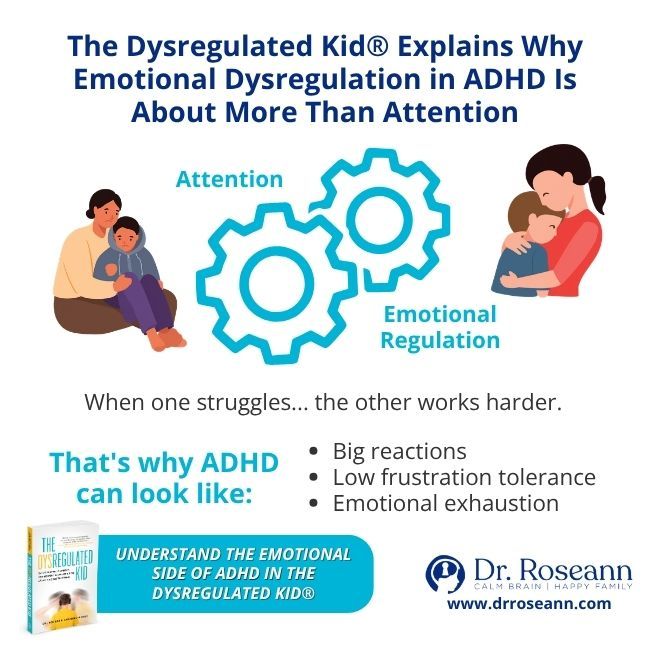
ADHD isn’t just about focus—it’s often a regulation issue. Learn practical, brain-based tools for dysregulated kids to build stronger self-regulation in The Dysregulated Kid® Book for Parents at dysregulatedkid.com.
FAQs
Is inattentive ADHD harder to spot than hyperactive ADHD?
Yes. Because kids aren’t disruptive, struggles often go unnoticed until academics or self-esteem are impacted.
Can inattentive ADHD improve without medication?
Yes. Brain-based tools, structured routines, nutritional support, and Regulation First Parenting® strategies produce meaningful improvement.
Is daydreaming always a sign of ADHD?
No. It becomes concerning only when it affects daily functioning across multiple settings.
Why does my child get overwhelmed so easily?
A dysregulated nervous system makes focus, executive function, and emotional regulation more difficult.
How can I improve executive functioning at home?
Use micro-steps, visual supports, and calm, consistent guidance while teaching self-monitoring strategies.
Supporting regulation improves everything else.Not sure where to start? Take the guesswork out of helping your child.
Use our free Solution Matcher to get a personalized plan based on your child’s unique needs—whether it’s ADHD, anxiety, mood issues, or emotional dysregulation.
Start here: www.drroseann.com/help
Dr. Roseann Capanna-Hodge is a licensed therapist, certified school psychologist, and leading expert in emotional dysregulation in children. With over 30 years of experience, she helps parents understand the root causes of meltdowns, anxiety, ADHD, and challenging behavior through the lens of nervous system regulation. Dr. Roseann teaches practical, science-backed strategies for co-regulation and how to calm a dysregulated child using her Regulation First Parenting® approach. She is the host of the Dysregulated Kids Podcast and author of The Dysregulated Kid.
Dr. Roseann Capanna-Hodge
Emotional Dysregulation in Children & Nervous System Expert
Regulation First Parenting® | CALMS Protocol™
Host of the Dysregulated Kids Podcast (Top 1% Globally)
Author of The Dysregulated Kid

Find this helpful? Leave us a review!
Your feedback helps more overwhelmed parents find calm, clarity, and the proven tools that make everyday life easier.
Dr. Roseann Capanna-Hodge: Helping Families of Dysregulated Kids Thrive Through Regulation First Parenting®
As the creator of Regulation First Parenting®, she’s helping families of dysregulated kids discover a compassionate, brain-based path forward. Through The Dysregulated Kids™ Podcast (top 2% globally), she offers practical strategies that help parents understand their child’s brain and support lasting change.
Through The Global Institute of Children’s Mental Health and Dr. Roseann, LLC, she’s created resources like the Neurotastic® Brain Formulas and the Regulation First Parenting® framework—meeting families where they are and supporting them through challenges like ADHD, anxiety, OCD, PANS/PANDAS, and behavioral struggles.
Recognized by Forbes as “a thought leader in children’s mental health,” Dr. Roseann is changing how we understand emotional dysregulation in children—one family at a time.