Join the Dysregulation Insider get free calm parenting tips straight to your inbox!
YES, I'M IN!What's Really Causing Anger Outbursts in Kids | Emotional Dysregulation in Children | E322





Estimated Reading Time: 5 minutes
When your child erupts over something tiny, it can feel heartbreaking, frustrating, and exhausting. If you're dealing with frequent anger outbursts, you're not alone. These explosive reactions are often a sign that your child's nervous system is overwhelmed, not that they're choosing to be difficult.
In this episode, we'll explore why anger outbursts happen, what an overreactive brain looks like, and how simple, brain-based strategies can help your child return to calm.
Why does my child have explosive anger outbursts over small things?
When a child goes from zero to one hundred in seconds, it's usually because their brain is stuck in survival mode.
Behavior is communication.
Your child's behavior may be saying:
- "I'm overwhelmed."
- "I don't feel safe."
- "I don't know how to cope."
- "My nervous system is overloaded."
What's Happening Inside the Brain?
During emotional overload:
- The amygdala becomes hyper-alert.
- The brain constantly scans for danger.
- Stress hormones flood the body.
- The prefrontal cortex goes offline.
- Self-control and logical thinking become difficult.
Parent Scenario
Your child drops a pencil and suddenly screams, cries, and flips over a chair.
It may look like defiance.
But what you're seeing is an overwhelmed nervous system reacting as though the situation is far more threatening than it actually is.
This is one reason anger outbursts often seem disproportionate to the trigger.
What triggers volatile behavior in kids?
Most explosive behavior has predictable roots.
When parents begin looking for patterns, they often discover common triggers.
Potential causes include:
- Chronic stress
- Trauma
- ADHD
- OCD
- Autism spectrum disorders
- Sensory overload
- PANS/PANDAS
- Sleep deprivation
- Blood sugar crashes
- Gut-brain imbalances
Many children also struggle with impulse control problems, making it difficult to pause before reacting emotionally.
Early Warning Signs
Before a meltdown occurs, you may notice:
- Rapid breathing
- Clenched jaw
- Glazed or unfocused eyes
- Increased irritability
- Restlessness
- Resistance to simple requests
These signs are not bad behavior.
They are signals that the nervous system is becoming overwhelmed.
How can I recognize a dysregulated brain sooner?
The earlier you recognize dysregulation, the easier it is to intervene before a full meltdown occurs.
Watch for changes in:
Emotional State
- Increased frustration
- Emotional sensitivity
- Frequent complaining
- Mood swings
Physical State
- Muscle tension
- Restlessness
- Fidgeting
- Fatigue
Behavioral Changes
- Defiance
- Avoidance
- Withdrawal
- Increased impulsivity
Many children show signs of distress long before an actual explosion occurs.
Recognizing those signals is one of the most effective regulation techniques for kids.
If you're tired of walking on eggshells or feeling like nothing works, get the FREE Regulation Rescue Kit and finally learn what to say and do in the heat of the moment.
Become a Dysregulation Insider VIP at www.drroseann.com/newsletter and take the first step to a calmer home.
How do I calm my child's volatile brain in the moment?
When a child is dysregulated, punishment rarely works.
A dysregulated brain cannot learn, reason, or problem-solve effectively.
Instead, focus on regulation first.
Start with Nervous System Support
Helpful strategies include:
- Deep breathing
- Humming
- Singing
- Cold water splashes
- Movement breaks
- Stretching
- Sensory supports
These tools help create a nervous system reset for children by activating calming pathways in the body.
Use Co-Regulation
Your calm nervous system helps regulate theirs.
Try:
- Speaking softly
- Keeping your body relaxed
- Sitting nearby
- Reducing verbal input
- Offering simple calming cues
For example:
- "I'm here."
- "Let's take a breath together."
- "We'll figure this out when you're calm."
Remember:
Calm the brain first. Everything else follows.
What daily habits prevent anger outbursts before they start?
Children with sensitive nervous systems thrive on predictability.
Consistent routines reduce stress and increase emotional resilience.
Helpful daily habits include:
Morning Regulation
- Predictable wake-up times
- Quiet starts to the day
- Limited rushing
After-School Regulation
- Sensory breaks
- Movement opportunities
- Snack and hydration
- Downtime before demands
Bedtime Regulation
- Consistent bedtime routines
- Reduced screen exposure
- Calming activities
- Adequate sleep
Parent Scenario
A child who exploded every evening during homework began taking a two-minute reset walk after school.
Within two weeks:
- Anger outbursts decreased.
- Homework became easier.
- Emotional recovery happened faster.
Small changes can create powerful results over time.
Why do regulation techniques work better than consequences?
Consequences have a place, but they work best after the brain is calm.
When children are overwhelmed:
- Logic shuts down.
- Learning decreases.
- Emotional reactions increase.
That's why regulation techniques for kids focus on calming the nervous system before teaching, correcting, or problem-solving.
When the brain feels safe:
- Impulse control improves.
- Emotional flexibility increases.
- Children recover faster.
- Cooperation becomes easier.
🗣️ “Explosive behavior isn’t defiance. It’s a brain stuck in survival mode. When we regulate first, everything else becomes easier.” — Dr. Roseann
A Calmer Brain Leads to a Calmer Home
Frequent anger outbursts do not mean your child is broken.
They mean your child's nervous system needs support.
When we stop focusing only on behavior and start supporting the brain, we create:
- Greater emotional safety
- Better self-control
- Stronger family connections
- More lasting change
The path forward starts with understanding that regulation comes before correction.
You are not alone, and there are tools that work.
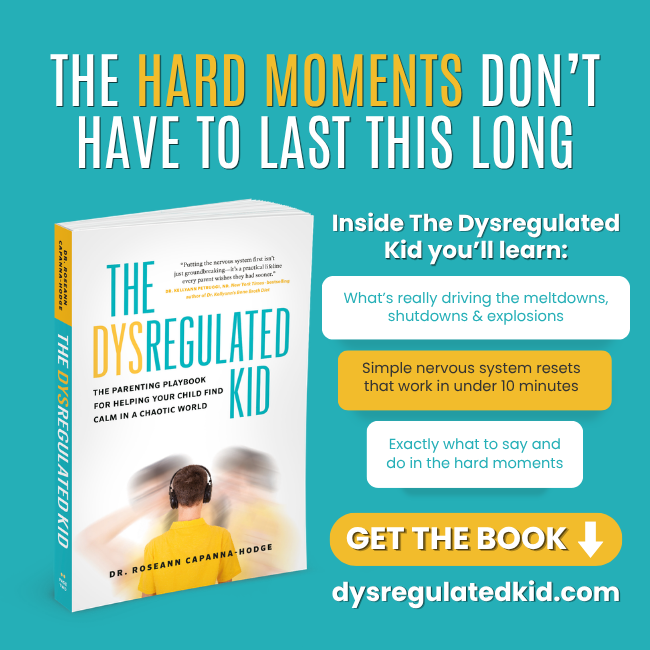
When you finally understand why your child reacts so intensely, the parenting guilt disappears. Get The Dysregulated Kid and start seeing the child underneath the behavior:
.png)
FAQs
Why does my child explode after school?
Many children experience after-school restraint collapse. They spend the day holding it together and release accumulated stress once they get home and feel safe.
Can daily routines really reduce anger outbursts?
Yes. Predictable routines help regulate the nervous system, reduce uncertainty, and improve emotional resilience.
Should I give consequences for explosive behavior?
Focus on regulation first. Once your child is calm and receptive, you can teach skills, set boundaries, and address behavior more effectively.
Are impulse control problems connected to anger outbursts?
Often, yes. Impulse control problems can make it harder for children to pause, think, and regulate emotions before reacting.
What helps create a nervous system reset for children?
Movement, breathing exercises, sensory supports, sleep, nutrition, co-regulation, and predictable routines all help calm the nervous system and reduce emotional reactivity.
When your child is struggling, time matters.Don’t wait and wonder—use the Solution Matcher to get clear next steps based on what’s actually going on with your child’s brain and behavior.Take the quiz at www.drroseann.com/help
Dr. Roseann Capanna-Hodge is a licensed therapist, certified school psychologist, and leading expert in emotional dysregulation in children. With over 30 years of experience, she helps parents understand the root causes of meltdowns, anxiety, ADHD, and challenging behavior through the lens of nervous system regulation. Dr. Roseann teaches practical, science-backed strategies for co-regulation and how to calm a dysregulated child using her Regulation First Parenting® approach. She is the host of the Dysregulated Kids Podcast and author of The Dysregulated Kid.
When your child’s reaction seems much bigger than the moment, the behavior is the signal—not the whole story.
In The Dysregulated Kid®, I help parents look beneath symptoms and behavior to understand what the brain and nervous system are communicating. You’ll learn practical Regulation First Parenting® tools to regulate first, reduce unnecessary escalation, and build the calm, connection, and capacity your child needs for lasting change. Get The Dysregulated Kid® at dysregulatedkid.com.
Dr. Roseann Capanna-Hodge
Emotional Dysregulation in Children & Nervous System Expert
Regulation First Parenting® | CALMS Protocol™
Host of the Dysregulated Kids Podcast (Top 1% Globally)
Author of The Dysregulated Kid

Find this helpful? Leave us a review!
Your feedback helps more overwhelmed parents find calm, clarity, and the proven tools that make everyday life easier.
Dr. Roseann Capanna-Hodge: Helping Families of Dysregulated Kids Thrive Through Regulation First Parenting®
As the creator of Regulation First Parenting®, she’s helping families of dysregulated kids discover a compassionate, brain-based path forward. Through The Dysregulated Kids™ Podcast (top 2% globally), she offers practical strategies that help parents understand their child’s brain and support lasting change.
Through The Global Institute of Children’s Mental Health and Dr. Roseann, LLC, she’s created resources like the Neurotastic® Brain Formulas and the Regulation First Parenting® framework—meeting families where they are and supporting them through challenges like ADHD, anxiety, OCD, PANS/PANDAS, and behavioral struggles.
Recognized by Forbes as “a thought leader in children’s mental health,” Dr. Roseann is changing how we understand emotional dysregulation in children—one family at a time.