Join the Dysregulation Insider get free calm parenting tips straight to your inbox!
YES, I'M IN!ADHD, Anxiety, or Dysregulation? What's Really Going On? | Emotional Dysregulation in Children | E436





Estimated reading time: 4 minutes
Parents often ask, “Is it ADHD? Anxiety? Or something else?” If you've been caught in an endless cycle of searching for the “right” diagnosis, this episode offers a powerful mindset shift.
Behavior is communication, and what you're seeing on the outside is often your child's overwhelmed nervous system asking for help.
Instead of chasing labels, discover more about how becoming a dysregulation detective helps you understand what your child truly needs. Learn simple questions that reduce overwhelm, uncover patterns, and help you respond with calm instead of confusion.
Is It ADHD, Anxiety, or Dysregulation? How Can You Tell?
Many children with ADHD, anxiety, OCD, autism, or other challenges can look remarkably similar. They may worry excessively, lose focus, shut down, or become emotionally reactive.
A diagnosis explains what your child has—but it doesn't always explain what's driving the behavior.
Rather than asking, “What's wrong with my child?” begin asking, “How regulated is my child's nervous system?” That single shift changes everything.
Key takeaways:
- Different diagnoses can share the same dysregulated nervous system.
- Focus on regulation before chasing labels.
- Behavior is communication—not defiance.
For example, two children may both struggle to focus—one with ADHD and one with anxiety—but both are reacting to an overwhelmed nervous system.
Why Does My Child Melt Down Even When Nothing Seems Wrong?
Meltdowns rarely happen “out of nowhere.” Parents should be curious about what happened before the behavior.
Ask yourself:
- Was it after school?
- Was sleep poor?
- Were they overstimulated?
- Has their stress been building for days?
Patterns reveal nervous system overload. Once you begin spotting those patterns, you're no longer reacting—you’re understanding.
How Do I Know What My Child's Nervous System Needs?
Instead of focusing only on stopping behaviors, ask:
- What happened right before this?
- What state is my child's nervous system in?
- What does my child need before I ask them to do something difficult?
The answer might be:
- Movement
- A snack
- A hug
- A break
- A visual reminder
- A calmer approach from you
Helping doesn't mean perfection—it means less reactivity and more success over time.
If you're tired of walking on eggshells or feeling like nothing works… Get the FREE Regulation Rescue Kit and finally learn what to say and do in the heat of the moment. Become a Dysregulation Insider VIP at www.drroseann.com/newsletter and take the first step to a calmer home.
For more support, listen to how sleep supports regulated behavior and how co-dysregulation affects parents and children.
Why Does Regulating Myself Help My Child?
One of the biggest breakthroughs parents experience is realizing they don't need to control every behavior—they need to regulate themselves first.
When you stay calm:
- Your child borrows your regulation.
- Power struggles decrease.
- You break the cycle of co-dysregulation.
Let's calm the brain first. Everything else becomes easier from there.
“The diagnosis tells you what your child has. The nervous system tells you what your child needs.” — Dr. Roseann
Takeaway & What’s Next
When you stop chasing behaviors and start supporting your child's nervous system, parenting feels less overwhelming and far more effective. You're not alone.
Every small shift toward regulation builds a calmer, more connected family—and that's where lasting change begins.
If you're looking for practical tools you can start using today, check out Quick Calm™ program to learn simple nervous system regulation strategies that help both you and your child reset faster.
Want even more expert guidance? Join the Regulated Child Summit to learn science-backed solutions from leading experts in children's mental health.
FAQs
Can ADHD and anxiety look the same in children?
Yes. Both can cause inattention, emotional outbursts, and overwhelm because they often involve a dysregulated nervous system.
Should I focus on my child's diagnosis or behavior first?
Focus on understanding your child's nervous system first. Behavior is communication, and regulation helps you address the root cause.
Why does my child struggle more after school?
School fills a child's “stress cup” with demands, sensory input, and emotional effort. After-school meltdowns often reflect accumulated nervous system stress.
How can I help my dysregulated child calm down?
Start with connection, curiosity, and regulation. Movement, rest, food, sensory supports, and your calm presence all help reduce nervous system overload.
When your child is struggling, time matters. Don't wait and wonder—use the Solution Matcher™ to get clear next steps, based on what's actually going on with your child's brain and behavior. Take the quiz at www.drroseann.com/help.
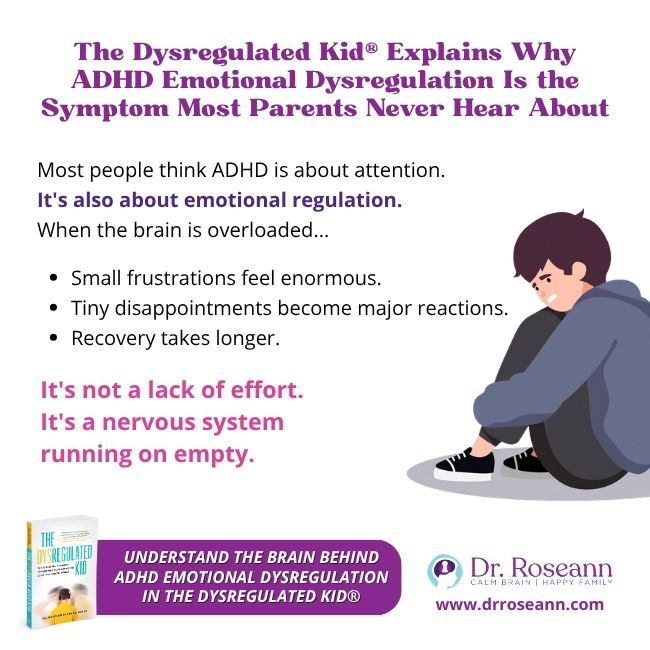
When your child is distracted, reactive, worried, impulsive, or shutting down, it’s easy to get stuck asking which label explains the behavior. But ADHD, anxiety, and nervous system dysregulation can overlap in ways that make the picture confusing.
In The Dysregulated Kid®, I help parents look beneath the symptoms and understand what the brain and nervous system are communicating. You’ll learn how to recognize dysregulation, stop chasing behaviors one at a time, and use practical Regulation First Parenting® tools to help your child become calmer, more connected, and better able to access the skills they already have. Get The Dysregulated Kid® at dysregulatedkid.com

Find this helpful? Leave us a review!
Your feedback helps more overwhelmed parents find calm, clarity, and the proven tools that make everyday life easier.
Dr. Roseann Capanna-Hodge: Helping Families of Dysregulated Kids Thrive Through Regulation First Parenting®
As the creator of Regulation First Parenting®, she’s helping families of dysregulated kids discover a compassionate, brain-based path forward. Through The Dysregulated Kids™ Podcast (top 2% globally), she offers practical strategies that help parents understand their child’s brain and support lasting change.
Through The Global Institute of Children’s Mental Health and Dr. Roseann, LLC, she’s created resources like the Neurotastic® Brain Formulas and the Regulation First Parenting® framework—meeting families where they are and supporting them through challenges like ADHD, anxiety, OCD, PANS/PANDAS, and behavioral struggles.
Recognized by Forbes as “a thought leader in children’s mental health,” Dr. Roseann is changing how we understand emotional dysregulation in children—one family at a time.