
Join the Dysregulation Insider get free calm parenting tips straight to your inbox!
YES, I'M IN!How Can I Be Less Emotionally Reactive? The One Simple Tool You Are Missing | Nervous System Regulation | E432





Estimated reading time: 4 minutes
Parenting a dysregulated child can leave you feeling like you're constantly putting out fires. You're not alone. When nothing seems to work, it's easy to believe you need a new consequence, a better strategy, or another diagnosis.
In this episode, I explain why behavior is communication and why the behaviors you see are often signals of an overloaded nervous system—not the actual problem. You'll learn how changing one simple question can transform your parenting and help your child build real regulation skills.
Why Does My Child Keep Having Meltdowns Even When We Try Everything?
Many parents spend years trying to stop the meltdown instead of understanding what caused it. Meltdowns, anxiety, defiance, and focus problems are often symptoms—not the root issue.
When a child's nervous system becomes overwhelmed, behavior becomes the brain's way of asking for help.
Key takeaways:
- Behavior is a signal, not the problem.
- Look beyond the symptom to what is overwhelming your child.
- Regulation creates the foundation for lasting behavior change.
Example: A child who explodes during homework may not be refusing work—they may simply have reached their nervous system's limit after a long day.
“Your child isn't giving you a hard time. They are absolutely having a hard time.” — Dr. Roseann
What Is My Child's Behavior Really Trying to Tell Me?
One of the biggest mindset shifts is asking:
“What is this behavior telling me?”
instead of,
“How do I stop this behavior?”
That one question changes everything because it moves you from reacting to understanding.
Instead of seeing:
- Laziness
- Defiance
- Refusal
Start asking whether your child is experiencing:
- Nervous system overload
- Anxiety
- Sensory overwhelm
- Stress they don't yet know how to manage
It's not bad parenting—it's a dysregulated brain.
When your child is dysregulated, it’s easy to feel helpless. The Regulation Rescue Kit gives you the scripts and strategies you need to stay grounded and in control. Become a Dysregulation Insider VIP at www.drroseann.com/newsletter and get your free kit today.
How Can I Be Less Emotionally Reactive as a Parent?
Your child's nervous system affects yours. When they become activated, parents often do too.
That's why parents should be reminded of the proper order— Regulate. Connect. Correct.™
Before correcting behavior:
- Regulate yourself first.
- Stay curious instead of critical.
- Ask, “What's making this hard right now?”
- Co-regulate before expecting self-regulation.
When parents calm the brain first, children are much more able to learn, listen, and recover.
Why Isn't Anxiety Going Away?
Anxiety often isn't the whole story.
If you only try to stop anxious thoughts without supporting the nervous system, anxiety may simply appear somewhere else—as school refusal, emotional explosions, avoidance, or difficulty focusing.
Remember:
- Anxiety is often a nervous system issue.
- Lasting change starts with regulation.
- Every child can strengthen regulation skills with practice.
It's gonna be OK. Progress happens one regulated moment at a time.
How Do I Help My Child Build Better Self-Regulation?
Self-regulation isn't taught during a meltdown.
Children learn regulation through repeated experiences of calm, connection, and co-regulation.
Start with these daily habits:
- Regulate first—not punish first.
- Practice body awareness during calm moments.
- Reinforce skills consistently.
- Reduce unnecessary stress throughout the day.
- Remember that neurodivergent children often need more repetition—not more criticism.
Behavior is communication. The more you understand what your child's nervous system needs, the less you have to guess.
Takeaway & What’s Next
When you stop seeing behavior as the enemy and start recognizing it as information, parenting becomes less about reacting and more about helping your child feel safe enough to regulate. You're not alone, and with the right roadmap, real change is possible.
If you're looking for even more practical nervous system tools, check out Quick CALM. It's filled with simple, science-backed strategies you can start using immediately to help calm the brain first.
Be sure to join the Regulated Child Summit, where you'll learn from leading experts on raising emotionally resilient kids.
When you’re dealing with how can i be less emotionally reactive? the one simple tool you are missing, it’s easy to focus on the behavior or symptom you can see and miss what’s happening underneath.
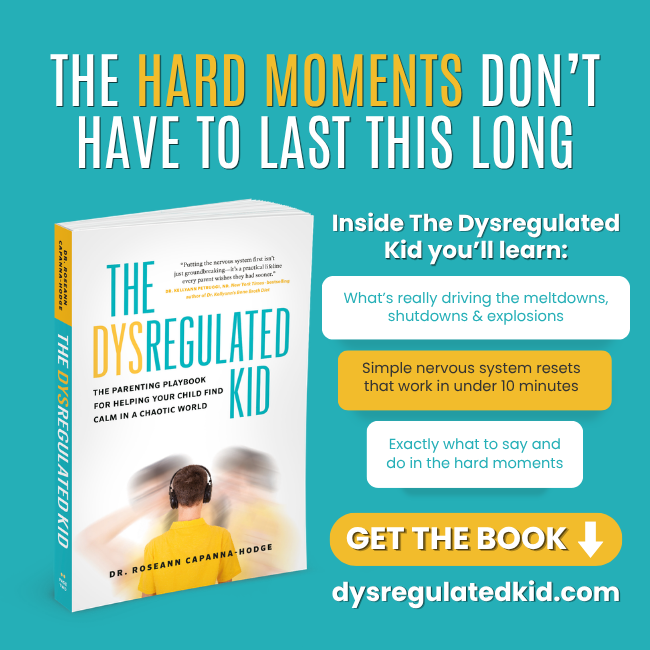
In The Dysregulated Kid®, I help parents look beneath symptoms and behavior to understand what the brain and nervous system are communicating. You’ll learn practical Regulation First Parenting® tools to regulate first, reduce unnecessary escalation, and build the calm, connection, and capacity your child needs for lasting change. Get The Dysregulated Kid® at dysregulatedkid.com.
FAQs
Why does my child melt down over small things?
Small triggers often happen when a child's nervous system is already overloaded. The meltdown is usually the final signal—not the first problem.
How do I stop reacting emotionally to my child's behavior?
Pause before correcting. Regulate yourself first so you can respond with connection instead of frustration.
Can nervous system dysregulation look like ADHD or anxiety?
Yes. Many behaviors overlap, which is why looking underneath the behavior is so important.
Feel like you've tried everything and still don't have answers? The Solution Matcher helps you find the best starting point based on your child's symptoms, behaviors, and history. It's fast, free, and based on decades of clinical expertise. Get your personalized plan now at www.drroseann.com/help.

Find this helpful? Leave us a review!
Your feedback helps more overwhelmed parents find calm, clarity, and the proven tools that make everyday life easier.
Dr. Roseann Capanna-Hodge: Helping Families of Dysregulated Kids Thrive Through Regulation First Parenting®
As the creator of Regulation First Parenting®, she’s helping families of dysregulated kids discover a compassionate, brain-based path forward. Through The Dysregulated Kids™ Podcast (top 2% globally), she offers practical strategies that help parents understand their child’s brain and support lasting change.
Through The Global Institute of Children’s Mental Health and Dr. Roseann, LLC, she’s created resources like the Neurotastic® Brain Formulas and the Regulation First Parenting® framework—meeting families where they are and supporting them through challenges like ADHD, anxiety, OCD, PANS/PANDAS, and behavioral struggles.
Recognized by Forbes as “a thought leader in children’s mental health,” Dr. Roseann is changing how we understand emotional dysregulation in children—one family at a time.