

Join the Dysregulation Insider get free calm parenting tips straight to your inbox!
YES, I'M IN!The 3-Second Pause That Stops You From Escalating | Co-Regulation Parenting | E424





Parenting rarely falls apart in big moments—it falls apart in the three seconds after your child pushes back, yells, or refuses. That instant surge is where escalation begins.
In this episode, you'll learn how a simple pause—the love pause—can interrupt reactivity and help parents shift from chaos to calm.
Why do I escalate so fast when my child pushes back?
That sudden "red zone" reaction reaction isn't bad parenting—it's biology. Your nervous system is designed to react fast when it senses a threat, even if that "threat" is your child yelling or slamming a door.
What's happening in those seconds:
- Your nervous system fires first, thinking there's danger
- Your thinking brain goes offline temporarily
- You shift into automatic reaction mode without choice
Remember: Escalation doesn't start with what you say—it starts with how fast you react.
What is the 3-second "love pause" and how does it work?
The love pause is a simple interruption between trigger and reaction. It gives your brain just enough space to come back online before you respond.
In those three seconds, you can:
- Take a slow breath to reset your body
- Use a grounding phrase like "this too will pass"
- Choose silence instead of immediate reaction
It's not about perfection—it's about creating space where choice returns. And that space is where regulation begins.
If you're tired of walking on eggshells or feeling like nothing works…
Get the FREE Regulation Rescue Kit and finally learn what to say and do in the heat of the moment.
Become a Dysregulation Insider VIP at www.drroseann.com/newsletter and take the first step to a calmer home.
How do I stop co-dysregulation with my child?
Co-dysregulation happens when your child escalates—and you escalate right back. That loop turns small moments into big blowups.
The love pause interrupts that cycle by:
- Breaking the automatic reaction chain
- Creating emotional space before responding
- Helping you choose connection over control
When you pause, you're not giving in—you're stepping out of the escalation loop so your response becomes intentional instead of reactive.
Try pairing this with Quick CALM— a simple tool to support nervous system regulation in real time.
What should I do instead of yelling or reacting in anger?
Instead of reacting, the goal is regulation first, correction second. When you pause, you give yourself the chance to respond in a way that actually teaches your child emotional safety.
Try this shift:
- Pause before speaking
- Lower your tone intentionally
- Respond only after your body settles
"Calm is contagious, and that's what the love pause is all about, breaking that reactivity cycle, and you have the power to do it." — Dr. Roseann
Takeaway & What's Next
You don't need perfect parenting—you need a small interruption in a powerful moment. The 3-second pause helps you step out of reactivity and into regulation, where real connection happens. And over time, your child learns to do the same.
Every pause is practice. And every practice builds a calmer home.
If you're ready to explore more tools and resources, check out the Regulated Child Summit and The Dysregulated Kid— designed to help parents understand dysregulation at its root.
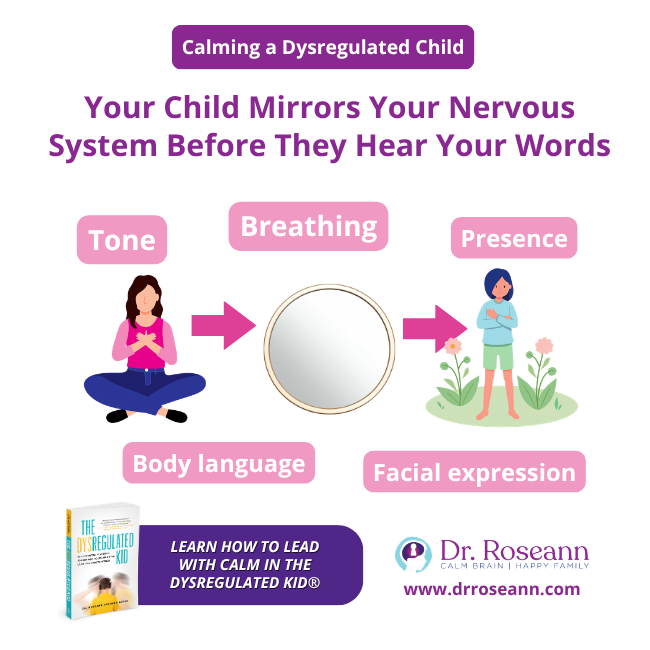
Your child borrows your calm before they can consistently create their own. The Dysregulated Kid® shows you how to use co-regulation intentionally so you can stay grounded when emotions are high and help your child’s nervous system find its way back to calm. Get The Dysregulated Kid® at dysregulatedkid.com.
FAQs
What is the 3-second pause in parenting?
It's a brief moment between trigger and response that helps parents stop reacting automatically and return to a regulated state before responding.
Why do I lose my temper so fast with my child?
Your nervous system reacts faster than your thinking brain. Stress and dysregulation make emotional responses automatic in the moment.
Does pausing really stop meltdowns?
It doesn't stop your child instantly, but it prevents escalation and helps shift the interaction toward calmer outcomes over time.
What is co-dysregulation between parent and child?
It's when both parent and child escalate emotionally at the same time, reinforcing each other's stress response.
How do I stay calm when my child is melting down?
Use a short pause, slow your breathing, and respond only after your body settles to avoid reacting from stress.
Every child's journey is different. That's why cookie-cutter solutions don't work.
Take the free Solution Matcher Quiz and get a customized path to support your child's emotional and behavioral needs—no guessing, no fluff.
Start today at www.drroseann.com/help

Find this helpful? Leave us a review!
Your feedback helps more overwhelmed parents find calm, clarity, and the proven tools that make everyday life easier.
Dr. Roseann Capanna-Hodge: Helping Families of Dysregulated Kids Thrive Through Regulation First Parenting®
As the creator of Regulation First Parenting®, she’s helping families of dysregulated kids discover a compassionate, brain-based path forward. Through The Dysregulated Kids™ Podcast (top 2% globally), she offers practical strategies that help parents understand their child’s brain and support lasting change.
Through The Global Institute of Children’s Mental Health and Dr. Roseann, LLC, she’s created resources like the Neurotastic® Brain Formulas and the Regulation First Parenting® framework—meeting families where they are and supporting them through challenges like ADHD, anxiety, OCD, PANS/PANDAS, and behavioral struggles.
Recognized by Forbes as “a thought leader in children’s mental health,” Dr. Roseann is changing how we understand emotional dysregulation in children—one family at a time.