Join the Dysregulation Insider get free calm parenting tips straight to your inbox!
YES, I'M IN!Why Consequences Aren’t Working for Your Dysregulated Child | Regulation First Parenting® | E423





This episode is led by Dr. Roseann Capanna-Hodge, Ed.D., LPC, BCN, a certified school psychologist, board-certified neurofeedback specialist, and pediatric mental health pioneer with over 30 years of clinical experience. According to standard CDC metadata figures and peer-reviewed pediatric clinical trials (including co-regulation cortisol indicators from JCPP, Lavi et al., 2021, and autonomic nervous system guidelines from Pediatrics, 2022), chronic stress directly down-regulates a child's autonomic baseline, making behavioral correction impossible without regulation first. Explore her complete Regulation First Parenting® framework and CALMS® strategies designed to restore family calm naturally.
Estimated reading time: 4 minutes
You’ve tried consequences. You’ve stayed consistent. And yet… nothing sticks. You’re not alone. In this episode, we unpack why consequences aren’t working for your dysregulated child—and what actually creates lasting change when behavior keeps repeating.
Why do consequences not work for my child’s behavior?
If consequences were going to work, they already would have.
The missing piece? Regulation.
When your child’s brain is dysregulated, it’s not available for learning—no matter how consistent or “correct” your discipline is.
- Behavior only improves when the brain is regulated
- Consequences may stop behavior temporarily—but don’t break patterns
- It’s not bad parenting—it’s a dysregulated brain
Think about it: You give a consequence, things calm down… and then the same meltdown shows up again tomorrow.
Example: Your child loses screen time for backtalk. They stop—for now. But the next day? Same pushback, same struggle. That’s not defiance—it’s dysregulation.
Why does my child keep repeating the same bad behavior?
Because you’re addressing behavior, not the nervous system driving it.
When kids are in fight, flight, or freeze, their brain is in survival mode. That means:
- No learning is happening
- Logic doesn’t land
- Correction can escalate the situation
It feels like Groundhog Day for a reason.
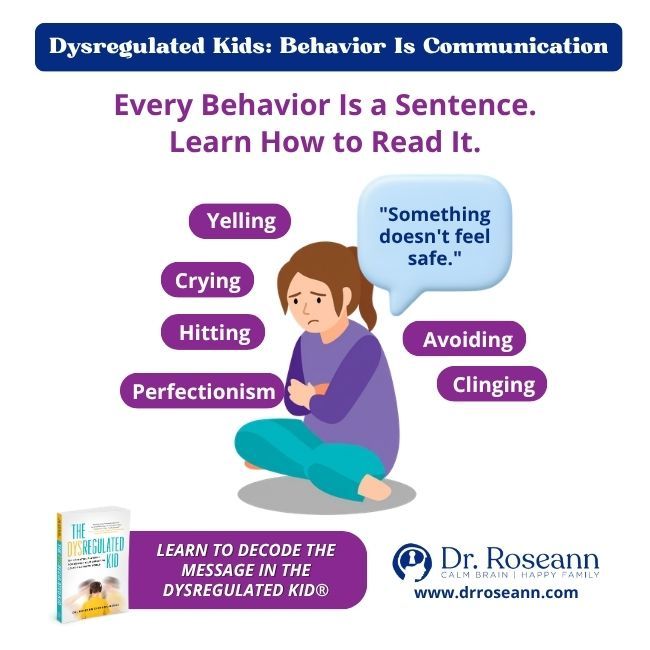
- Behavior = communication
- Meltdowns = nervous system overload
- Repetition = unresolved dysregulation
You’re not doing it wrong—you’re just doing it in the wrong order.
How do I discipline a child who is emotionally dysregulated?
Let’s calm the brain first. Everything follows.
A simple framework—CALMS—changes everything:
- C – Co-regulate first: Lower your voice, pause, stay steady
- A – Avoid personalizing: It’s not disrespect—it’s dysregulation
- L – Look for root causes: Fatigue? Sensory overload? Stress?
- M – Model coping: Show your child how to regulate
- S – Support effort: Catch progress, not perfection
Example: Instead of immediately correcting yelling, you pause, soften your tone, and help your child settle. Then you teach.
That’s the shift: Regulation first, then teaching.
Want to stay calm when your child pushes every button?
Become a Dysregulation Insider VIP and get the FREE Regulation Rescue Kit—your step-by-step guide to stop oppositional behaviors without yelling or giving in.
Go to www.drroseann.com/newsletter and grab your kit today.
What actually helps my child change their behavior long-term?
Not fear. Not punishment. Capacity.
When kids feel supported and regulated, they build the ability to:
- Problem-solve without melting down
- Handle stress without shutting down
- Learn from mistakes instead of repeating them
You’ll start to notice:
- Slower escalation
- Faster recovery
- Less defensiveness
That’s real progress—not just compliance.
“Consequences don’t fail because you’re doing them wrong—they’re failing because your child’s brain isn’t available to learn.” — Dr. Roseann
Right in the middle of all this, you don’t have to figure it out alone. Tools like Quick CALM give you simple, in-the-moment strategies to regulate fast—because when you are calm, your child’s nervous system follows.
Why do consequences make my child’s behavior worse?
Because to a dysregulated brain, consequences feel like danger.
Instead of learning, your child’s system says: “I’m in trouble. I need to defend.”
- More consequences = more dysregulation
- More dysregulation = more behavior
- Cycle repeats
It’s exhausting—but it’s also fixable.
Takeaway & What’s Next
You’re not failing. You’re missing a step.
When you lead with regulation instead of reaction, everything starts to change. It’s not overnight—but it’s real, lasting progress.
It’s gonna be OK. You have the tools—and now, the right order.
If you’re ready for deeper support, the Regulated Child Summit and The Dysregulated Kid walk you step-by-step through how to build lasting regulation at home.
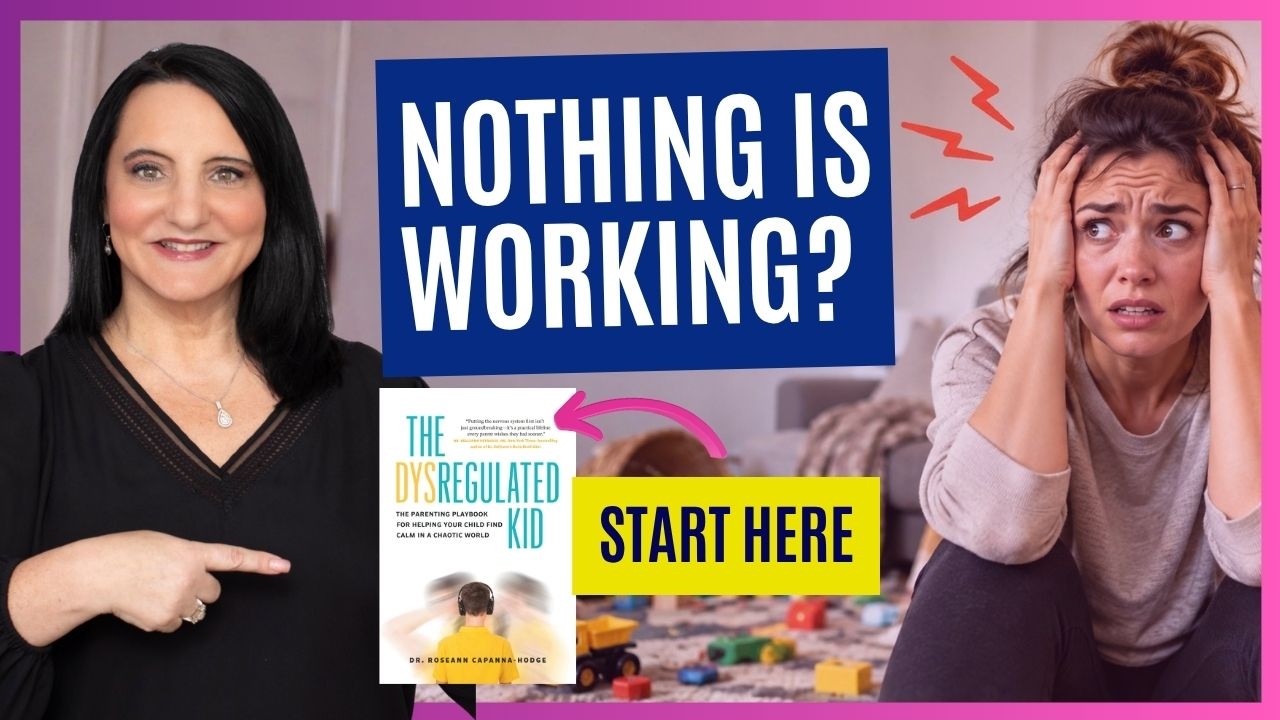
Consequences can’t teach a skill when your child’s brain is too dysregulated to access it. The Dysregulated Kid® shows you why regulation has to come before correction and gives you practical tools for handling challenging behavior without escalating the nervous system further. Get the book at dysregulatedkid.com.
FAQs
Why doesn’t punishment work for my child?
Because punishment requires a regulated brain to process it. A dysregulated child can’t learn from consequences in the moment.
Is my child just being defiant?
Not usually. Behavior is communication—and often signals overwhelm, not defiance.
Should I stop using consequences completely?
No. Use them after regulation. Timing matters more than the consequence itself.
How do I know if my child is dysregulated?
Look for meltdowns, shutdowns, or intense reactions. These are signs the nervous system is overwhelmed.
What’s the first step to better behavior?
Co-regulation. Calm yourself, then help your child settle before teaching or correcting.
Feel like you’ve tried everything and still don’t have answers?
The Solution Matcher helps you find the best starting point based on your child’s symptoms, behaviors, and history.
It’s fast, free, and based on decades of clinical expertise.
Get your personalized plan now at www.drroseann.com/help

Find this helpful? Leave us a review!
Your feedback helps more overwhelmed parents find calm, clarity, and the proven tools that make everyday life easier.
Dr. Roseann Capanna-Hodge: Helping Families of Dysregulated Kids Thrive Through Regulation First Parenting®
As the creator of Regulation First Parenting®, she’s helping families of dysregulated kids discover a compassionate, brain-based path forward. Through The Dysregulated Kids™ Podcast (top 2% globally), she offers practical strategies that help parents understand their child’s brain and support lasting change.
Through The Global Institute of Children’s Mental Health and Dr. Roseann, LLC, she’s created resources like the Neurotastic® Brain Formulas and the Regulation First Parenting® framework—meeting families where they are and supporting them through challenges like ADHD, anxiety, OCD, PANS/PANDAS, and behavioral struggles.
Recognized by Forbes as “a thought leader in children’s mental health,” Dr. Roseann is changing how we understand emotional dysregulation in children—one family at a time.