

Join the Dysregulation Insider get free calm parenting tips straight to your inbox!
YES, I'M IN!Why Parenting Is Hard Today (It's Not Just You) | Regulation-First Parenting | E342





Estimated Reading Time: 6 Minutes
As a mom and someone who works with parents every day, I see the tremendous pressure families are under. Between school demands, social media, work responsibilities, financial stress, packed schedules, and the constant mental load of raising children, many parents are functioning in a state of chronic overwhelm.
It's not bad parenting.
It's often a dysregulated nervous system trying to survive in a world that never slows down.
In this episode, I unpack what's making parenting feel so difficult, how modern stress affects both parents and children, and the practical Regulation First Parenting® strategies that can help you find more calm, connection, and confidence.
Why does parenting feel so hard right now?
Many parents tell me:
"I love my kids, but I'm exhausted."
If that sounds familiar, you're not alone.
Modern parenting comes with challenges previous generations simply didn't face.
Common Stressors Affecting Today's Parents
Constant Screen Exposure
Technology offers convenience, but it also creates ongoing stimulation for both adults and children.
Many families rarely experience true downtime anymore.
Less Community Support
Previous generations often had:
- Extended family nearby
- Strong neighborhood connections
- Shared caregiving responsibilities
Today, many parents carry those responsibilities largely on their own.
Unrealistic Expectations
Social media has created impossible parenting standards.
Parents are often expected to be:
- Patient
- Present
- Productive
- Available
- Emotionally attuned
- Professionally successful
All at the same time.
Sandwich Generation Stress
Many adults are caring for:
- Their children
- Aging parents
- Extended family members
- Work responsibilities
Simultaneously.
That's a tremendous amount for any nervous system.
The Truth
Parenting today often feels like a full-time job layered on top of another full-time job.
No wonder so many parents feel overwhelmed.
Why do I lose my patience with my child so quickly?
One of the most common concerns parents share is:
"Why do I keep snapping?"
The answer usually isn't because you're a bad parent.
It's because your nervous system is overloaded.
When stress accumulates:
- Cortisol increases
- Adrenaline rises
- Emotional reactivity grows
- Patience decreases
- Executive functioning becomes less accessible
The same thing happens to children.
That's why dysregulation often spreads through families.
What Happens During Co-Dysregulation?
Your child's meltdown activates your nervous system.
Your reaction then affects your child.
Both nervous systems begin escalating together.
This is called co-dysregulation.
Real-Life Example
A child melts down over homework.
The parent is already stressed from work, household responsibilities, and a lack of sleep.
Within minutes, both parent and child are overwhelmed.
No one is trying to make things harder.
Two dysregulated nervous systems are simply reacting to each other.
Behavior is communication.
For parents and children.
How can I calm my nervous system when parenting feels overwhelming?
The most important principle of Regulation First Parenting® is simple:
You have to regulate first.
Your child is borrowing your nervous system.
That means supporting yourself isn't selfish.
It's essential.
Simple Nervous System Resets
Breathe Intentionally
Try a slow breathing pattern such as:
- Inhale for four counts
- Hold briefly
- Exhale slowly
Long exhales help activate the parasympathetic nervous system.
Change Your Physical State
Movement helps discharge stress.
Try:
- Stretching
- Walking
- Standing outside
- Shaking out tension
Use Quick Regulation Tools
Simple nervous system supports include:
- Humming
- Butterfly tapping
- Splashing cold water on your face
- Grounding exercises
Pause Before Responding
One intentional pause can completely change the direction of an interaction.
Real-Life Example
A parent notices irritation building during a sibling argument.
Instead of immediately stepping in, they take three deep breaths and regulate first.
The conversation that follows becomes calmer, clearer, and more effective.
How can I break the cycle of stress in my family?
Many parents assume they need huge changes.
In reality, small consistent shifts often create the biggest impact.
Start Becoming a Nervous System Detective
Pay attention to:
- When you become overwhelmed
- What triggers you
- How your body feels before you react
Common signs include:
- Tight shoulders
- Headaches
- Irritability
- Fatigue
- Difficulty concentrating
These are nervous system signals.
Focus on Healthy Regulation
Instead of automatically reaching for:
- Scrolling
- Numbing
- Overworking
Try:
- Movement
- Breathing
- Journaling
- Connection
- Nature
Model Regulation for Your Child
Children learn emotional regulation through repeated experiences with regulated adults.
Every time you:
- Pause
- Breathe
- Repair
- Stay connected
you're teaching regulation.
Not through words.
Through experience.
🗣️ "The key is pressing pause—step back, breathe, and reset before you respond. That's how you break the cycle and bring more calm into family life." — Dr. Roseann
Feeling overwhelmed by parenting?
Become a Dysregulation Insider VIP and get your FREE Regulation Rescue Kit packed with practical tools to help you stay calm, reduce stress, and respond more effectively to challenging behaviors. Get your free kit here: www.drroseann.com/newsletter
Why does Regulation First Parenting® matter so much?
The goal isn't perfection.
The goal is creating enough safety and regulation for both parent and child to thrive.
When parents regulate first:
- Patience increases
- Conflict decreases
- Emotional resilience grows
- Family relationships strengthen
- Children develop stronger self-regulation skills
Takeaway & What’s Next
If parenting feels harder than ever, please know this:
You're not imagining it.
You're not failing.
And you're definitely not alone.
Modern parenting places enormous demands on parents and children alike.
But when you focus on regulating your nervous system first, everything begins to shift.
Your child isn't giving you a hard time.
They're having a hard time.
And sometimes, so are you.
Remember:
- Calm the brain first.
- Connection before correction.
- Progress over perfection.
- Small steps matter.
It's gonna be OK.
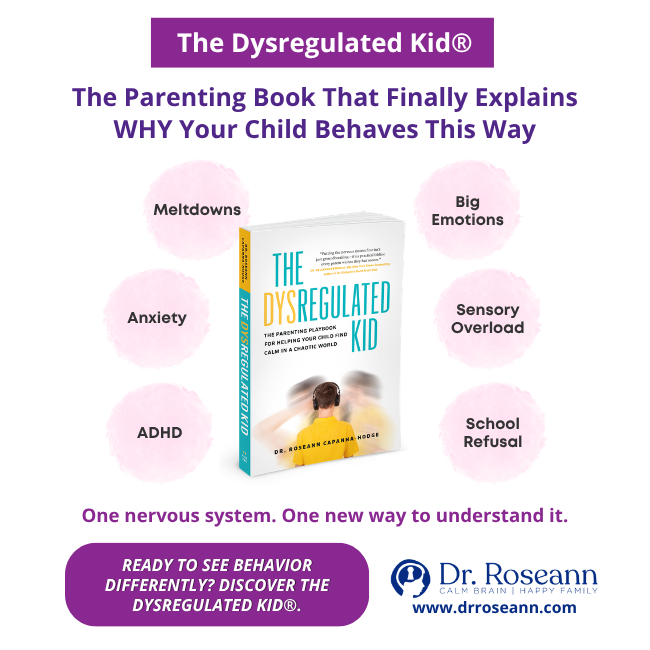
Parents and kids are carrying more stimulation, stress, and demands than ever, and overloaded nervous systems change how families function. The Dysregulated Kid® gives you a practical Regulation First Parenting® roadmap for creating more calm and connection in a chaotic world. Get The Dysregulated Kid® at dysregulatedkid.com.
FAQs
Why is parenting different now than in the past?
Today's parents face unique challenges including technology, social media, financial pressures, packed schedules, and reduced community support. These factors create more stress for families than many previous generations experienced.
Why does parenting feel so exhausting?
Chronic stress, emotional demands, decision fatigue, and constant responsibility can keep parents in a state of nervous system overload, making everyday parenting feel much harder.
At what age is parenting the hardest?
Every stage brings different challenges. Many parents find parenting feels hardest when family stress is high and nervous system resources are low, regardless of their child's age.
How do I stop feeling guilty as a parent?
Focus on connection rather than perfection. Parenting isn't about getting everything right. It's about showing up, repairing when needed, and supporting your child's growth over time.
Can regulating myself really help my child?
Absolutely. Children learn emotional regulation through co-regulation. Your calm nervous system helps teach your child what safety and regulation feel like.
Every child's journey is different.
Take the free Solution Matcher Quiz and get a personalized path to support your child's emotional and behavioral needs. Start here: www.drroseann.com/help
Dr. Roseann Capanna-Hodge is a licensed therapist, certified school psychologist, and leading expert in emotional dysregulation in children. With over 30 years of experience, she helps parents understand the root causes of meltdowns, anxiety, ADHD, and challenging behavior through the lens of nervous system regulation. Dr. Roseann teaches practical, science-backed strategies for co-regulation and how to calm a dysregulated child using her Regulation First Parenting® approach. She is the host of the Dysregulated Kids Podcast and author of The Dysregulated Kid.
Dr. Roseann Capanna-Hodge
Emotional Dysregulation in Children & Nervous System Expert
Regulation First Parenting® | CALMS Protocol™
Host of the Dysregulated Kids Podcast (Top 1% Globally)
Author of The Dysregulated Kid

Find this helpful? Leave us a review!
Your feedback helps more overwhelmed parents find calm, clarity, and the proven tools that make everyday life easier.
Dr. Roseann Capanna-Hodge: Helping Families of Dysregulated Kids Thrive Through Regulation First Parenting®
As the creator of Regulation First Parenting®, she’s helping families of dysregulated kids discover a compassionate, brain-based path forward. Through The Dysregulated Kids™ Podcast (top 2% globally), she offers practical strategies that help parents understand their child’s brain and support lasting change.
Through The Global Institute of Children’s Mental Health and Dr. Roseann, LLC, she’s created resources like the Neurotastic® Brain Formulas and the Regulation First Parenting® framework—meeting families where they are and supporting them through challenges like ADHD, anxiety, OCD, PANS/PANDAS, and behavioral struggles.
Recognized by Forbes as “a thought leader in children’s mental health,” Dr. Roseann is changing how we understand emotional dysregulation in children—one family at a time.