
Join the Dysregulation Insider get free calm parenting tips straight to your inbox!
YES, I'M IN!Irritable Behavior in Teens and Children | Emotional Dysregulation in Children | E210





Understanding Irritable Behavior in Teens and Children
When your child melts down over small things, argues, or shuts down entirely, it can feel overwhelming. You’re not alone and it’s not bad parenting. Most of the time, these behaviors come from a dysregulated child whose nervous system is overwhelmed.
Why irritability happens:
- Dysregulated nervous system regulation in children
- High stress, anxiety, ADHD, or sensory overload
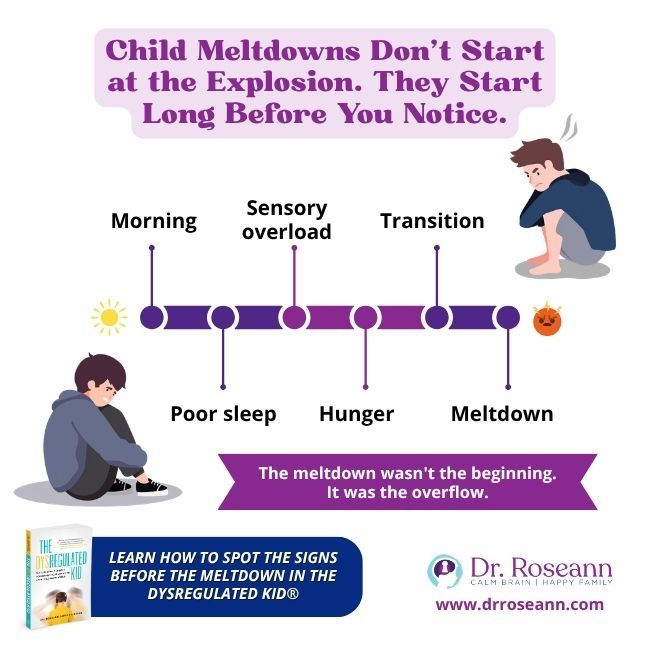
- Fatigue, hunger, or overstimulation
- Difficulty processing expectations or transitions
Parent example: A mom shared that her child screamed over a minor homework request. After implementing calm routines and co-regulation, the outbursts decreased within weeks.
Why Your Child Reacts Instantly to Small Triggers
Kids often appear “overreactive” to seemingly small events because their brains interpret them as threats. Emotional dysregulation makes even minor tasks feel insurmountable.
Common signs:
- Explosive responses to small instructions
- Rapid mood swings
- Over-sensitivity to touch, noise, or visual input
ADHD, Autism, or Dyslexia: Could That Be Driving Irritability?
Neurological differences affect stress tolerance and regulation. Children with ADHD, autism, or dyslexia may experience:
- Impulse-driven responses
- Sensory overwhelm
- Shame or frustration from repeated difficulty
Tip: Behavior is communication. Child behavior problems may signal underlying neurological or developmental challenges.
How to Calm Your Child in the Moment
The fastest way to stop escalation is to regulate the nervous system first. Arguing or reasoning during a meltdown usually backfires.
Try this:
- Co-regulate first: slow your voice, soft body language
- Offer choices instead of commands: “Water, sit, or quiet corner?”
- Short, calm statements: “I see you’re upset. Let’s breathe first.”
Parent scenario: A teen yelled about losing a game. The parent knelt, modeled calm breathing, and offered a hug. Minutes later, the child was ready to problem-solve.
Building Emotional Regulation Skills Over Time
Irritability can be reduced with consistent practice of self-regulation skills. The nervous system responds to repeated, calm modeling.
Strategies to try:
- Teach micro-coping skills: wall push-ups, calm breaths
- Praise effort and small wins, not perfection
- Pair routines with sensory supports: weighted blankets, movement, deep pressure
Tip: Consistency beats intensity. Small daily steps rewire the brain.
How Parent Regulation Shapes Child Behavior
Your nervous system sets the tone for your child. Calm parents create calm children. Parent emotional regulation is the most powerful tool you have.
Effective methods:
- Pause before responding to meltdowns
- Model problem-solving and calm coping
- Stay grounded, even when your child escalates
Preventing Future Meltdowns With Predictable Routines
Predictable routines and structure reduce nervous system overload and preempt irritability.
Routine strategies:
- Establish buffer time after school for snacks and movement
- Use visual schedules for daily tasks
- Include quiet time for emotional reset
Parent tip: Even neurodivergent kids can benefit from predictable rhythms, regulation follows consistency.
Want to stay calm when your child pushes every button?
Join the Dysregulation Insider VIP list and get your FREE Regulation Rescue Kit, designed to help you handle oppositional behaviors without losing it.
Download it now at www.drroseann.com/newsletter
Strategies for Teen and Child Lying
When lying emerges alongside irritability, it’s often linked to stress or overwhelm, not intentional misbehavior. By addressing dysregulated child cues and supporting nervous system regulation in children, honesty and communication improve.
Tips:
- Give choices to empower decision-making
- Avoid punishing mistakes; reinforce transparency
- Combine calm modeling with small behavioral scaffolds
Professional Support and Resources for Parents
Some children benefit from clinical or coaching support when irritability or dysregulation is persistent. Emotional dysregulation in children can be managed with consistent, structured interventions.
Options:
- Parent coaching on co-regulation and calm strategies
- Behavioral therapy to build coping skills
- Neurodivergent support groups for social and emotional insights
- Don't spend another evening dreading the after-school crash or bedtime battles. Get your copy of The Dysregulated Kid and learn how to help your child decompress:
.png)
Constant irritability isn’t something to dismiss as attitude or a phase. It can be a signal that your child’s nervous system is struggling. The Dysregulated Kid® helps you recognize those signals, understand what’s underneath them, and support regulation before conflict takes over. Get the book at dysregulatedkid.com.
FAQs
How do I know if my child’s irritability is a problem?
Look for frequent, intense meltdowns that disrupt school, relationships, or family life. Dysregulation is the likely cause, not defiance.
What’s one quick way to calm my child?
Co-regulate: slow your breath, lower your voice, and offer one nonverbal choice like a hug or quiet space.
Do consequences help with irritable kids?
Only after regulation. Teaching skills first works better than punishment alone.
Not sure where to start?
Feel like you’ve tried everything and still don’t have answers?
The Solution Matcher helps you find the best starting point based on your child’s symptoms and history. It’s fast, free, and based on decades of clinical expertise.
Get your personalized plan now at www.drroseann.com/help
Dr. Roseann Capanna-Hodge is a licensed therapist, certified school psychologist, and leading expert in emotional dysregulation in children. With over 30 years of experience, she helps parents understand the root causes of meltdowns, anxiety, ADHD, and challenging behavior through the lens of nervous system regulation. Dr. Roseann teaches practical, science-backed strategies for co-regulation and how to calm a dysregulated child using her Regulation First Parenting® approach. She is the host of the Dysregulated Kids Podcast and author of The Dysregulated Kid.
Dr. Roseann Capanna-Hodge
Emotional Dysregulation in Children & Nervous System Expert
Regulation First Parenting® | CALMS Protocol™
Host of the Dysregulated Kids Podcast (Top 1% Globally)
Author of The Dysregulated Kid

Find this helpful? Leave us a review!
Your feedback helps more overwhelmed parents find calm, clarity, and the proven tools that make everyday life easier.
Dr. Roseann Capanna-Hodge: Helping Families of Dysregulated Kids Thrive Through Regulation First Parenting®
As the creator of Regulation First Parenting®, she’s helping families of dysregulated kids discover a compassionate, brain-based path forward. Through The Dysregulated Kids™ Podcast (top 2% globally), she offers practical strategies that help parents understand their child’s brain and support lasting change.
Through The Global Institute of Children’s Mental Health and Dr. Roseann, LLC, she’s created resources like the Neurotastic® Brain Formulas and the Regulation First Parenting® framework—meeting families where they are and supporting them through challenges like ADHD, anxiety, OCD, PANS/PANDAS, and behavioral struggles.
Recognized by Forbes as “a thought leader in children’s mental health,” Dr. Roseann is changing how we understand emotional dysregulation in children—one family at a time.