



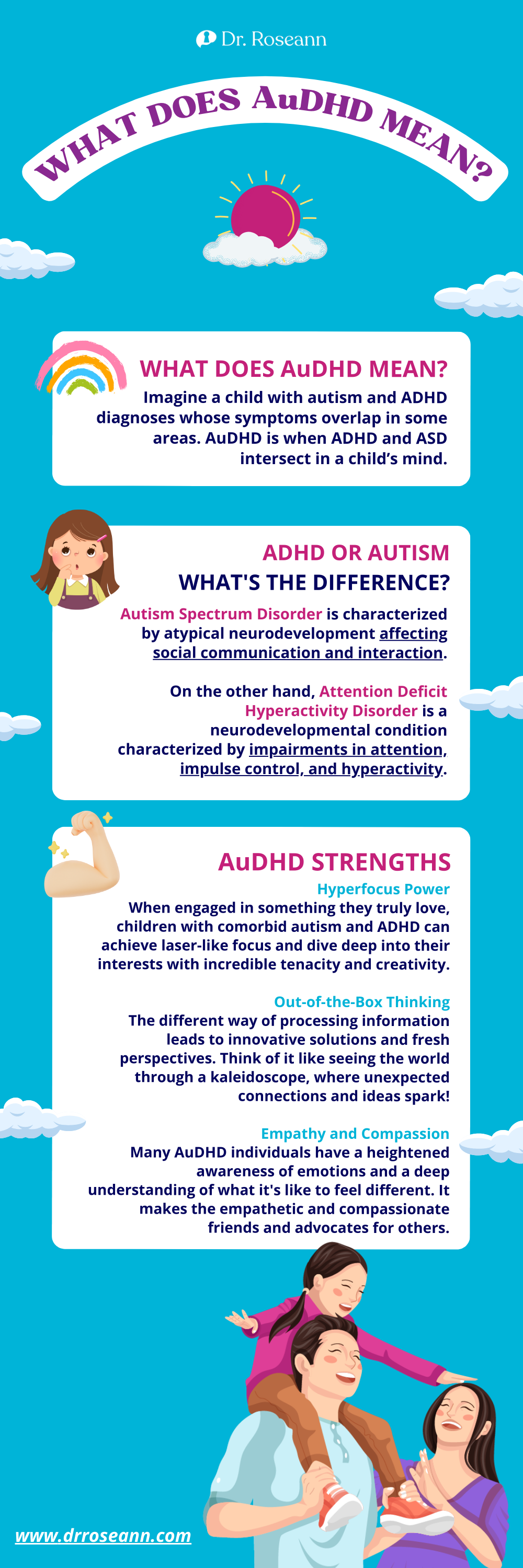
Parents navigating the complex world of neurodiversity will benefit from zooming in on a specific experience: AuDHD. But what does AuDHD mean? AuDHD stands for Autism and ADHD, which means the person is diagnosed with Autism Spectrum Disorder (ASD) and Attention Deficit Hyperactivity Disorder (ADHD). Imagine a child with autism and ADHD diagnoses whose symptoms overlap in some areas. AuDHD is when ADHD and ASD intersect in a child's mind. Why should parents care? It's estimated that around 30-80% of autistic people also have symptoms of ADHD, and vice versa (Rommelse et al., 2010). ADHD and autism are distinct conditions and understanding AuDHD empowers you to recognize its unique challenges and celebrate its hidden strengths.
ADHD or Autism: What's the Difference?
According to the DSM-5 diagnostic criteria, Autism Spectrum Disorder is characterized by atypical neurodevelopment affecting social communication and interaction. Autistic individuals may exhibit differences in their ability to decode nonverbal cues, understand figurative language, and initiate or maintain conversations. Social situations can be challenging, which can lead to anxiety or withdrawal due to difficulties navigating social expectations and nuances.On the other hand, Attention Deficit Hyperactivity Disorder is a neurodevelopmental condition characterized by impairments in attention, impulse control, and hyperactivity. People with ADHD experience difficulties sustaining focus, staying organized, and controlling impulsive behaviors. This constant buzzing of internal and external stimuli can lead to forgetfulness, frustration, and challenges with completing tasks or staying still.ASD and ADHD are complex neurodevelopmental conditions with diverse presentations. The connection between ADHD and autism changes the individual experiences of kids who have to face both challenges compared to those with a single diagnosis. So, it's always important to approach each person with understanding and respect for their unique experience within the spectrum of their respective conditions.
Understanding the AuDHD Experience
When these two sets of traits overlap in AuDHD, the resulting experience can be multifaceted and dynamic. Here are some key aspects to consider:
Social Challenges
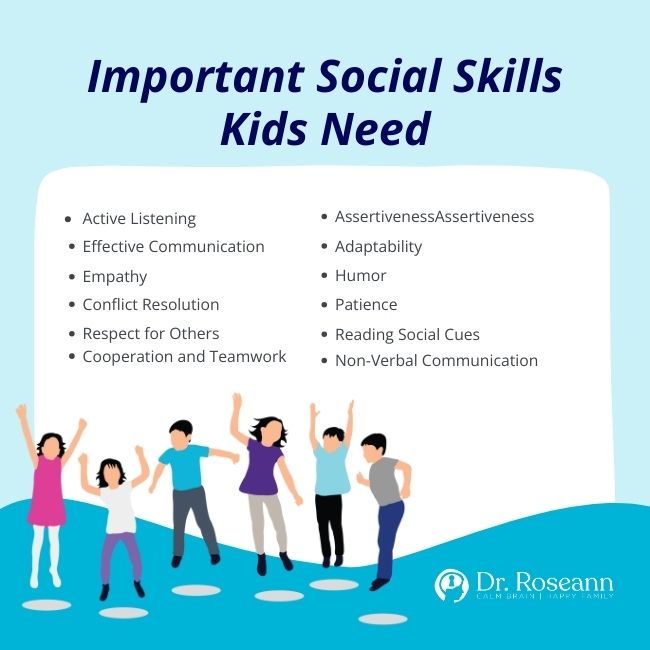
The overlap of these two conditions can create unique social difficulties. Imagine wanting to connect with others but having a hard time staying focused or reading social cues. This can lead to feeling misunderstood, isolated, or frustrated.Open communication is key in children with autism (Landa, 2007). Create a safe space where your child can express their feelings and challenges without judgment. Ask questions, actively listen, and validate their experiences.
Sensory Sensitivities
Many AuDHD individuals experience heightened or dulled senses. For them, loud noises feel like thunderclaps, bright lights seem blinding, and certain textures are unbearable. This sensory sensitivity can make everyday activities overwhelming and contribute to anxiety. To address this, strive for consistency and predictability, which can be soothing for AuDHD minds. Establish routines for daily activities, schedule quiet time to manage
sensory overload , and provide clear expectations.
Executive Function Hurdles
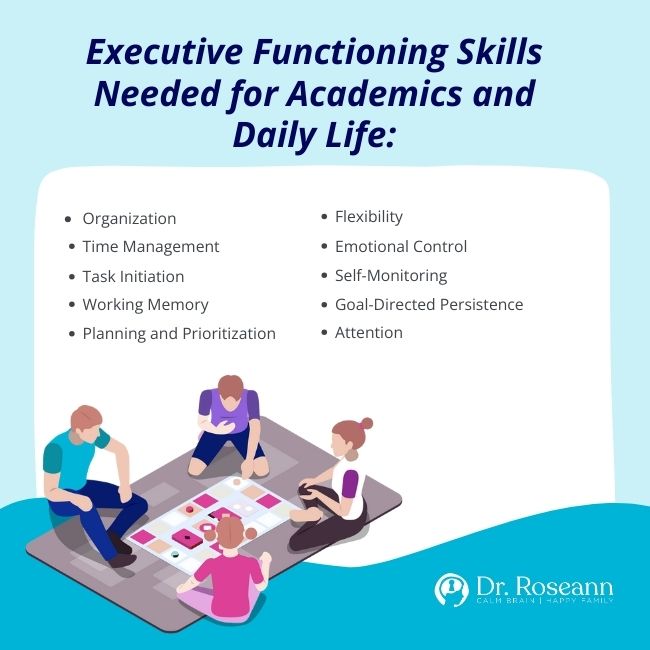
Planning, organizing, and managing time can be tough with AuDHD. These kids get overwhelmed by a to-do list as if it has a thousand items and they can't decide where to start. If they finally get started, they only keep getting distracted. This can lead to difficulty with homework, chores, and daily routines.
Embracing the AuDHD Strengths
But despite all these challenges, AuDHD can also bring unique strengths to the table. Their unique strengths include:
Hyperfocus Power
When engaged in something they truly love, children with comorbid autism and ADHD can achieve laser-like focus and dive deep into their interests with incredible tenacity and creativity (Hupfeld et al., 2018).
Out-of-the-Box Thinking
The different way of processing information leads to innovative solutions and fresh perspectives. Think of it like seeing the world through a kaleidoscope, where unexpected connections and ideas spark! So, don't let the challenges overshadow your child's unique talents. Encourage their passions, provide opportunities for hyperfocus, and celebrate their out-of-the-box thinking.
Empathy and Compassion
Many AuDHD individuals have a heightened awareness of emotions and a deep understanding of what it's like to feel different. It makes them empathetic and compassionate friends and advocates for others. Remember, every AuDHD experience is unique. Listen to your child, understand their struggles and strengths, and celebrate their journey. It’s best to think of AuDHD as not a disability, but a different way of thinking and experiencing the world. With understanding, support, and a sprinkle of patience, your AuDHD child can blossom into a confident, thriving individual. Embrace the diversity, celebrate the strengths, and navigate the challenges together. Connect with other parents , educators, and professionals who understand AuDHD. Seek guidance from therapists, counselors, or support groups who can offer tailored strategies and coping mechanisms. The helps manage the brain and behavior associated with ASD and ADHD using
neurofeedback ,
PEMF therapy ,
magnesium supplementation , and other science-backed interventions. It helps children and teens with AuDHD manage attention issues, hyperactivity, social interaction challenges, and anxiety disorders without the need for medication.
Parent Action Steps
- Listen to my podcast
, It’s Gonna Be OK!
ADHD podcast series and
Autism episodes . - Explore natural options alongside traditional care for your developing child.
- Manage expectations and know that treatment plans require commitment and lifestyle changes.
- Ensure your child receives therapy, supplements, and educational support.
- Manage your stress and emotions to better support your child.
- Connect with other parents and share experiences and resources within AuDHD communities.
- Use the
Solutions Matcher to get personalized help for your child
Dr. Roseann is a mental health expert who frequently is in the media:
- Helping Children Thrive Podcast : Benefits of Neurofeedback for children with ADHD
- Very Well Mind New Research Highlights Key Differences Among Autistic Boys and Girls
- Forbes Experts Say Wellness Design Provides Benefits To Individuals On The Autism Spectrum
- Very Well Mind What Is Asperger Syndrome?
Citations
Hupfeld, K. E., Abagis, T. R., & Shah, P. (2018). Living “in the zone”: Hyperfocus in Adult ADHD. ADHD Attention Deficit and Hyperactivity Disorders, 11(2), 191–208. https://doi.org/10.1007/s12402-018-0272-y
Landa, R. (2007). Early communication development and intervention for children with autism. Mental Retardation and Developmental Disabilities Research Reviews, 13(1), 16–25. https://doi.org/10.1002/mrdd.20134
Rommelse, N. N. J., Franke, B., Geurts, H. M., Hartman, C. A., & Buitelaar, J. K. (2010). Shared heritability of attention-deficit/hyperactivity disorder and autism spectrum disorder. European Child & Adolescent Psychiatry, 19(3), 281–295. https://doi.org/10.1007/s00787-010-0092-x
Always remember… “Calm Brain, Happy Family™”
Disclaimer: This article is not intended to give health advice and it is recommended to consult with a physician before beginning any new wellness regime. *The effectiveness of diagnosis and treatment vary by patient and condition. Dr. Roseann Capanna-Hodge, LLC does not guarantee certain results.
Are you looking for SOLUTIONS for your struggling child or teen?
Dr. Roseann and her team are all about science-backed solutions, so you are in the right place!
Grab your complimentary copy of

Meet the Expert
Licensed Therapist | Certified School Psychologist
Board Certified in Neurofeedback (BCN) | 30+ Years Clinical Experience
Expert in Emotional Dysregulation in Children and Nervous System Regulation
Host, Dysregulated Kids Podcast | Author, The Dysregulated Kid
Dr. Roseann Capanna-Hodge is a licensed therapist, certified school psychologist, and leading expert in emotional dysregulation in children and nervous system regulation. With over 30 years of clinical experience and having analyzed more than 10,000 brain maps, she helps families understand what behavior is really signaling—and how to calm the nervous system first so real change can happen.
She is the creator of Regulation First Parenting™ and the CALMS Protocol™, host of the top 1% podcast Dysregulated Kids, and author of The Dysregulated Kid.