



Estimated reading time: 10 minutes
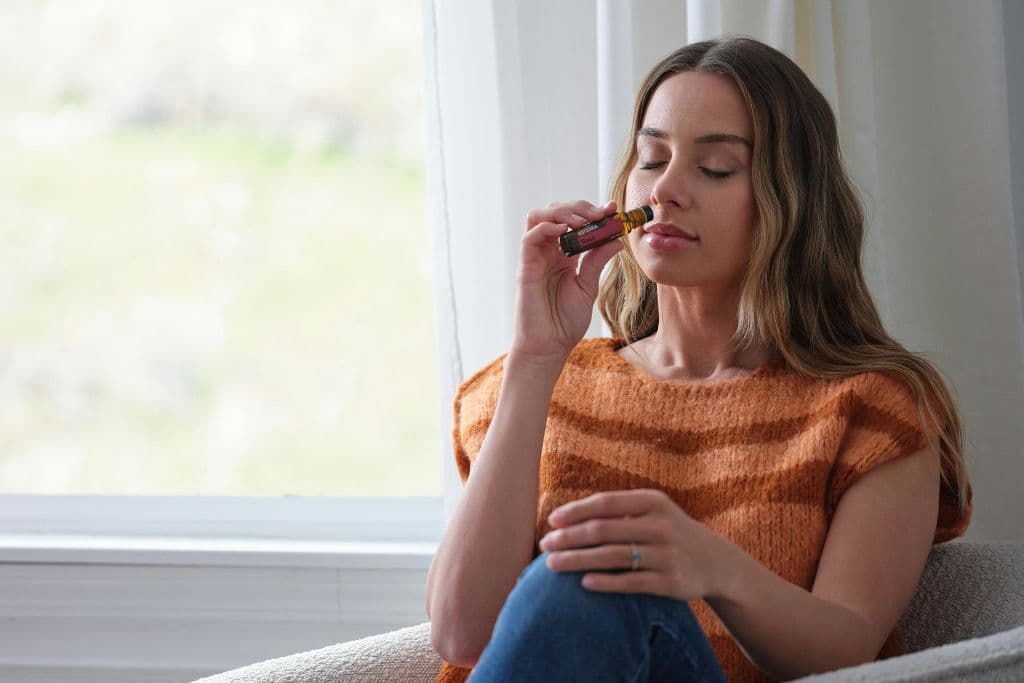
Essential oils for nervous system regulation may support relaxation and emotional comfort as part of a calming routine. Lavender and bergamot have been studied for stress-related outcomes, while rosemary and peppermint have been researched for aspects of memory and alertness. For families, the starting point is simple: an appropriate product, a scent your child enjoys, and a moment to slow down together.
Because when bedtime has become a three-act production and everyone is running on fumes, you need something manageable. You do not need another complicated parenting project.
A preferred scent might become one small part of winding down, taking a homework break, or settling into a quieter space. Your child’s comfort comes first. The bottle does not get the deciding vote.
I’m Dr. Roseann Capanna-Hodge, a therapist, school psychologist, mom of two neurodivergent boys, and author of The Dysregulated Kid. For more than three decades, I’ve helped families understand what behavior is communicating and approach challenges through Regulation First Parenting®.
Let’s look at where essential oils fit, what the research tells us, and how to keep their use simple and thoughtful.

What Is the Connection Between Essential Oils and the Nervous System?
Certain aromas may influence short-term mood, alertness, and aspects of the body’s stress response. That is why researchers have explored aromatherapy as a supportive tool for relaxation and emotional well-being.
For example, a small study in healthy adult women found changes in mood, cortisol, and a heart-rate variability measure associated with parasympathetic activity after bergamot aromatherapy. These were short-term adult findings, offering a starting point for research rather than a prediction of how your child will respond (Watanabe et al., 2015).
For parents, the practical questions are:
- Does my child enjoy the scent?
- Is this product appropriate for their age and health history?
- Does it fit comfortably into a routine we already use?
- Can my child decline it or leave the space?
Think about the whole experience: the lighting, the noise, your tone of voice, and what you are asking your child to do.
A lovely fragrance cannot make a loud, rushed bedtime feel unhurried. We still have to turn down the volume—sometimes our own included.
How Can Essential Oils Support Emotional Regulation?
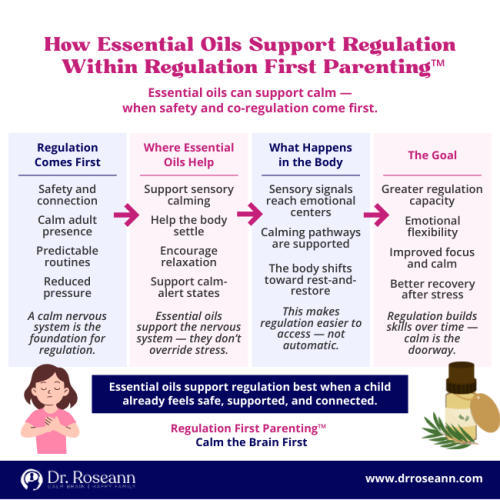
A preferred scent can be an optional part of a comforting routine that includes connection, a pause, and fewer demands. Start by noticing what helps your child feel comfortable and willing to participate.
In my Regulation First approach, we begin by asking what the child needs in that moment.
Try:
“That was a lot. Let’s take a minute together.”
Or:
“Would you like your quiet space with the scent, or without it?”
Both answers count.
Picture an evening when your child arrives at bedtime already overwhelmed. Instead of adding another instruction, you lower the lights, sit nearby, and offer a familiar book. If an appropriate fragrance is something they enjoy, it may fit into that quieter moment.
The routine might include:
- Lower lighting.
- A familiar book or quiet activity.
- A calm adult nearby.
- An optional fragrance your child welcomes.
- Permission to skip the fragrance entirely.
When evenings become easier, notice the whole routine—the pace, the connection, and your child’s preferences.
That is a theme I return to in The Dysregulated Kid: look beyond the behavior and get curious about what your child needs.
And remember, your child does not have to enjoy lavender to be doing regulation “correctly.” There is no lavender participation trophy.

Which Essential Oils Are Best for Brain Health and Focus?
Rosemary and peppermint are among the oils studied for memory and alertness in adults. Different aromas have produced different results, so it helps to separate feeling calmer from performing better on a task.
| Essential oil | What the research found |
|---|---|
| Rosemary | Adults performed better on some memory measures, while responding more slowly on another measure (Moss et al., 2003). |
| Peppermint | Adults showed improvements in memory measures and reported increased alertness (Moss et al., 2008). |
| Ylang-ylang | Adults reported greater calmness but showed poorer memory performance and slower processing (Moss et al., 2008). |
These findings concern specific tasks in adults; they do not establish treatment effects for childhood ADHD.
When a child enjoys a scent and shows no discomfort, that can be one small clue that the experience feels comfortable. Comfort matters for sensory-sensitive children, and their preferences deserve attention alongside product suitability.
When attention feels dysregulated, start with what is happening around the task.
Is your child hungry? Is the worksheet overwhelming? Have they been holding it together at school all day?
For homework, try:
- One clear starting point.
- A manageable amount of work.
- A planned movement break.
- A comfortable workspace, with fragrance only if your child wants it and it is appropriate.
A diffuser cannot explain long division. Unfortunately, someone still has to do that part.
Explore the research and practical considerations in my guide to essential oils for attention, focus, and calm.
Can Aromatherapy Help With Anxiety and Stress in Kids?
Some research suggests that aromatherapy may ease short-term anxiety in specific situations. Lavender and sweet orange, for example, have been studied during children’s dental procedures, with reductions in anxiety reported in the aromatherapy groups (Nirmala & Kamatham, 2021).
That gives us a useful but specific finding: support during a stressful procedure. Everyday anxiety needs a broader understanding of what is making your child feel overwhelmed.
At home, begin with connection and choice:
“Would you like me to sit with you while we get ready?”
“What would make this space feel more comfortable?”
A child who likes an appropriate scent may welcome it during a quiet activity. Another child may prefer fresh air and no fragrance.
Their response gives you information. Turning away, covering their nose, or asking you to stop means it is time to remove the scent.
We want a calming routine to feel welcoming. Your child should not have to tolerate an unpleasant smell just because the label says “relaxation.”
For a closer look at this topic, read about essential oils for stress and anxiety.

Are Essential Oils Safe for Children’s Nervous System Health?
Safety depends on the exact oil, formulation, concentration, method of use, and your child’s age and health history. Choose the product and method with as much care as you choose the scent.
Keep bottles secured and out of reach. Accidental ingestion of products containing eucalyptus or camphor can cause serious poisoning in children (Flaman et al., 2001).
And pay attention to skin reactions, even with diffusion. Airborne contact dermatitis associated with essential oils has been reported in a child (Shah et al., 2019).
Essential Oil Safety for Kids: Do’s and Don’ts
| Do | Don’t |
|---|---|
| Review the exact product with your child’s clinician, especially for young children or children with medical conditions. | Assume an oil is appropriate because another family uses it. |
| Follow product-specific, age-appropriate instructions. | Use one blanket dilution percentage for every child and oil. |
| Keep bottles secured and out of reach. | Add aromatherapy oils to your child’s food or drinks. |
| Keep use optional and supervised. | Hold an oil or inhaler near a child’s face when they are resisting. |
| Stop if discomfort or symptoms appear. | Continue because a product is marketed as calming or pure. |
| Use skin products only as directed. | Apply concentrated oils directly to skin or improvise bath mixtures. |
Check first if your child has asthma, allergies, or a seizure history. Your clinician can help you review whether the product and method are suitable (Nationwide Children’s Hospital, 2023).
If exposure causes breathing difficulty, a seizure, or reduced responsiveness, seek emergency care. For an accidental ingestion, contact a poison service promptly.
A Quick Note About Lavender
Using lavender regularly? Put it on your list of questions for your child’s clinician. Some research has raised questions about possible hormonal effects, though a causal link has not been established. Natural products deserve a thoughtful check, too (Ramsey et al., 2019).

What Conditions May Benefit From Neurological Essential Oils?
An appropriate, preferred fragrance may fit into comfort routines for children with different needs. Let your child’s preferences and health history guide that choice, rather than matching a diagnosis to a bottle.
“Neurological essential oils” is a descriptive phrase, not an established treatment category. The useful question is where an optional scent might fit into the support your child already receives.
| Concern | Where an optional scent might fit |
|---|---|
| Focus and ADHD | A comfortable study space, alongside task support and planned breaks. |
| Anxiety and stress | A quiet routine that includes preparation and connection. |
| OCD | Ordinary downtime, while treatment addresses obsessions and compulsions. |
| Autism and sensory sensitivities | A child-led sensory preference, with equal respect for wanting a fragrance-free space. |
| PANS/PANDAS | Optional comfort within the child’s established medical care plan. |
| Sleep difficulties | A preferred part of winding down, while addressing what makes sleep difficult. |
Focus, Attention, and ADHD
For a child struggling with impulsivity and attention, a useful question is:
“What is making this task hard right now?”
An enjoyable scent may be one environmental preference. Keep clear instructions, movement opportunities, and your child’s other ADHD supports at the center.
Sometimes the most useful adjustment is smaller than we expect: fewer problems on the page, a snack, or someone helping them begin.
Anxiety and Stress
When your child is worried, make room for connection before adding another tool.
“I’m here. We can take the next step together.”
An optional scent may fit into that moment if your child enjoys it. Keep noticing the situations, expectations, and sensory demands that contribute to their stress.
The essential oils for anxiety guide explores this topic in more detail.
OCD
Keep scent use flexible and optional. A child may enjoy a fragrance during ordinary downtime, while their care plan addresses obsessions and compulsions.
Avoid presenting an oil as something your child must use to prevent a feared event or make everything safe. If using it starts to feel compulsory, discuss that pattern with the treating clinician.
Explore this distinction in essential oils for OCD.
Autism and Sensory Processing Differences
For children with autism spectrum disorders (ASD) or sensory sensitivities, preferences should guide the environment.
What smells gentle to you may feel overwhelming to your child. Ask, observe, and give them room to change their mind.
“No smell, please” is a perfectly useful answer.
Respecting that answer helps you create a space your child actually wants to use.
PANS/PANDAS
For a child with PANS/PANDAS, keep the focus on comfort within an established medical care plan.
If your family is considering fragrance, review the product with your child’s clinician, particularly when sensitivities or symptoms change. A familiar routine can stay flexible: the book, quiet space, or time together can remain even when the scent does not.
Sleep and Evening Overwhelm
A fragrance your child enjoys may fit alongside a book, quieter lighting, and time together.
Think about what bedtime asks of your child. Are they transitioning abruptly from an exciting activity? Is the room uncomfortable? Do they need a little more connection before separating for the night?
For more on this specific topic, explore sleep-supporting oils.
Keep the focus on the whole evening. A bedtime routine should not require a shopping cart full of products.
How Do You Use Essential Oils for Nervous System Regulation?
Begin with one simple routine, confirm product suitability, and let your child choose whether to participate. Keep the experience easy to stop.
1. Choose a Calm Moment to Introduce It
A full meltdown is not the moment for a surprise scent experiment.
Introduce an appropriate product when your child is comfortable and able to tell you what they think.
“Would you like to try this, or keep things how they are?”
Let curiosity lead. There is no need to turn trying a fragrance into an assignment.
2. Start With One Routine
Choose a time that already has a little breathing room:
- After school: A snack and quiet activity.
- Before homework: Set out materials and choose the first small step.
- In the evening: Read together or listen to familiar music.
Let fragrance fit into a routine your child already finds welcoming. Follow the product’s instructions and the guidance you have received for your child.
3. Keep Your Child in Charge of Preference
Ask directly:
“Do you like it?”
“Would you like me to turn it off?”
Watch their response, too. You do not need a dramatic reaction to respect a quiet no.
A child who liked a fragrance yesterday may not want it today. That is useful information, not a parenting setback.
4. Notice the Whole Experience
Pay attention to:
- Whether your child chooses the routine.
- Whether they report comfort or discomfort.
- Any skin, breathing, or other symptoms.
- What else changed that day.
If bedtime goes better, celebrate the easier evening. Notice the calmer pace, the connection, and the manageable expectations, too.
You do not need to give all the credit to the lavender.
5. Keep the Basics in Place
Continue the routines, accommodations, and care your child needs.
When exploring essential oils for nervous system regulation, keep the goal practical: a comfortable experience that fits your child and your family.
In The Dysregulated Kid, I encourage parents to build an understanding of their child’s needs so everyday choices feel less confusing. That same approach applies here: observe, stay curious, and adjust.
There is no prize for the most elaborate blend. Simple is welcome here.

Using Essential Oils in Everyday Parenting
The most workable approach is a small, child-led addition to everyday life. You should not need a spreadsheet to manage your lavender.
For example, an older child might enjoy an approved fragrance while reading after school. Another might prefer a completely fragrance-free homework space. A teen may occasionally request a familiar scent during their evening routine.
Each preference gives you a starting point.
Try asking:
“What part of this routine feels good to you?”
Maybe it is the fragrance. Maybe it is sitting beside you. Maybe it is the first moment all day when nobody is asking for shoes, homework, or a missing permission slip.
Keep the connection at the center.
And keep the routine flexible enough to work without the product. Reading together, lowering the lights, and giving your child a little breathing room are still available when the bottle is empty.
Final Thoughts + Regulation Resources
Essential oils may have a small, supportive place in a family’s calming routines when the product is appropriate and the child enjoys the experience.
You do not have to build the perfect calming corner or find the magical blend.
Start with a quieter moment. Listen to your child. Make the next step manageable.
For a deeper understanding of what behavior is communicating and how to respond with Regulation First Parenting®, explore my book, The Dysregulated Kid.
You can also explore more about essential oils or join The Dysregulation Insider for practical, brain-based parenting guidance.
Calm Brain, Happy Family™
Frequently Asked Questions
What Essential Oils Help Regulate the Nervous System?
Lavender and bergamot have been studied for stress-related outcomes, while rosemary, peppermint, and ylang-ylang have been studied for aspects of mood or cognition. Much of this research involves adults or specific situations. For your child, begin with product suitability and sensory preference.
Are Essential Oils Safe for Kids With ADHD or Anxiety?
Safety depends on the product and the child. Age, medical history, concentration, and exposure method all matter. Review these details with your child’s clinician and keep use optional.
How Long Does It Take to See Benefits?
There is no established timeline for improving a child’s everyday regulation with essential oils. Some studies measure responses during a single session. At home, pay attention to comfort and tolerability rather than setting a deadline for behavioral changes.
Can Essential Oils Replace Medication?
No. Essential oils do not replace prescribed medication or condition-specific treatment. Discuss medication questions with the prescribing clinician. When appropriate, aromatherapy can remain an optional part of a comfort routine.
How Often Should I Use Essential Oils?
Follow guidance for the exact product and your child’s needs. There is no established daily aromatherapy schedule for children’s nervous system regulation. Keep use purposeful, supervised, and easy for your child to decline.
References
Flaman, Z., Pellechia-Clarke, S., Bailey, B., & McGuigan, M. (2001). Unintentional exposure of young children to camphor and eucalyptus oils. Paediatrics & Child Health, 6(2), 80–83. https://doi.org/10.1093/pch/6.2.80
Moss, M., Cook, J., Wesnes, K., & Duckett, P. (2003). Aromas of rosemary and lavender essential oils differentially affect cognition and mood in healthy adults. International Journal of Neuroscience, 113(1), 15–38. https://doi.org/10.1080/00207450390161903
Moss, M., Hewitt, S., Moss, L., & Wesnes, K. (2008). Modulation of cognitive performance and mood by aromas of peppermint and ylang-ylang. International Journal of Neuroscience, 118(1), 59–77. https://doi.org/10.1080/00207450601042094
Nationwide Children’s Hospital. (2023). Aromatherapy: Essential oils. https://www.nationwidechildrens.org/family-resources-education/health-wellness-and-safety-resources/helping-hands/aromatherapy-essential-oils
Nirmala, K., & Kamatham, R. (2021). Effect of aromatherapy on dental anxiety and pain in children undergoing local anesthetic administrations: A randomized clinical trial. Journal of Caring Sciences, 10(3), 111–120. https://doi.org/10.34172/jcs.2021.026
Ramsey, J. T., Li, Y., Arao, Y., Naidu, A., Coons, L. A., Diaz, A., & Korach, K. S. (2019). Lavender products associated with premature thelarche and prepubertal gynecomastia: Case reports and endocrine-disrupting chemical activities. The Journal of Clinical Endocrinology & Metabolism, 104(11), 5393–5405. https://doi.org/10.1210/jc.2018-01880
Shah, K. M., Goldman, S. E., & Agim, N. G. (2019). Airborne contact dermatitis caused by essential oils in a child. Dermatitis, 30(1), 79–80. https://doi.org/10.1097/DER.0000000000000430
Watanabe, E., Kuchta, K., Kimura, M., Rauwald, H. W., Kamei, T., & Imanishi, J. (2015). Effects of bergamot (Citrus bergamia (Risso) Wright & Arn.) essential oil aromatherapy on mood states, parasympathetic nervous system activity, and salivary cortisol levels in 41 healthy females. Forschende Komplementärmedizin, 22(1), 43–49. https://doi.org/10.1159/000380989
Dr. Roseann is a mental health expert in Self-Regulation who frequently is in the media:
- Healthline Understanding Self-Regulation Skills
- Scary Mommy What Is Self-Regulation In Children, And How Can You Help Improve It?
- The Warrior Parent Podcast It's Gonna Be OK! Changing Behaviors and Responses (And The Magic of Magnesium)In Your Family with Dr. Roseann Capanna-Hodge
©Dr. Roseann Capanna-Hodge
For parents who want a deeper understanding of why dysregulation happens—and what actually helps—Dr. Roseann explores these strategies in The Dysregulated Kid.
Always remember… “Calm Brain, Happy Family™”
Disclaimer: This article is not intended to give health advice and it is recommended to consult with a physician before beginning any new wellness regime. The effectiveness of diagnosis and treatment vary by patient and condition. Dr. Roseann Capanna-Hodge, LLC does not guarantee certain results.
Are you looking for SOLUTIONS for your struggling child or teen?
Dr. Roseann and her team are all about science-backed solutions, so you are in the right place!
Meet the Expert
Licensed Therapist | Certified School Psychologist
Board Certified in Neurofeedback (BCN) | 30+ Years Clinical Experience
Expert in Emotional Dysregulation in Children and Nervous System Regulation
Host, Dysregulated Kids Podcast | Author, The Dysregulated Kid
Dr. Roseann Capanna-Hodge is a licensed therapist, certified school psychologist, and leading expert in emotional dysregulation in children and nervous system regulation. With over 30 years of clinical experience and having analyzed more than 10,000 brain maps, she helps families understand what behavior is really signaling—and how to calm the nervous system first so real change can happen.
She is the creator of Regulation First Parenting® and the CALMS Protocol™, host of the top 1% podcast Dysregulated Kids, and author of The Dysregulated Kid.

Want more Regulation First Parenting® guidance from Dr. Roseann? Add us as a preferred source on Google.