



Estimated reading time: 7 minutes
Neurodivergent therapies are supports designed to help children thrive by working with their unique brain wiring rather than trying to change who they are.
Examples of neurodivergent therapies include:
- neurofeedback
- occupational therapy
- speech and language therapy
- cognitive behavioral therapy (CBT)
- executive functioning coaching
- sensory integration therapy
- parent coaching
- social skills training
- mindfulness-based interventions
- nervous system regulation therapies such as PEMF and biofeedback.
These approaches can help improve self-regulation, emotional control, attention, sensory processing, executive functioning, and social-emotional skills.
I’m Dr. Roseann Capanna-Hodge, and throughout more than three decades of helping neurodivergent children and teens, I’ve seen how transformative the right combination of brain-based, behavioral, and nervous-system-focused supports can be.
In this guide, we’ll explore neurodivergent therapies that help children move from chaos to calm. You’ll learn what these therapies are, how they work, and how parents can use Regulation First Parenting® to bring peace back to the home.
What Are Neurodivergent Therapies?
Neurodivergent therapies are approaches designed to support brains that process, learn, and respond differently—such as in:
- ADHD
- autism
- anxiety
- OCD
- learning disabilities
- PANS/PANDAS
Rather than forcing children to ‘fit in,’ these therapies help calm and regulate their unique nervous systems—because when the brain feels safe, focus, connection, and learning naturally follow.
Why is Self-Regulation the Foundation of Healing?
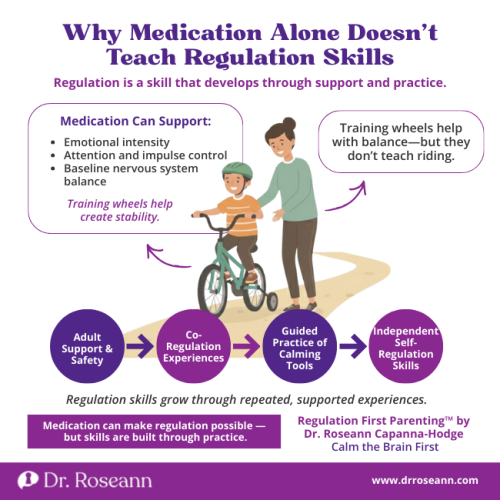
When a child’s nervous system is dysregulated, their brain gets stuck in ‘fight, flight, or freeze.’ That’s why even the best behavioral strategies or talk therapy often fall flat—they’re trying to teach logic to a brain in survival mode.
This is what I call the Calm First principle: You can’t correct what’s dysregulated. When we calm the brain first, connection and correction naturally follow.
A regulated brain can finally:
- Access reasoning and learning
- Manage emotions more easily
- Reduce impulsivity and anxiety
- Build confidence and resilience
How Do Neurodivergent Therapies Work?
Neurodivergent therapies focus on balancing brainwave activity and soothing the autonomic nervous system (ANS)—the body’s built-in stress-response system. They blend neuroscience with holistic care so the brain learns to self-regulate, one calm moment at a time.
Common Neurodivergent Therapies:
QEEG Brain Mapping
- Identifies brain areas running too fast or too slow
- Acts like a GPS for the brain—spotting “traffic jams” in neural highways
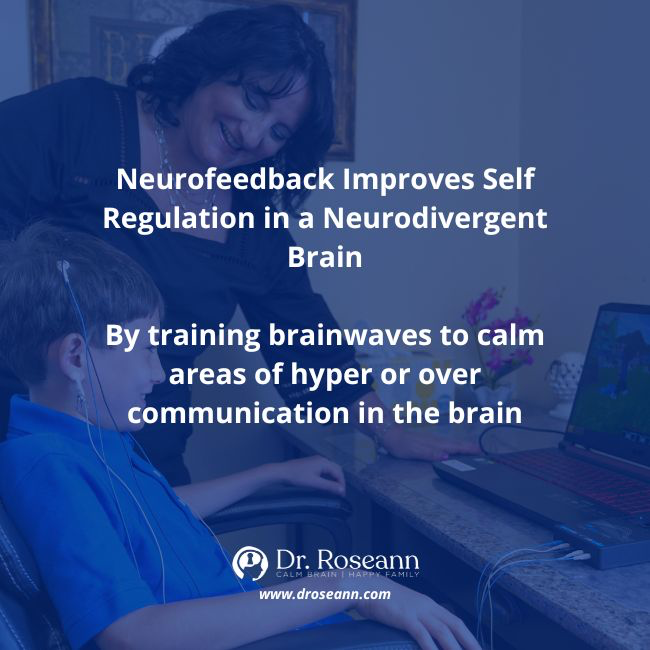
Neurofeedback
- A drug-free training method using real-time brainwave feedback to teach focus and calm (Niv, 2013)
- Strengthens the brain’s ability to shift into balanced, healthy rhythms
CALM PEMF® Therapy
- Gentle electromagnetic pulses that nudge the nervous system toward balance
- Encourages deep relaxation and supports overall regulation
Occupational Therapy (OT)
- Builds sensory and motor skills for better grounding
- Helps children integrate body awareness and improve daily function
Psychotherapy and CBT
- Reinforce coping once the brain finds balance
- Support mindset shifts and healthier behavioral patterns
Lifestyle Pillars
- Deep sleep
- Nourishing food
- Movement
- Detoxification
Because when the brain learns calm, everything else—focus, connection, even joy—can finally catch up. Behavior is the symptom; brain regulation is the solution.
What’s the Science Behind Neurodivergent Therapies?
The brain is always active, sending signals that guide mood, focus, and behavior. When those signals fire too fast, too slow, or out of sync, kids become dysregulated. You can see it before they can even say it.
Brain-Based Therapies
Help retrain brain rhythms so calm can return
- Neurofeedback
- PEMF Therapy
Once every part finds rhythm, everything flows in harmony.
Body-Based Therapies
Support healing from the outside in
- Yoga and Movement
- Sensory Integration
These methods quiet the body’s alarms and bring a sense of safety words can’t always reach. Because true healing begins when the brain feels safe enough to rest, learn, and connect.
What Are the Most Effective Therapies for Neurodivergent Kids?
No single therapy fits every child—because no two nervous systems speak the same language. But when parents blend brain, body, and lifestyle approaches, true change begins. Think of it like weaving a safety net of regulation—each strand strengthens the next.
Top Natural and Evidence-Based Options
Mind-Body Regulation Therapies
- Breathing, mindfulness, yoga, and tapping activate the body’s “calm switch”
- Help kids feel safe and centered before addressing behavior
Nutritional Support
- Focuses on stabilizing blood sugar and boosting omega-3s for sharper focus
- Adds magnesium and whole foods that feed brain chemistry instead of draining it
Sensory Regulation Activities
- Weighted blankets, swinging, and fidget tools help organize sensory input
- Builds body awareness so kids can feel grounded instead of overwhelmed
Sleep Optimization and Movement Plans
- Promotes consistent routines that balance circadian rhythms
- Encourages daily movement—because a calm brain begins with an active body
How Can Parents Support Neurodivergent Therapies at Home?
You’re your child’s best co-regulator. When you stay calm, their brain follows your lead.
Home Regulation Tips:
- Keep routines predictable – structure builds safety
- Model calm – slow breath, soft voice, steady presence
- Add movement breaks – stretch, dance, or jump to release stress
- Protect sleep – tired brains can’t regulate
- Limit screens at night – blue light overstimulates
Parent Story:
Emily, mom of a 9-year-old with anxiety, used to dread after-school meltdowns. Through the Brain Behavior Reset™ Program, she learned how to co-regulate—breathing together, dimming lights, and using PEMF therapy. Within weeks, her son’s meltdowns shortened and his focus improved.
Calm starts with connection. When we regulate together, everything changes — for your child, and for you too.

147 Therapist-Endorsed Self-Regulation Strategies for Children: A Practical Guide for Parents
How Do Creative Modalities Help Neurodivergent Individuals Build Self-Regulation?
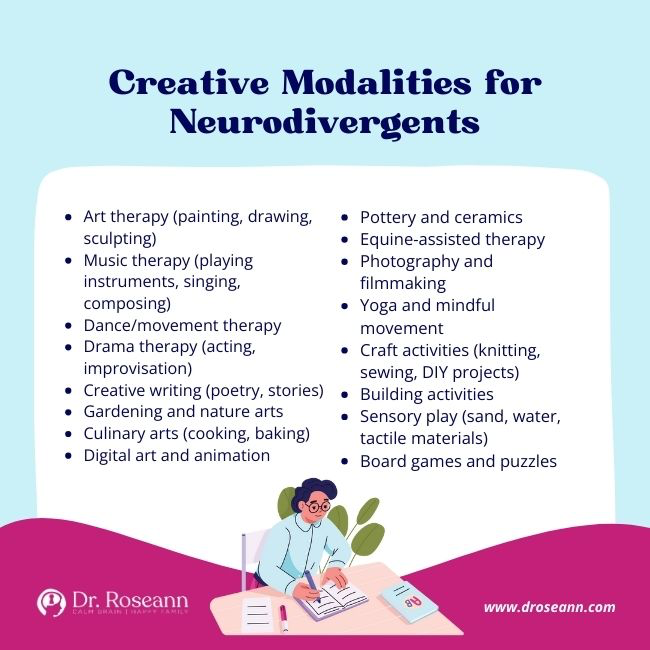
Creative therapies open doors words alone can’t unlock. Sometimes what a child can’t explain with language spills out through color, rhythm, or movement. Healing doesn’t always start with talking—it can begin through motion, sensation, and art (Dunphy et al., 2019).
Here are some examples of Creative Modalities:
- Equine-Assisted Therapy – Builds trust and calm through gentle animal connection
- Art and Music Interventions – Channel emotion and soothe the senses
- Sensory Techniques – Use weighted tools, textures, or rhythmic play to ease overload
These methods celebrate strengths while calming sensory chaos. They turn everyday activities into moments of regulation and joy.
At its core, creative therapy honors individuality. With tailored coaching or family sessions, each person learns to thrive in a world that often overlooks their brilliance.
What Are the Benefits of Combining Therapies?
When parents integrate therapies, each reinforces the other—creating a synergy that accelerates healing.
Neurodivergent Therapies at a Glance:
| Therapy Type | Main Benefit | Best For |
|---|---|---|
| Neurofeedback | Calms overactive brainwaves | ADHD, anxiety |
| CALM PEMF® | Reduces stress & supports sleep | OCD, PANS/PANDAS |
| Occupational Therapy | Builds sensory regulation | Autism, sensory issues |
| Psychotherapy | Supports coping skills | Mood, trauma |
| Lifestyle Adjustments | Improves resilience | All neurodivergent kids |
We’re not chasing quick fixes here. We’re building calm that lasts—and that’s what consistent, brain-based therapies can truly deliver.
Read more about: The Neurodivergent Umbrella: A Guide to Understanding and Supporting Neurodiverse Kids
How Can You Find the Right Neurodivergent Therapist?
Finding the right therapist isn’t about degrees or fancy titles—it’s about feeling safe, understood, and truly seen.
A neurodivergent-affirming therapist doesn’t try to ‘fix’ your child’s brain; they learn its language and help it find balance.
Start Here:
- Search Smart: Use reputable directories or community referrals. Ask your pediatrician or trusted providers who truly get neurodivergent minds.
- Think Beyond Local: Virtual sessions can connect you with the right expert—no matter where you live.
- Check the Fit: Read bios carefully and schedule a short consult. Notice if their energy and approach align with your goals.
The best therapy happens in safe spaces—where neurodivergent brains feel seen, not ‘fixed.’ When you find that kind of support, real growth begins.
Ready to take the next step? Join Self-Regulation Mastery: A Parent’s Path to Understanding and Managing Children’s Dysregulated Behaviors and Emotions and start building calm from the inside out.
Parent Action Steps
- Explore neurodivergent-affirming therapy options such as neurofeedback or occupational therapy.
- Ask potential therapists about their experience with ADHD, autism, or sensory processing needs.
- Consider virtual sessions if local options feel limited.
- Combine brain, body, and lifestyle supports for a holistic plan.
- Observe your child’s response and adjust therapies as needed.
- Prioritize consistency—progress grows through repetition and regulation.
FAQs
What are neurodivergent therapies and how do they help children?
Neurodivergent therapies support how a child's brain naturally processes information and help improve regulation, focus, learning, and emotional well-being.
Which conditions can benefit from neurodivergent therapies?
Neurodivergent therapies can support children with ADHD, autism, anxiety, OCD, learning disabilities, executive functioning challenges, and related differences.
Why is self-regulation important for neurodivergent children?
Self-regulation helps neurodivergent children manage emotions, attention, behavior, and daily stress more effectively.
How do neurodivergent therapies support nervous system regulation?
Neurodivergent therapies focus on calming and regulating the nervous system so children can learn, connect, and cope more successfully.
Are neurodivergent therapies only for children with a diagnosis?
No. Neurodivergent therapies can help any child showing signs of regulation, attention, learning, or emotional challenges.
What types of neurodivergent therapies are commonly used?
Common neurodivergent therapies include neurofeedback, occupational therapy, counseling, social skills support, and regulation-focused interventions.
Can neurodivergent therapies improve behavior at home and school?
Yes. When children feel more regulated, behavior, focus, communication, and learning often improve naturally.
How do parents know if neurodivergent therapies are the right fit?
Parents should look for ongoing struggles with regulation, attention, emotions, learning, or sensory processing and seek a professional evaluation when needed.
Citations
Dunphy, K., Baker, F. A., Dumaresq, E., Carroll-Haskins, K., Eickholt, J., Ercole, M., Kaimal, G., Meyer, K., Sajnani, N., Shamir, O. Y., & Wosch, T. (2019). Creative Arts Interventions to Address Depression in Older Adults: A Systematic Review of Outcomes, Processes, and Mechanisms. Frontiers in Psychology, 9(6). https://doi.org/10.3389/fpsyg.2018.02655
Niv, S. (2013). Clinical efficacy and potential mechanisms of neurofeedback. Personality and Individual Differences, 54(6), 676–686. https://doi.org/10.1016/j.paid.2012.11.037
Dr. Roseann is a mental health expert in Neurodivergence who frequently is in the media:
CBS2 New York (Article) Experts Offer Tips On How To Help Children Deal With Anxiety.
Byrdie Smiling at Strangers was a Helpful Tool for my Social Anxiety.
For parents navigating ADHD challenges, The Dysregulated Kid provides specific guidance on supporting neurodivergent brains through practical regulation strategies.
Always remember… “Calm Brain, Happy Family™”
Disclaimer: This article is not intended to give health advice and it is recommended to consult with a physician before beginning any new wellness regime. The effectiveness of diagnosis and treatment vary by patient and condition. Dr. Roseann Capanna-Hodge, LLC does not guarantee certain results.
Are you looking for SOLUTIONS for your struggling child or teen?
Dr. Roseann and her team are all about science-backed solutions, so you are in the right place!

Meet the Expert
Licensed Therapist | Certified School Psychologist
Board Certified in Neurofeedback (BCN) | 30+ Years Clinical Experience
Expert in Emotional Dysregulation in Children and Nervous System Regulation
Host, Dysregulated Kids Podcast | Author, The Dysregulated Kid
Dr. Roseann Capanna-Hodge is a licensed therapist, certified school psychologist, and leading expert in emotional dysregulation in children and nervous system regulation. With over 30 years of clinical experience and having analyzed more than 10,000 brain maps, she helps families understand what behavior is really signaling—and how to calm the nervous system first so real change can happen.
She is the creator of Regulation First Parenting® and the CALMS Protocol™, host of the top 1% podcast Dysregulated Kids, and author of The Dysregulated Kid.