




Estimated reading time: 6 minutes
PDA (pathological demand avoidance) is a pattern of extreme resistance to everyday demands that is commonly discussed as a profile seen in some autistic children.
And when I say everyday demands, I mean everyday. Getting dressed. Brushing teeth. Leaving the house. Starting homework. Sometimes even doing something your child actually likes.
Yep. It can be confusing.
A Pathological Demand Avoidance checklist often includes behaviors like:
- extreme resistance to everyday requests
- emotional outbursts when feeling pressured
- obsessive control of situations
- social masking
- sudden shutdowns
- using distraction or negotiation to avoid demands
What catches many parents off guard is that these children can appear highly capable, social, funny, or even completely cooperative at times—until pressure builds and their nervous system says, “Nope. Not doing this.”
If your child’s behavior feels out of control lately, you’re not alone.
I’m Dr. Roseann Capanna-Hodge, and I believe that behind every meltdown is a brain trying to feel safe. After more than 30 years of supporting children with autism, anxiety, and nervous system dysregulation, I’ve seen how often PDA behaviors are misunderstood as manipulation or defiance.
And here’s the thing: when we misunderstand the why, we usually reach for the wrong tool.
Parents often come to me saying, “I’ve tried everything.”
Sticker charts. Consequences. Rewards. Taking things away. More reminders. Even more reminders.
And somehow, everyone just gets more dysregulated.
That’s your clue.
What You’ll Learn
- The most common signs included in a PDA behavior checklist.
- How anxiety-driven avoidance differs from oppositional behavior.
- Why children with PDA often mask symptoms in social settings.
- How a PDA diagnosis checklist can help you organize what you’re seeing.
- What professional assessment for PDA may involve.

What Exactly is A Pathological Demand Avoidance Checklist?
Think of this checklist as your parent-friendly guide to noticing patterns you might already be living through but haven’t named yet.
Because when you’re in the middle of the morning rush and one sock has somehow become a full-blown crisis, it’s hard to step back and see the pattern.
- Purpose: Helps you spot PDA signs, including demand avoidance autism and anxiety-driven behaviors, so you aren't lost in the moment and can advocate confidently.
- Not a diagnosis: It is a tool for connection and clarity. It lets you say, “I’m seeing a pattern here. My child isn’t being oppositional—they’re overwhelmed” (Green et al., 2018).
- What it looks at: Daily demands, social strategies, emotional lability, flexibility, and obsessive interests. It’s similar to Dr. Roseann’s downloadable PDA parent checklist.
PDA Diagnosis Checklist for Kids
Use this PDA diagnosis checklist to notice patterns across situations and over time. It is a screening and observation tool, not a diagnosis.
The goal here isn’t to tally up behaviors like points on a scoreboard. It’s to notice what happens again and again, especially when your child feels pressured, rushed, controlled, uncertain, or overwhelmed.
Demands and Expectations
☐ Resists everyday requests such as getting dressed, brushing teeth, eating, leaving the house, or starting homework.
☐ Avoids activities they normally enjoy once the activity becomes an expectation or requirement.
☐ Frequently delays, bargains, negotiates, changes the subject, or gives reasons why a task can’t be done.
☐ Becomes more resistant when a request is repeated or pressure increases.
☐ Seems able to complete a task one day but unable to manage the same task another day.
That last one can drive parents bananas.
“Yesterday you did this just fine!”
But nervous system capacity changes from day to day. What feels manageable on Tuesday may feel impossible on Wednesday.
Social Understanding and Interaction
☐ Uses distraction, humor, negotiation, excuses, or changing the subject to avoid demands.
☐ Tries to control how games, conversations, routines, or interactions happen.
☐ Appears socially confident or capable in some situations but struggles when expectations increase.
☐ Uses role-play, characters, fantasy, or pretend situations as a way to delay or avoid demands.
☐ Shows noticeably different behavior at home, school, or around different adults.
This is where parents often hear, “Well, we don’t see that at school.”
And suddenly you’re wondering if everyone thinks you made the whole thing up.
You didn’t.
Some kids hold it together all day and unravel where they feel safest.
Emotional Regulation and Coping
☐ Has a strong emotional reaction when feeling pressured or unable to control a situation.
☐ Shifts quickly from calm or cooperative to distressed, angry, shut down, or overwhelmed.
☐ Appears increasingly anxious as demands or expectations build.
☐ May freeze, withdraw, leave, cry, argue, or have a meltdown when avoidance strategies stop working.
☐ Needs significant recovery time after situations involving pressure, conflict, or too many demands.
This is why I always say: behavior is communication.
A meltdown isn't your child saying, “How can I ruin everyone’s afternoon?”
It’s usually their nervous system saying, “I cannot handle one more thing.”
Flexibility and Adaptation
☐ Struggles when plans change unexpectedly or when they don’t know what will happen next.
☐ Needs to feel they have a choice or some control over how a task happens.
☐ Finds direct instructions harder to manage than collaborative suggestions or choices.
☐ Becomes overwhelmed when several expectations or tasks build up at once.
☐ Shows persistent demand avoidance across different parts of daily life rather than around only one particular activity.
Want a printable version? Download the Free PDA Parenting Checklist to keep on hand, track patterns over time, or share observations with your child’s support team.
Sometimes getting these behaviors out of your head and onto paper is the first moment everything starts to make more sense.
How Do I Know If My Child Shows PDA Signs?
In simple moments—like resisting “easy” tasks or turning down a cherished activity—PDA might be quietly playing out.
And yes, “easy” belongs in quotation marks because what looks easy to us may feel very different inside a dysregulated nervous system.
Research tells us that PDA isn’t just defiance. It can involve anxiety and a strong need for control that goes beyond typical resistance (O’Nions, Christie, Gould, Viding, & Happé, 2014).
Looks like:
- Obsessive refusal to comply.
- Social strategies such as distraction or negotiation, followed by a meltdown if pushed.
- Emotional swings: sweet one moment, furious the next.
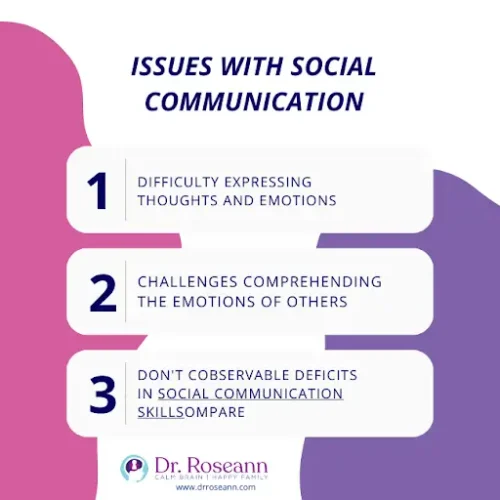
- Difficulty expressing thoughts or emotions.
Real-Life Example
Verna, mom of 10-year-old Alen, says, “He stopped his favorite game when asked to pause—and threw all his toys. I thought it was defiance. The checklist helped me see it was overwhelm.”
Takeaway
When compliance feels threatening, you’re not simply looking at misbehavior. You may be seeing anxiety-fueled avoidance.
And that changes everything.
Instead of asking, “How do I make my child comply?” we start asking, “What is making this feel so hard?”
That is why I always want to calm the brain first.
What’s the Difference Between PDA and ODD or ADHD?
It’s not bad parenting.
And no, your child didn’t wake up and choose chaos before breakfast.
Sometimes what looks like “won’t” is actually “can’t right now.”
| Feel like… | PDA (Anxiety-driven) | ODD (Defiance-driven) | ADHD-related avoidance |
|---|---|---|---|
| Motivation | Fear of losing control | Willful pushback | Executive dysfunction |
| Strategy | Excuses, distraction, role-play | Argues, blames, defies | Procrastination, inattention |
| Typical triggers | Simple tasks light a fuse | Direct authority or correction | Boring, overwhelming work |
- PDA: Deep anxiety and a need for control may be involved, so reframing demands can help (Newson et al., 2003; Green et al., 2018).
- ODD: Behaviors are associated with patterns of oppositionality, mood, and defiance (Green et al., 2018).
- ADHD-related avoidance: Executive functioning struggles, overwhelm, or difficulty initiating tasks may be involved rather than the same demand-avoidance pattern (O’Nions et al., 2014).
We once had a child at the center named Mia. When Mia’s stickers were taken away, she kept hissing, “Fine then!”
That looked like ODD.
But when I realized the request felt controlling to her, switching to playful language diffused it.
Tip: Understand the “why” behind avoidance—anxiety, overwhelm, executive functioning, or another underlying factor—before responding.
Because if you treat anxiety like defiance, you usually get more anxiety.
How Is PDA Diagnosed? Getting Your Child Assessed
PDA isn't currently a stand-alone diagnosis. Instead, a PDA profile may be identified during an autism or broader neurodevelopmental assessment when a child's pattern of demand avoidance significantly affects everyday life.
If you're wondering how to get your child assessed for PDA, look for a professional or multidisciplinary team with experience in autism, neurodevelopmental differences, anxiety, and demand avoidance.
And don’t be afraid to ask directly:
“Do you have experience with pathological demand avoidance?”
That one question can save you a lot of frustration.
You can learn more about the PDA diagnosis, including what a professional evaluation may involve and why PDA traits can sometimes be mistaken for other behavioral or neurodevelopmental concerns.
What Does a PDA Assessment Look Like?
A professional assessment may include:
- your child’s developmental and behavioral history
- interviews with parents or caregivers
- information from teachers or other professionals
- observations across different settings
- autism and neurodevelopmental assessments
- discussion of anxiety, sensory needs, emotional regulation, and other possible reasons for demand avoidance
- consideration of how strongly the pattern affects home, school, relationships, and daily functioning
A good assessment looks at the whole child because marked demand avoidance can have different underlying causes and doesn't automatically mean a child has a PDA profile.
That matters.
We don’t want to force a child into a label because one behavior looks familiar. We want to understand the pattern, the nervous system, and what is actually driving the behavior.
What Is the EDA-Q?
The Extreme Demand Avoidance Questionnaire (EDA-Q) is a parent-report questionnaire developed to measure behaviors associated with extreme or pathological demand avoidance in children and adolescents (O’Nions et al., 2014).
It can help organize observations and identify patterns worth exploring with a professional, but the EDA-Q is not a stand-alone diagnostic test.
Think of it as another piece of the puzzle—not the entire puzzle box.
A PDA diagnosis checklist can help you recognize a pattern. It cannot, by itself, determine whether your child has PDA, autism, ADHD, anxiety, or another condition.
What Parenting Strategies Actually Work for PDA?
If normal discipline doesn’t help, that's your clue: typical tools may not be right for PDA.
More consequences are not always the answer.
Sometimes the fastest way to get cooperation is to stop chasing cooperation and start creating safety.
We need a low-demand, brain-first approach.
If these patterns sound familiar, these more detailed pathological demand avoidance strategies can help you adjust the way demands, transitions, and daily expectations are handled.
Strategies That Help:
- Low-demand language: “I’m getting my shoes on,” instead of “Go get yours.”
- Playful offers instead of commands: “Shall we pick a toothbrush next?”
- Give choices: Even around seemingly trivial things, like which fork to use, to restore a sense of control.
- Add novelty or humor: Lighten the mood and shift from threat to connection.
- Prep for change slowly: Use visuals, stories, and countdowns.
- Honor big emotions: “What I’m hearing is that this is overwhelming for you.”
And yes, sometimes letting them choose the blue fork instead of the green fork really does matter that much.
It isn’t about “giving in.”
It’s about lowering nervous system threat so your child has more capacity to cooperate.
Real-Life Example
“I used to demand bedtime; now I ask, ‘Would you like to go brush your teeth or read with me?’ And magic happened—cooperation came back.” — Parent of 8-year-old Lucas
That isn’t magic, of course.
It’s regulation.
But on a hard parenting day, it can certainly feel like magic.
What Are the Early Signs of PDA?
Early identification isn’t about labels—it’s about support.
You don’t need to wait until everyone is exhausted, school is calling every other day, and your family feels like it’s walking on eggshells.
- PDA isn’t an official DSM-5 diagnosis, but recognizing traits early can help you track patterns instead of looking at each difficult moment in isolation (Green et al., 2018).
- Even if a full PDA profile doesn’t emerge, noticing patterns such as emotional lability or strategic resistance can give your family more information about what your child needs.
- Get professionals involved once persistent patterns emerge rather than waiting until your family reaches a crisis point.
Tip: A PDA checklist can help you notice early signs and recurring patterns that may otherwise seem random, oppositional, or difficult to explain.
Once you see the pattern, you can stop fighting every individual behavior and start supporting the underlying need.
Can Therapy or Professionals Support PDA—What Should I Ask For?
Yes—yes—and yes.
But only when they understand PDA’s nuances.
This is not the time for a provider who says, “They just need firmer consequences.”
What to Look For:
- PDA-aware professionals who see avoidance as communication, not manipulation.
- Therapies such as Acceptance and Commitment Therapy (ACT), which focus on psychological flexibility, may be considered depending on the child's individual needs.
- Transdisciplinary support involving speech, occupational therapy, psychology, and school teams to address emotional, communication, sensory, and learning needs.
- Peer-support communities such as PDA North America or PDA Society for compassionate understanding.
“PDA is rooted in anxiety, not defiance – and shifting to low-demand, safe language opens the door to connection.” — Dr. Nicole Carvill, Think Psychologists
The right professional should help you understand your child better—not make you feel blamed for their behavior.
Your Path Forward With PDA
You’ve learned:
- How to use a Pathological Demand Avoidance Checklist to make sense of behaviors that may initially look like defiance.
- The real differences between PDA, ODD, and ADHD-related avoidance.
- Gentle, collaborative strategies that honor your child’s brain instead of punishing them for being overwhelmed.
- Why early awareness and the right professional support can help your family better understand what your child needs.
And here's what I really want you to take away:
Your child isn’t giving you a hard time.
They’re having a hard time.
That distinction changes the way we parent, support, teach, and connect.
You’re not alone. Behavior is communication. It’s gonna be OK.
Want more support? Download our Free PDA Parenting Checklist and begin turning overwhelm into understanding—one step at a time.
And if you want to keep building on that understanding, start with the nervous system. When a child’s nervous system is overwhelmed, support often begins with co-regulation. That approach is central to The Dysregulated Kid.
FAQs About Our PDA Checklist
What behaviors are included in a pathological demand avoidance checklist?
Behaviors included in a pathological demand avoidance checklist may include avoidance, negotiation, emotional outbursts, control needs, and social masking.
The important part isn’t one isolated behavior. It’s the pattern you see across situations.
Can a pathological demand avoidance checklist help parents?
Yes, a pathological demand avoidance checklist can help parents recognize patterns and better understand their child’s behaviors.
Sometimes simply seeing those behaviors grouped together creates that “Ohhh… now this makes sense” moment.
Is a pathological demand avoidance checklist enough for diagnosis?
No. A pathological demand avoidance checklist is not enough for diagnosis because a full professional evaluation is still important.
Use the checklist to organize what you’re seeing—not to diagnose your child at the kitchen table.
Why do clinicians use a pathological demand avoidance checklist?
Clinicians may use a pathological demand avoidance checklist to gather information about anxiety-driven demand avoidance behaviors and patterns across settings.
It can also help parents put specific examples into words instead of having to say, “I know something is going on, but I don’t know how to explain it.”
Can schools use a pathological demand avoidance checklist?
Yes. Schools can use a pathological demand avoidance checklist to better understand learning challenges, triggers, and support needs.
That can be especially helpful when your child looks very different at school than they do at home.
What should parents do after completing a pathological demand avoidance checklist?
After completing a pathological demand avoidance checklist, parents should discuss persistent concerns with a qualified professional for further evaluation.
Bring examples. Bring school observations. Bring your questions.
More context is always better.
How can a pathological demand avoidance checklist improve support strategies?
A pathological demand avoidance checklist can improve support strategies by helping adults recognize triggers and unnecessary demands.
Once you understand what increases pressure, you can start changing the environment instead of constantly trying to change the child.
Can a child have PDA without autism?
PDA is currently most often understood as a profile associated with autism rather than a separate diagnosis. However, significant demand avoidance can occur for other reasons, so demand avoidance alone doesn’t confirm autism or a PDA profile.
A comprehensive evaluation can help determine what is driving your child's behavior.
Does PDA get better with age?
PDA traits can change in how they look over time as children grow and the demands around them change.
With greater understanding, appropriate support, nervous system regulation, and approaches that reduce unnecessary pressure, children can build skills for handling everyday expectations more successfully.
That is different from assuming a child will simply “grow out of” PDA.
Is there a PDA checklist for teachers?
Yes. Teachers can use a PDA checklist for teachers to document patterns such as demand avoidance, negotiation, shutdowns, emotional escalation, masking, or differences between school and home.
A teacher checklist cannot diagnose PDA, but school observations can give parents and professionals valuable information about when, where, and why demand avoidance occurs.
And when home and school compare notes instead of blaming each other? That’s when we usually learn a whole lot more about the child.
Is there a PDA diagnosis checklist for adults?
There are questionnaires designed to explore PDA traits in adults, including the Extreme Demand Avoidance Questionnaire–Adult version (EDA-QA).
These tools are better viewed as ways to identify demand-avoidance traits rather than as a stand-alone PDA diagnosis checklist for adults. Adults seeking clarification about these patterns may want to discuss them as part of a broader autism or neurodevelopmental assessment.
Terminologies
- PDA (Pathological Demand Avoidance): A pattern of extreme avoidance of everyday demands associated with a strong need for autonomy and underlying distress; PDA is not currently an official stand-alone diagnostic label.
- Low-demand language: Speaking in a way that reduces perceived pressure (e.g., “I’m putting my shoes on now” vs. “Go put on your shoes”).
- Emotional lability: Rapid shifts in mood—one moment calm, the next distressed.
- ACT (Acceptance and Commitment Therapy): Therapy focused on psychological flexibility, values-based action, and accepting difficult thoughts and feelings.
- EDA-Q (Extreme Demand Avoidance Questionnaire): A parent-report questionnaire developed to measure extreme demand-avoidance traits in children and adolescents. It is not a stand-alone diagnostic test.
Citations
Newson, E., Le Maréchal, K., & David, C. (2003). Pathological demand avoidance syndrome: A necessary distinction within the pervasive developmental disorders. Archives of Disease in Childhood, 88(7), 595–600. https://adc.bmj.com/content/88/7/595
O’Nions, E., Christie, P., Gould, J., Viding, E., & Happé, F. (2014). Development of the ‘Extreme Demand Avoidance Questionnaire’ (EDA-Q): Preliminary observations on a trait measure for Pathological Demand Avoidance. Journal of Child Psychology and Psychiatry, 55(7), 758–768. https://doi.org/10.1111/jcpp.12149
Green, J., Absoud, M., Grahame, V., Malik, O., Simonoff, E., Le Couteur, A., & Baird, G. (2018). Pathological Demand Avoidance: symptoms but not a syndrome. The Lancet Child & Adolescent Health, 2(6), 455–464. https://doi.org/10.1016/S2352-4642(18)30044-0
© Roseann Capanna-Hodge
Always remember… “Calm Brain, Happy Family™”
Disclaimer: This article is not intended to give health advice and it is recommended to consult with a physician before beginning any new wellness regime. The effectiveness of diagnosis and treatment vary by patient and condition. Dr. Roseann Capanna-Hodge, LLC does not guarantee certain results.
Meet the Expert
Licensed Therapist | Certified School Psychologist
Board Certified in Neurofeedback (BCN) | 30+ Years Clinical Experience
Expert in Emotional Dysregulation in Children and Nervous System Regulation
Host, Dysregulated Kids Podcast | Author, The Dysregulated Kid
Dr. Roseann Capanna-Hodge is a licensed therapist, certified school psychologist, and leading expert in emotional dysregulation in children and nervous system regulation. With over 30 years of clinical experience and having analyzed more than 10,000 brain maps, she helps families understand what behavior is really signaling—and how to calm the nervous system first so real change can happen.
She is the creator of Regulation First Parenting® and the CALMS Protocol™, host of the top 1% podcast Dysregulated Kids, and author of The Dysregulated Kid.