



Estimated reading time: 8 minutes
For a child with ADHD, Adderall often feels like the mental "noise" quiets down, making it easier to focus, stay organized, think clearly, and control impulses. Many children describe feeling calmer rather than more energetic, while others may notice little benefit or experience side effects such as decreased appetite, difficulty sleeping, irritability, or emotional changes.
If your child's behavior feels out of control lately, you're not alone.
Parents often come to me overwhelmed by the school calls, homework battles, or explosive meltdowns. When ADHD medications like Adderall are suggested, it's natural to wonder what your child might actually feel.
I'm Dr. Roseann Capanna-Hodge, and for more than 30 years I've helped children, teens, and families navigate ADHD with personalized, evidence-based care.
Throughout my clinical experience, I've seen that medication can be an effective tool for some children, but it's only one part of a comprehensive treatment plan.
In this article, we'll explore:
- what Adderall feels like in children and teens with ADHD
- what parents commonly notice
- what science tells us about adderrall and ADHD
- real parent questions
- regulation-first tools you can use whether or not medication is part of your child's plan
What Does Adderall Feel Like with ADHD Compared to Without It?
With ADHD:
- Creates mental clarity and focus
- Brain feels like it has "slowed down enough to catch up"
- Improves task completion and listening
- Reduces emotional volatility and meltdowns
- Often described as a calming, grounding effect
Without ADHD:
- Feels overstimulating or jittery
- May cause racing thoughts or restlessness
- Can trigger anxiety, rapid heartbeat, or insomnia
- Sometimes produces temporary euphoria
- Very different from the steadying effect in ADHD brains
Parent story:
Emily, a mom of a 10-year-old, described it this way: "Before medication, homework was a nightmare. After starting Adderall, he could sit and finish his work in one stretch for the first time. He even said, 'Mom, I can finally hear myself think.'"
For many kids, Adderall feels like the noise in their brain has been turned down. That's why I always remind parents: it's not bad parenting—it's a dysregulated brain.
When we calm the brain, everything else begins to fall into place.
How Quickly Does Adderall Start Working in Children?
Adderall doesn't usually hit like a lightning bolt.
Most kids notice a shift within 30 to 60 minutes—like the static in their brain has quieted enough for them to finally catch a thought.
How long it lasts depends on the type:
- Short-acting Adderall 4–6 hours
- Extended-release (XR) 8–12 hours
- Peak effects usually 1–3 hours after dosing
Parents often describe the change as subtle. Their child isn't a different person—just calmer, more cooperative, able to sit for homework or move between activities with fewer battles.
Teachers may notice first. The child who once squirmed and blurted out answers might now raise a hand, or the one who never finished work finally turns in assignments.
Remember—it's not bad parenting, it's a dysregulated brain. Medication may help turn down the static, but calming the nervous system is what creates real, lasting change.
What Are the Positive Effects Parents Often Notice?
When Adderall is a good fit, parents report improvements such as:
- More consistent focus during schoolwork
- Decreased impulsivity and blurting out
- Greater ability to finish tasks without reminders
- Less frustration with transitions
Case study:
12-year-old Marcus with ADHD, used to take 2 hours to finish 20 minutes of homework. After starting Adderall XR, he finished in 40 minutes and told his mom: "I feel like my brain isn't fighting me anymore."
That's the power of calming the brain first—when kids feel in control inside, their behavior and learning naturally follow.
What Side Effects Should I Watch Out For?
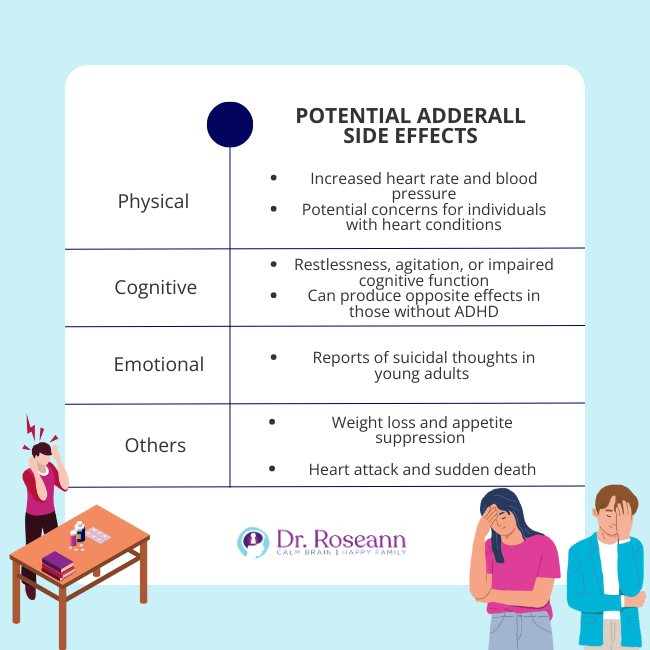
While Adderall can be life-changing for some kids, side effects show up more often than parents expect. A few slip away after a couple of weeks, though others stick around and sometimes mean a dose tweak or even a switch.
Common side effects parents report:
- Trouble falling asleep
- Loss of appetite
- Stomachaches or headaches
- Irritability or mood swings
- Increased heart rate or blood pressure
When Side Effects Need Immediate Attention
At times, side effects cross into red flag territory. That's when a call to your provider matters most.
Reach out right away if you see:
- Severe mood changes
- Tics or repetitive movements
- Sudden weight loss
- Signs of anxiety or panic
Remember—behavior and even side effects are communication from the brain and body. Listening early helps you and your provider make the right adjustments.
How Does Adderall Affect Emotions and Mood?
For many kids, Adderall softens frustration and reduces outbursts. Not every child responds this way. Some become irritable, sad, or emotionally flat—often when:
- The dose runs too high
- Anxiety hides beneath ADHD symptoms
- Stress shows up through a dysregulated nervous system
Parent story:
Sofia's 8-year-old grew tearful on Adderall XR. Lowering the dose eased emotions while focus held steady.
Medication should support function, not change who your child is.
It's not bad parenting—it's a dysregulated brain. The goal is always to calm the brain first so your child can shine as their true self.
What Happens When Adderall Wears Off?
As Adderall fades, some kids hit what parents call a "crash." Think of a balloon slowly deflating—energy slips away, patience thins, and big feelings rush back in.
It can show up as:
- Rebound hyperactivity that feels louder than before
- Irritability or sudden tantrums that come out of nowhere
- Fatigue mixed with teary meltdowns
This slump often sneaks in during late afternoon or evening, though timing shifts based on when the dose went in earlier. Parents sometimes describe it as a second round of chaos just as everyone's winding down.
Parent tip: Create an after-school buffer zone. Outdoor play, sensory breaks, or quiet downtime act like shock absorbers, softening the fall from that crash.
Remember, behavior is communication—this crash isn't defiance, it's the nervous system showing stress as the medication wears off.
Read more about: Dangers of Medication: The Complete Safety Guide for Parents
Are There Natural Alternatives or Supports if Medication Isn't Enough?
Even if Adderall helps, medication alone isn't enough to address ADHD. Calm the brain first, everything follows. A regulation-first approach gives kids the best chance to thrive.
Natural Supports for ADHD
- Neurofeedback – trains brainwaves for self-regulation
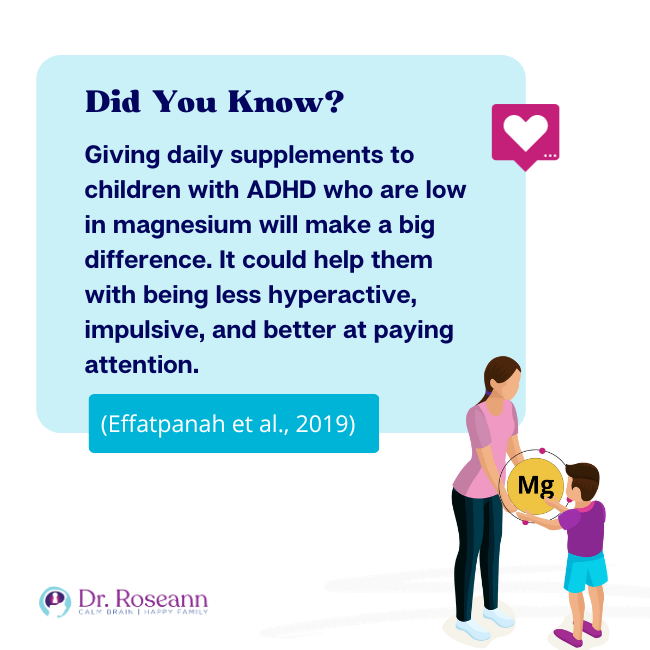
- Nutrition & supplements – magnesium, omega-3s, zinc
- A diet rich in omega-3s and magnesium supports brain function.
- For kids low in magnesium, daily supplements can ease hyperactivity, impulsivity, and attention struggles (Effatpanah et al., 2019).
- Sleep & exercise – reset energy and focus
- CALMS Dysregulation Protocol® – teaches nervous system regulation
- Social support – strengthens resilience
- Cognitive Behavioral Therapy (CBT) – builds coping and stress skills
- Research shows CBT works best when combined with medication. Teens receiving both improved more than those on medication alone (Sprich et al., 2016).
- Mindfulness & Stress Management
- Relaxation and mindfulness calm the nervous system.
- In an 8-week program, adults and teens with ADHD reported better attention, mood, and reduced anxiety (Zylowska et al., 2008).
No two children are alike. That's why a whole-brain approach matters. The Brain Behavior Reset™ Program, to address root causes—not just symptoms, blends:
- Neurofeedback
- PEMF
- nutrition
- lifestyle changes
Lasting change isn't about quick fixes—it's about giving your child the calm foundation their brain needs to grow and shine.
Get started with our free Self-Regulation Toolkit—simple, science-backed strategies to help your child find calm.
Parent Action Steps
- Learn about ADHD and natural treatment options
- Talk with your child's healthcare provider
- Keep open communication with your child
- Support a balanced lifestyle: routine, diet, exercise, sleep
- Try mindfulness and stress-management tools
- Offer emotional support; consider therapy for mood swings
- Track your child's progress regularly
- Celebrate big and small achievements
- Advocate for support at school
- Take the ADHD Quiz to clarify symptoms
- Use the Solutions Matcher for personalized treatment
FAQs
Does Adderall make kids feel "high"?
No. When taken as prescribed for ADHD, Adderall does not typically make kids feel "high." Most children feel calmer, more focused, and better able to manage attention and impulses. A euphoric "high" is more likely when Adderall is misused, taken in excessive doses, or used by someone without ADHD.
What does the Adderall "crash" feel like?
The Adderall "crash" happens as the medication wears off and may cause rebound hyperactivity, irritability, fatigue, sadness, or emotional meltdowns. If your child experiences a difficult crash, talk with your healthcare provider, as adjusting the medication or supporting nervous system regulation may help.
Can my child outgrow ADHD and stop Adderall?
Some children become less affected by ADHD symptoms as they mature, but ADHD does not simply disappear. Whether your child continues or stops Adderall should depend on their symptoms, daily functioning, and progress—not age alone. Many children thrive by combining healthy lifestyle habits, nervous system regulation, behavioral supports, and, when appropriate, medication.
How long does it take for Adderall to start working?
Adderall often starts working within 30 to 60 minutes, depending on the type prescribed. Your child's provider can explain what to expect based on their medication.
Will Adderall change my child's personality?
Adderall should help your child manage ADHD symptoms without changing their personality. If your child seems unusually withdrawn or unlike themselves, it's important to talk with their provider.
How can I tell if Adderall is working for my child?
You'll know Adderall is working when your child is better able to focus, stay organized, manage impulses, and participate more successfully at home and school.
What side effects should parents watch for when starting Adderall?
When starting Adderall, parents should watch for changes in appetite, sleep, mood, headaches, or stomachaches and share any concerns with their provider.
Can Adderall make my child feel more anxious?
Yes. Adderall can increase anxiety in some children, especially if the dose is too high or anxiety was already present.
Related reading: Adderall and emotional dysregulation; ADHD medication safety questions.
Citations
Effatpanah, M., Rezaei, M., Effatpanah, H., Effatpanah, Z., Varkaneh, H. K., Mousavi, S. M., Fatahi, S., Rinaldi, G., & Hashemi, R. (2019). Magnesium status and attention deficit hyperactivity disorder (ADHD): A meta-analysis. Psychiatry Research, 274, 228–234. https://doi.org/10.1016/j.psychres.2019.02.043
Sprich, S. E., Safren, S. A., Finkelstein, D., Remmert, J. E., & Hammerness, P. (2016). A randomized controlled trial of cognitive behavioral therapy for ADHD in medication-treated adolescents. Journal of Child Psychology and Psychiatry, 57(11), 1218–1226. https://doi.org/10.1111/jcpp.12549
Zylowska, L., Ackerman, D. L., Yang, M. H., Futrell, J. L., Horton, N. L., Hale, T. S., Pataki, C., & Smalley, S. L. (2008). Mindfulness Meditation Training in Adults and Adolescents With ADHD. Journal of Attention Disorders, 11(6), 737–746. https://doi.org/10.1177/1087054707308502
Dr. Roseann is a mental health expert in ADHD who frequently is in the media:
- Helping Children Thrive Podcast — Benefits of Neurofeedback for children with ADHD
- She Knows — 11 Products Moms of Kids With ADHD Swear By to Maintain Order in the Chaos
- The Healthy — 12 Silent Signs of Adult ADHD You Might Be Ignoring
- It's Gonna Be OK! Podcast — ADHD Series
Always remember… “Calm Brain, Happy Family™”
Disclaimer: This article is not intended to give health advice and it is recommended to consult with a physician before beginning any new wellness regime. The effectiveness of diagnosis and treatment vary by patient and condition. Dr. Roseann Capanna-Hodge, LLC does not guarantee certain results.
Are you looking for SOLUTIONS for your struggling child or teen?
Dr. Roseann and her team are all about science-backed solutions, so you are in the right place!

Meet the Expert
Licensed Therapist | Certified School Psychologist
Board Certified in Neurofeedback (BCN) | 30+ Years Clinical Experience
Expert in Emotional Dysregulation in Children and Nervous System Regulation
Host, Dysregulated Kids Podcast | Author, The Dysregulated Kid
Dr. Roseann Capanna-Hodge is a licensed therapist, certified school psychologist, and leading expert in emotional dysregulation in children and nervous system regulation. With over 30 years of clinical experience and having analyzed more than 10,000 brain maps, she helps families understand what behavior is really signaling—and how to calm the nervous system first so real change can happen.
She is the creator of Regulation First Parenting® and the CALMS Protocol™, host of the top 1% podcast Dysregulated Kids, and author of The Dysregulated Kid.