
Join the Dysregulation Insider get free calm parenting tips straight to your inbox!
YES, I'M IN!ADHD and School Challenges | Emotional Dysregulation in Children | E242





Estimated Reading Time: 6 minutes
When your child struggles in school with missed assignments, frequent meltdowns, or frustration over transitions, you’re not alone. These ADHD and school challenges aren’t laziness, they are a result of a dysregulated nervous system, executive functioning gaps, and difficulty regulating attention. In this episode, I break down what really drives these struggles and what parents can do to help their child thrive academically and emotionally.
Why ADHD Makes School Hard
ADHD affects attention, impulse cacontrol, and executive functioning, the brain’s “job manager.” That means kids may miss instructions, lose track of steps, or freeze when faced with multi-step tasks. Over time, these struggles compound, creating frustration for both child and parent.
Parent snapshot: A mom shared that her child understood the assignment but could not get started because the task felt overwhelming. Once the teacher and parent provided structured cues and breaks, the child completed it successfully.
Key takeaways:
- ADHD brains need structure and predictability to thrive
- Dysregulated brains misread tasks as threats or impossible challenges
- Behavior is communication—resistance is rarely willful
How Executive Functioning Impacts Learning
Kids may know what to do, but their brain can’t organize, plan, or sequence effectively. Executive functioning deficits affect:
- Task initiation and follow-through
- Time management and planning
- Cognitive flexibility and problem-solving
Practical tip: Start with the end goal. Show your child the finished project first, then break the process into visual, step-by-step tasks.
Using Structure and Routines to Reduce Stress
Structure is not rigid; it’s predictability that helps the nervous system stay regulated. Small, consistent routines reduce cognitive overload and prevent meltdowns.
Strategies to try:
- Visual checklists and planners for assignments
- Predictable morning and after-school routines
- Movement breaks or sensory “resets” during transitions
Parent example: A student struggled with math homework daily. Introducing a short movement break and visual step guide transformed homework into a calmer, manageable task.
Want to stay calm when your child pushes every button? Become a Dysregulation Insider VIP and get the FREE Regulation Rescue Kit, your step-by-step guide to stop oppositional behaviors without yelling or giving in.
Go to www.drroseann.com/newsletter and grab your kit today.
Supporting Self-Regulation During School
A dysregulated brain can’t process instructions effectively. Co-regulation is essential for teaching self-regulation.
Techniques include:
- Calm modeling: slow voice, deep breaths, grounded posture
- Reinforcing effort, not perfection
- Positive, specific praise for micro-successes
These tools help children build self-regulation skills while reinforcing a sense of safety and control.
Bridging School and Home
Home can amplify stress after a long day. After-school strategies reduce the risk of meltdowns:
- Snack + movement → quiet transition → homework
- Clear, predictable expectations
- Avoid over-explaining or lecturing during high-stress moments
Tip: Consistency across home and school builds nervous system regulation in children, which improves attention and emotional control.
Accommodations That Work for ADHD Students
IEPs and 504 plans aren’t about labels, they’re about access and regulation.
Helpful supports:
- Movement breaks and sensory tools
- Visual step-by-step instructions
- Chunked assignments with clear deadlines
- Quiet spaces to reduce distractions
Parent scenario: A child’s teacher implemented short movement breaks and visual cues. After a week, the student’s homework completion improved, and afternoon meltdowns decreased.
How to Advocate Without Conflict
Parents often feel intimidated at meetings. Advocacy doesn’t require confrontation.
Strategies:
- Present data: show patterns of attention, behavior, and learning
- Request specific interventions, not generic solutions
- Collaborate with teachers for consistent approaches
When parents understand behavior is communication, they can advocate with confidence and clarity.
Building Motivation and Independence
ADHD Kids need opportunities to develop confidence and executive skills.
Supports to encourage independence:
- Visual prompts and step-by-step guides
- Breaking large tasks into achievable micro-steps
- Positive reinforcement tied to effort and follow-through
Motivation grows when children feel capable, supported, and understood.
Quick Brain-Based Wins
- Show finished product before starting a task
- Use visual and kinesthetic teaching methods
- Combine sensory breaks with academic tasks
- Maintain calm co-regulation throughout transitions
.png)
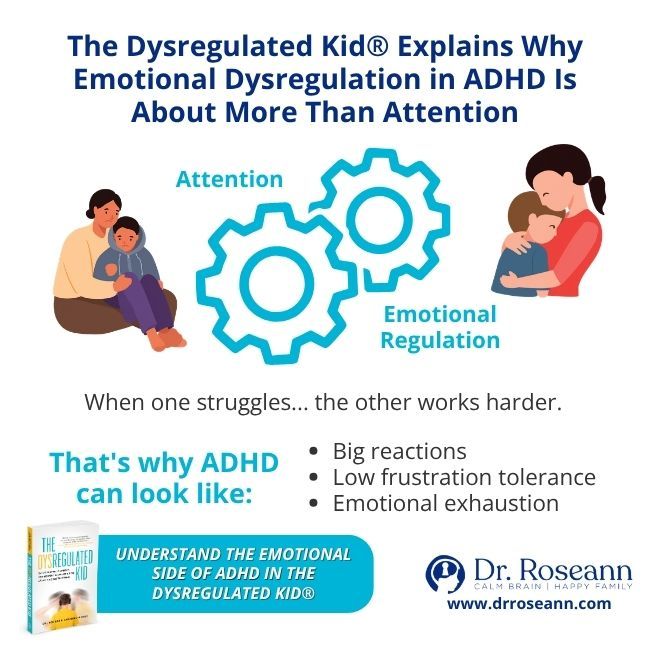
ADHD isn’t just about focus—it’s often a regulation issue. Learn practical, brain-based tools for dysregulated kids to build stronger self-regulation in The Dysregulated Kid® Book for Parents at dysregulatedkid.com.
FAQs
Does my child need an IEP or 504 for ADHD?
If learning, behavior, or focus is impaired, accommodations can help. IEPs provide direct instruction; 504s provide access and supports.
Why does my child’s performance go up and down so much?
Fluctuations often reflect emotional dysregulation or nervous system overload, not effort or motivation.
Can kids with ADHD really learn coping and problem-solving skills?
Yes. With structured support, co-regulation, and consistent practice, children can strengthen executive functioning skills.
What’s the first step when nothing seems to work?
Start by calming the nervous system first. Use routines, visual supports, and predictability before addressing behavior.
Not sure where to start? Take the guesswork out of helping your child.
Use our free Solution Matcher to get a personalized plan based on your child’s unique needs. Start here: www.drroseann.com/help
Dr. Roseann Capanna-Hodge is a licensed therapist, certified school psychologist, and leading expert in emotional dysregulation in children. With over 30 years of experience, she helps parents understand the root causes of meltdowns, anxiety, ADHD, and challenging behavior through the lens of nervous system regulation. Dr. Roseann teaches practical, science-backed strategies for co-regulation and how to calm a dysregulated child using her Regulation First Parenting® approach. She is the host of the Dysregulated Kids Podcast and author of The Dysregulated Kid.
Dr. Roseann Capanna-Hodge
Emotional Dysregulation in Children & Nervous System Expert
Regulation First Parenting® | CALMS Protocol™
Host of the Dysregulated Kids Podcast (Top 1% Globally)
Author of The Dysregulated Kid

Find this helpful? Leave us a review!
Your feedback helps more overwhelmed parents find calm, clarity, and the proven tools that make everyday life easier.
Dr. Roseann Capanna-Hodge: Helping Families of Dysregulated Kids Thrive Through Regulation First Parenting®
As the creator of Regulation First Parenting®, she’s helping families of dysregulated kids discover a compassionate, brain-based path forward. Through The Dysregulated Kids™ Podcast (top 2% globally), she offers practical strategies that help parents understand their child’s brain and support lasting change.
Through The Global Institute of Children’s Mental Health and Dr. Roseann, LLC, she’s created resources like the Neurotastic® Brain Formulas and the Regulation First Parenting® framework—meeting families where they are and supporting them through challenges like ADHD, anxiety, OCD, PANS/PANDAS, and behavioral struggles.
Recognized by Forbes as “a thought leader in children’s mental health,” Dr. Roseann is changing how we understand emotional dysregulation in children—one family at a time.