


Estimated reading time: 9 minutes
Mold toxicity treatment starts with identifying and reducing mold exposure and treating your child’s assessed medical needs. For families navigating PANS/PANDAS, the care plan can also include supportive routines that prioritize calm, connection, and nervous system regulation while the healthcare team investigates symptoms and guides treatment.
When sudden OCD symptoms, anxiety, tics, or big emotional changes enter family life, you want to understand what is happening—and what might help.
Discovering mold adds another question. It deserves investigation without becoming the explanation for every symptom. Your child’s medical care and day-to-day support still matter while you sort out the environmental concerns.
I’m Dr. Roseann Capanna-Hodge, a therapist, school psychologist, mom of two neurodivergent boys, and author of The Dysregulated Kid.
With 30+ years of experience, I help parents make sense of complicated brain and behavior needs. My Regulation First approach brings calm and connection into the parenting plan while your healthcare team assesses and treats the medical concerns.
Let’s walk through the options together: what to address in the home, what to ask your child’s provider, and how to keep nervous system support part of everyday care. One manageable step at a time.
What you’ll learn:
- How mold exposure may affect children’s health.
- What to discuss when your child has PANS/PANDAS.
- The difference between environmental assessment and medical testing.
- Questions about treatment, supplements, and detoxification.
- Practical ways to support your child through the process.

How Does Mold Affect the Body?
Certain household mold exposures have been associated with coughing and wheezing in children. Research has also explored nervous system findings, but the studies discussed here do not establish that mold causes PANS/PANDAS (Gent et al., 2002; Abou-Donia et al., 2018).
Here’s the quick summary:
- Coughing and wheezing: Higher levels of certain household molds have been associated with these symptoms in infants at increased risk for asthma (Gent et al., 2002).
- Asthma symptoms: Addressing moisture damage alongside medical care may help children with asthma living in mold-affected homes (Kercsmar et al., 2006).
- Nervous system questions: A small study reported elevated neural autoantibodies in patients with mixed environmental-exposure histories, including water or mold damage (Abou-Donia et al., 2018).
- PANS/PANDAS concerns: These findings do not establish mold as a cause of PANS/PANDAS. Suspected exposure belongs in the medical conversation.
What Does the Research Tell Us?
Respiratory symptoms: A study of infants at increased risk for asthma found that higher household levels of Penicillium were associated with more wheezing and persistent coughing during the first year of life (Gent et al., 2002).
Moisture repairs: A randomized trial involving 62 children with asthma added household repairs to medical care. Researchers reported fewer symptom days after remediation, although some comparisons between groups were not statistically significant (Kercsmar et al., 2006).
Nervous system findings: Researchers examined neural autoantibodies in 24 patients with different environmental-exposure histories. Eight had histories of building water or mold damage. Antibody levels were elevated in the overall patient group, but this did not establish a mold/PANS connection or a treatment plan for children (Abou-Donia et al., 2018).
What does this mean for your family? Address documented environmental concerns while continuing your child’s medical care.
Ask:
“Could the environment be relevant, and what else should we assess?”
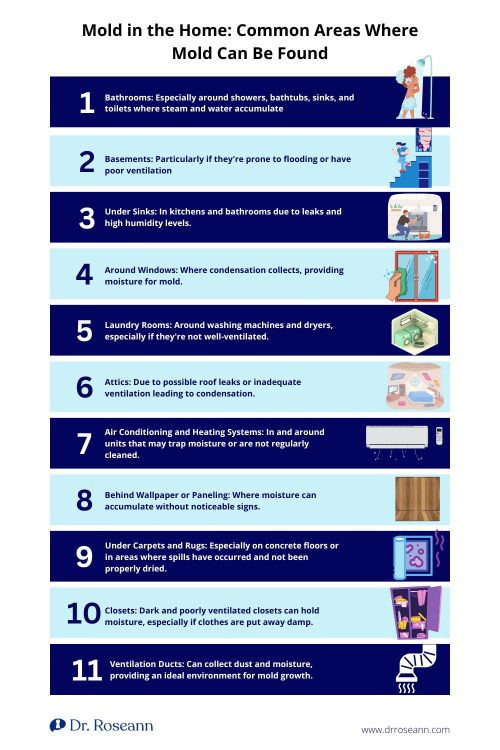
What Is the Connection Between Mold and PANS/PANDAS?
For a child with PANS/PANDAS, suspected mold exposure warrants investigation, but it does not establish a diagnosis or a confirmed cause of a flare.
The primary studies discussed here do not demonstrate that household mold causes PANS or that mold removal resolves it.
You can address two questions together:
- What does my child need medically?
- What needs attention in the environment?
Both deserve a clear plan.
How Are PANS and PANDAS Different?
PANS stands for pediatric acute-onset neuropsychiatric syndrome.
A study of 43 children with PANS described:
- Abrupt neuropsychiatric changes.
- Significant obsessive-compulsive symptoms.
- Anxiety.
- Emotional changes.
- Difficulties affecting daily life.
These findings describe the children studied; they do not identify mold as the cause (Murphy et al., 2015).
PANDAS stands for pediatric autoimmune neuropsychiatric disorders associated with streptococcal infections.
The original clinical description involved 50 children with OCD and/or tic disorders who met working criteria that included an association with group A streptococcal infections (Swedo et al., 1998).
Finding mold does not establish either diagnosis. A clinician needs to assess the symptom pattern, timing, medical history, and other possible explanations.
Explore PANS/PANDAS symptoms and assessment for questions to bring to your child’s provider.
Keep Nervous System Support in the Everyday Plan
Appointments and environmental concerns do not make the rest of family life disappear. There is still breakfast, school, and the bedtime routine.
My Regulation First Parenting® approach encourages parents to begin with connection and a manageable next step.
Try:
“You’re having a hard time. I’m here. Let’s work out what you need next.”
Calming routines do not remove mold or replace medical treatment. They offer a practical way to support your child while the larger questions are being addressed.
For a broader discussion, listen to What Causes PANS/PANDAS Onset and Triggers Flares?.

What Symptoms Should Parents Bring to the Clinician?
Bring respiratory symptoms, sudden behavioral changes, new OCD-like behaviors or tics, eating or drinking changes, and environmental concerns to your child’s clinician.
Record when each began and how it affects daily life.
| Concern | What to record | Question to ask |
|---|---|---|
| Respiratory symptoms | Coughing, wheezing, timing, and where symptoms occur. | “Does this need a respiratory or allergy assessment?” |
| Sudden behavioral changes | What changed, how quickly, and the effect on daily life. | “What should we evaluate?” |
| OCD-like behaviors or tics | Examples, onset, frequency, and interference. | “Could this warrant a PANS/PANDAS evaluation?” |
| Eating or drinking changes | What your child avoids and changes in intake. | “How urgently should we assess this?” |
| Environmental concerns | Leaks, water damage, odors, or visible growth. | “What information would help assess possible exposure?” |
This is an appointment aid, not a diagnostic checklist.
The PANS study described children experiencing substantial difficulties. Sudden symptoms deserve attention without waiting for an environmental explanation (Murphy et al., 2015).
A Practical Example
Imagine your child starts coughing at night around the time you discover a bedroom-window leak. A week later, new repetitive behaviors appear.
Write down:
- When the coughing began.
- When the leak was discovered.
- When the repetitive behaviors appeared.
- Any illnesses or treatment changes nearby in time.
Tell the clinician:
“These changes happened close together. I don’t know whether they are connected, but I wanted you to have the timeline.”
You do not need to arrive with the cause already figured out.
What Is the Importance of Mold Testing?
Environmental assessment can help investigate building concerns, while medical testing should answer a specific question about your child’s health.
Before testing, ask what the result would change in the care or repair plan.
Environmental Assessment vs. Medical Testing
| Assessment | What it investigates | Important distinction |
|---|---|---|
| Building or moisture assessment | Where water is entering or accumulating and what needs repair. | It does not diagnose your child. |
| Environmental sampling, when proposed | A specific question about the building environment. | It does not establish PANS/PANDAS. |
| Medical evaluation | Your child’s symptoms and appropriate care. | It does not replace a building assessment. |
| A proposed laboratory test | A particular medical question. | Its value depends on how the result will guide care. |
Questions to Ask Before Testing
- “What will this test tell us?”
- “Has it been validated for that purpose?”
- “What would a positive result mean?”
- “What would a negative result mean?”
- “How would either result change the plan?”
The small autoantibody study did not validate a routine mold/PANS screening panel for children (Abou-Donia et al., 2018).
You are allowed to ask for clarity. A test should have a purpose you understand.
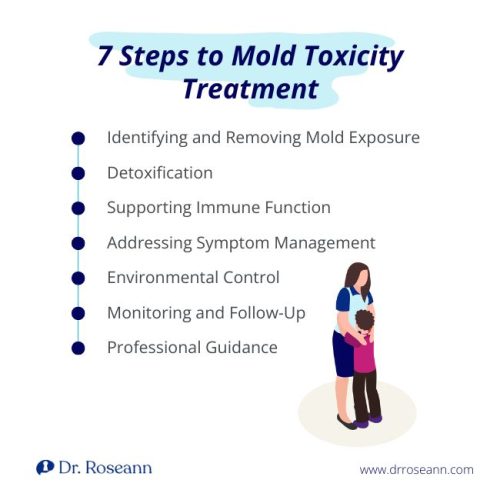
What Are the Mold Toxicity Treatment Options for Children?
Treatment options include addressing identified mold and moisture problems, treating assessed medical conditions, and arranging follow-up care.
For children with PANS/PANDAS, supportive routines can accompany medical care. Detox products require a separate, individualized discussion.
1. Identify and Address Mold and Moisture Problems
Ask an appropriately qualified professional to assess:
- Persistent leaks.
- Water damage.
- Suspected hidden growth.
- The work needed to address the findings.
The pediatric asthma trial included repairs to reduce water entry, remove damaged materials, and address ventilation-related concerns alongside medical care (Kercsmar et al., 2006).
Before work begins, ask:
- Who should perform it?
- What precautions are needed?
- How will completion be assessed?
Give the environmental work a clear plan.
2. Treat the Symptoms Your Child Has
Your child’s immediate needs matter while the environmental investigation continues.
Discuss:
- Respiratory symptoms.
- Sudden behavioral changes.
- OCD-like behaviors or tics.
- Eating or drinking difficulties.
- Other significant changes.
The treating clinician can determine what assessment, treatment, or specialist input is appropriate.
For broader care discussions, visit Treatment for PANS/PANDAS in Children.
3. Ask About Detoxification Before Adding Products
Products discussed in mold treatment may include:
- Glutathione.
- Activated charcoal.
- Mycotoxin binders.
The studies cited here do not establish these products as effective treatments for mold-related PANS in children.
Before adding a product, ask about:
- Its intended purpose.
- Evidence relevant to your child.
- Possible risks or interactions.
- How its use will be monitored.
“What are we trying to address with this product, and how will we know whether it is helping?”
The discovery of mold alone should not determine a supplement regimen.
4. Review Nutrition and Supplements Individually
Bring questions about eating and supplements to the clinician, particularly when your child’s intake has changed.
Ask:
- Is there an identified nutritional need?
- What is the proposed supplement meant to address?
- How will it fit with current treatment?
- When will its use be reviewed?
Our resources on magnesium, magnesium threonate versus glycinate, and magnesium and PANS/PANDAS can help you prepare questions.
These resources do not establish magnesium as a mold-detox treatment.
For food ideas, including foods discussed for their antioxidant content, explore our nutrition resource and discuss suitability for your child.
5. Make Nervous System Support Practical
Choose small supports that fit your child’s day. A useful parenting plan should feel manageable—not like another full-time job.
| Difficult moment | Support to consider | Parent script |
|---|---|---|
| Preparing for an appointment | Explain the next step simply. | “First we’ll talk with the doctor. You can tell me when you need help.” |
| Feeling overwhelmed | Give one manageable step. | “Let’s start with your shoes.” |
| Explaining discomfort | Offer time and simple questions. | “Does it hurt, feel uncomfortable, or feel different?” |
| Facing an unexpected change | Explain what changes and what stays familiar. | “We’re using another room today. Your blanket can come with us.” |
| Needing school support | Agree on a way to ask for help. | “Who can you check in with when the day feels hard?” |
These are examples to adapt, not treatments for mold exposure or PANS/PANDAS.
Connection belongs in the care plan without becoming another task to perform perfectly.
6. Monitor and Follow Up
Agree on what you will review and when.
| Area | Information to bring | Follow-up question |
|---|---|---|
| Environment | Assessment findings and completed repairs. | “Is further inspection or work needed?” |
| Symptoms | Changes and their timing. | “What needs reassessment?” |
| Treatment | Medicines, supplements, and recommendations. | “What should continue or change?” |
| Daily life | Eating, sleep, school, and activities. | “What support is needed now?” |
Coordinate changes with the professionals involved rather than adjusting several treatments on your own.
7. Build a Team With Clear Roles
Begin with your child’s pediatrician or treating clinician.
Ask:
- Who will assess the medical concerns?
- Who will evaluate the building?
- Who should receive updates?
- Whom should you contact when something changes?
Medical care and environmental work need different expertise.
When questions about natural approaches to mental health support arise, discuss how each proposed approach fits your child’s needs and current treatment.
Parent Action Steps
Start with medical assessment for significant symptoms, document environmental concerns, and agree on the next steps with the professionals involved.
Use this checklist to keep the plan manageable:
- Arrange assessment for significant or sudden symptoms.
- Create a short timeline of symptoms, illnesses, environmental concerns, and treatment changes.
- Document moisture or mold concerns and seek an appropriate assessment.
- Ask what each proposed test will change.
- Review treatment and supplement recommendations with the clinician.
- Set a follow-up point to reassess the plan.
Seek urgent medical care for:
- Severe breathing difficulty.
- Inability to maintain hydration.
- Immediate safety concerns.
Do not wait for mold testing before obtaining needed care.
In The Dysregulated Kid, I help parents understand challenging behavior and approach difficult moments with greater clarity and connection.
That support can sit alongside your family’s medical and environmental plan.
Bring your observations, ask your questions, and keep the next step manageable.
Frequently Asked Questions
Can Mold Exposure Worsen PANS or PANDAS Symptoms?
The primary studies discussed here do not establish that mold causes or worsens PANS/PANDAS. Bring suspected exposure to the treating clinician’s attention while continuing assessment and care.
What Are Signs of Mold Toxicity in Children With PANS or PANDAS?
The cited research does not establish a diagnostic symptom list. Record respiratory symptoms, behavioral changes, and environmental concerns separately so the provider can assess the whole picture.
Why Is Mold Removal Important?
Addressing documented moisture and mold problems is an environmental step. A pediatric asthma trial reported improvements in symptom days after repairs alongside medical care, but it did not establish a PANS recovery outcome (Kercsmar et al., 2006).
What Is the First Step in Mold Toxicity Treatment for Kids?
Have your child’s symptoms assessed and investigate identified environmental concerns. Ask how the medical and environmental findings will guide the next steps.
Can Detox Support Help Children Exposed to Mold?
The cited studies do not establish a pediatric detox regimen or show that binders treat mold-related PANS. Discuss the evidence, risks, and monitoring for any proposed product with the clinician.
How Does Mold Affect the Brain and Behavior?
A small study reported neural autoantibody findings in patients with mixed environmental exposures. It did not establish a mold-specific cause for a child’s behavioral symptoms (Abou-Donia et al., 2018).
What Home Changes Help Address Mold Concerns?
Arrange assessment of persistent moisture problems and appropriate repairs. Ask about damaged materials, ventilation, and preventing recurrence based on the building’s findings.
Who Should Help Treat a Child With Suspected Mold-Related Illness?
Start with the pediatrician or treating clinician, who can recommend specialists when appropriate. Use an appropriately qualified environmental professional for building concerns.
Does Mold Exposure Mean My Child Has PANDAS?
No. The original PANDAS description involved a clinical pattern associated with streptococcal infections. Mold exposure does not establish that diagnosis (Swedo et al., 1998).
How Can I Support My Child’s Nervous System During Care?
Use manageable routines, simple explanations, and opportunities to ask for help. My Regulation First Parenting® approach emphasizes calm and connection alongside medical care.
How Long Does Recovery Take?
The cited studies do not establish a recovery timeline for children with suspected mold-related PANS. Ask what to monitor, when to follow up, and which changes require earlier assessment.
References
Abou-Donia, M. B., Lieberman, A., & Curtis, L. (2018). Neural autoantibodies in patients with neurological symptoms and histories of chemical/mold exposures. Toxicology and Industrial Health, 34(1), 44–53. https://doi.org/10.1177/0748233717733852
Gent, J. F., Ren, P., Belanger, K., Triche, E., Bracken, M. B., Holford, T. R., & Leaderer, B. P. (2002). Levels of household mold associated with respiratory symptoms in the first year of life in a cohort at risk for asthma. Environmental Health Perspectives, 110(12), A781–A786. https://doi.org/10.1289/ehp.021100781
Kercsmar, C. M., Dearborn, D. G., Schluchter, M., Xue, L., Kirchner, H. L., Sobolewski, J., Greenberg, S. J., Vesper, S. J., & Allan, T. (2006). Reduction in asthma morbidity in children as a result of home remediation aimed at moisture sources. Environmental Health Perspectives, 114(10), 1574–1580. https://doi.org/10.1289/ehp.8742
Murphy, T. K., Patel, P. D., McGuire, J. F., Kennel, A., Mutch, P. J., Parker-Athill, E. C., Hanks, C. E., Lewin, A. B., Storch, E. A., Toufexis, M. D., Dadlani, G. H., & Rodriguez, C. A. (2015). Characterization of the pediatric acute-onset neuropsychiatric syndrome phenotype. Journal of Child and Adolescent Psychopharmacology, 25(1), 14–25. https://doi.org/10.1089/cap.2014.0062
Swedo, S. E., Leonard, H. L., Garvey, M., Mittleman, B., Allen, A. J., Perlmutter, S., Lougee, L., Dow, S., Zamkoff, J., & Dubbert, B. K. (1998). Pediatric autoimmune neuropsychiatric disorders associated with streptococcal infections: Clinical description of the first 50 cases. American Journal of Psychiatry, 155(2), 264–271. https://doi.org/10.1176/ajp.155.2.264
Always remember… “Calm Brain, Happy Family™”
Disclaimer: This article is for educational purposes and does not replace medical or mental health advice. Consult a qualified healthcare provider before beginning a new treatment or wellness regimen. Outcomes vary by child and condition; Dr. Roseann Capanna-Hodge, LLC does not guarantee particular results.
Are you looking for SOLUTIONS for your struggling child or teen?
Dr. Roseann and her team are all about science-backed solutions, so you are in the right place!
Meet the Expert
Licensed Therapist | Certified School Psychologist
Board Certified in Neurofeedback (BCN) | 30+ Years Clinical Experience
Expert in Emotional Dysregulation in Children and Nervous System Regulation
Host, Dysregulated Kids Podcast | Author, The Dysregulated Kid
Dr. Roseann Capanna-Hodge is a licensed therapist, certified school psychologist, and leading expert in emotional dysregulation in children and nervous system regulation. With over 30 years of clinical experience and having analyzed more than 10,000 brain maps, she helps families understand what behavior is really signaling—and how to calm the nervous system first so real change can happen.
She is the creator of Regulation First Parenting® and the CALMS Protocol™, host of the top 1% podcast Dysregulated Kids, and author of The Dysregulated Kid.

Want more Regulation First Parenting® guidance from Dr. Roseann? Add us as a preferred source on Google.