



Estimated reading time: 9 minutes
Gifted children can experience anxiety alongside deep thinking, strong feelings, and differences in the pace at which their skills develop. Advanced cognitive abilities do not mean emotional coping skills are equally advanced.
I’m Dr. Roseann Capanna-Hodge, and for over three decades I’ve supported families in managing gifted child anxiety, with a focus on understanding dysregulation and supporting the nervous system alongside appropriate anxiety care.
If your child is constantly anxious, perfectionistic, or overwhelmed—you’re not imagining it, and you’re certainly not alone.
In this blog, I’m going to walk you through what gifted anxiety really looks like, the signs of anxiety in gifted children, why it happens, and most importantly—how to help gifted students with anxiety so they can truly thrive.
What Is Gifted Anxiety?
Gifted anxiety describes anxiety experienced by a gifted child. It is not a separate clinical diagnosis.
A child may understand complex ideas while still needing age-appropriate help with disappointment, uncertainty, and frustration. Adults sometimes describe differences in the pace of development across areas as asynchronous development.
That description can help us consider a child’s needs, but it does not establish the cause of their anxiety.
Understanding something intellectually and coping with it emotionally are different tasks.
What Are the Signs of Gifted Anxiety?
Look for persistent worry, distress, avoidance, or changes that interfere with everyday life. Strong academic performance does not rule out a need for emotional support.
Instead of an obvious expression of fear, you might notice repeated checking, reluctance to begin, frustration, or withdrawal.
| Sign or concern | What to notice | Everyday example |
|---|---|---|
| Perfectionism | Fear of mistakes that interferes with completing work | Avoiding a project because it might not turn out perfectly |
| Sensory discomfort | Distress in particular environments | Struggling with the noise in the cafeteria |
| Overthinking | Repeated analysis that makes action difficult | Spending an evening worrying about which club to join |
| Uneven skills | A difference between understanding and independent coping | Understanding advanced mathematics but needing help managing frustration |
| Social concerns | Loneliness, fear of judgment, or difficulty joining others | Wanting friends but avoiding a group activity |
| Physical complaints | Symptoms, their timing, and medical assessment needs | Repeated stomachaches before presentations |
| Sleep difficulties | Worry or other factors interfering with rest | Remaining awake with questions about tomorrow |
| Performance anxiety | Fear of disappointing themselves or others | Avoiding an unfamiliar sport because they might lose |
| Big-picture worries | Distress about issues beyond the child’s control | Repeated worries about climate change or family safety |
| Self-criticism | Harsh judgments after ordinary mistakes | “I got one wrong, so I’m terrible at this.” |
| Repeated reassurance-seeking | Returning to the same question despite answers | Asking repeatedly whether a parent will be safe |
| Avoidance | Increasingly missing feared activities | Refusing to participate in class or attend gatherings |
Real-life example:
I remember working with Jennifer, the mom of a bright nine-year-old named Mason. He would tear up his drawings when a line looked wrong and become upset at night about school projects—even when his work was going well.
His fear of falling short of his own expectations deserved attention.
The finished project told us about his ability. The distress surrounding it told us about his support needs.
Why Do Gifted Kids Experience So Much Anxiety?
Some gifted children experience substantial anxiety, but giftedness alone does not explain it. Their individual worries, circumstances, expectations, and other needs matter.
In practice, parents may describe children who:
- Think extensively about criticism or mistakes.
- Worry about large, complicated issues.
- Feel misunderstood by peers.
- Put pressure on themselves to keep succeeding.
These experiences are worth exploring without assuming every gifted child shares them.
A study of 132 children found that gifted students had similar anxiety scores to one comparison group and higher scores than another. The relationship between giftedness, perfectionism, and anxiety was more complex than a simple “higher intelligence means more anxiety” explanation (Guignard et al., 2012).
High standards are not automatically a problem. Look at whether fear and distress are making it difficult for your child to participate.
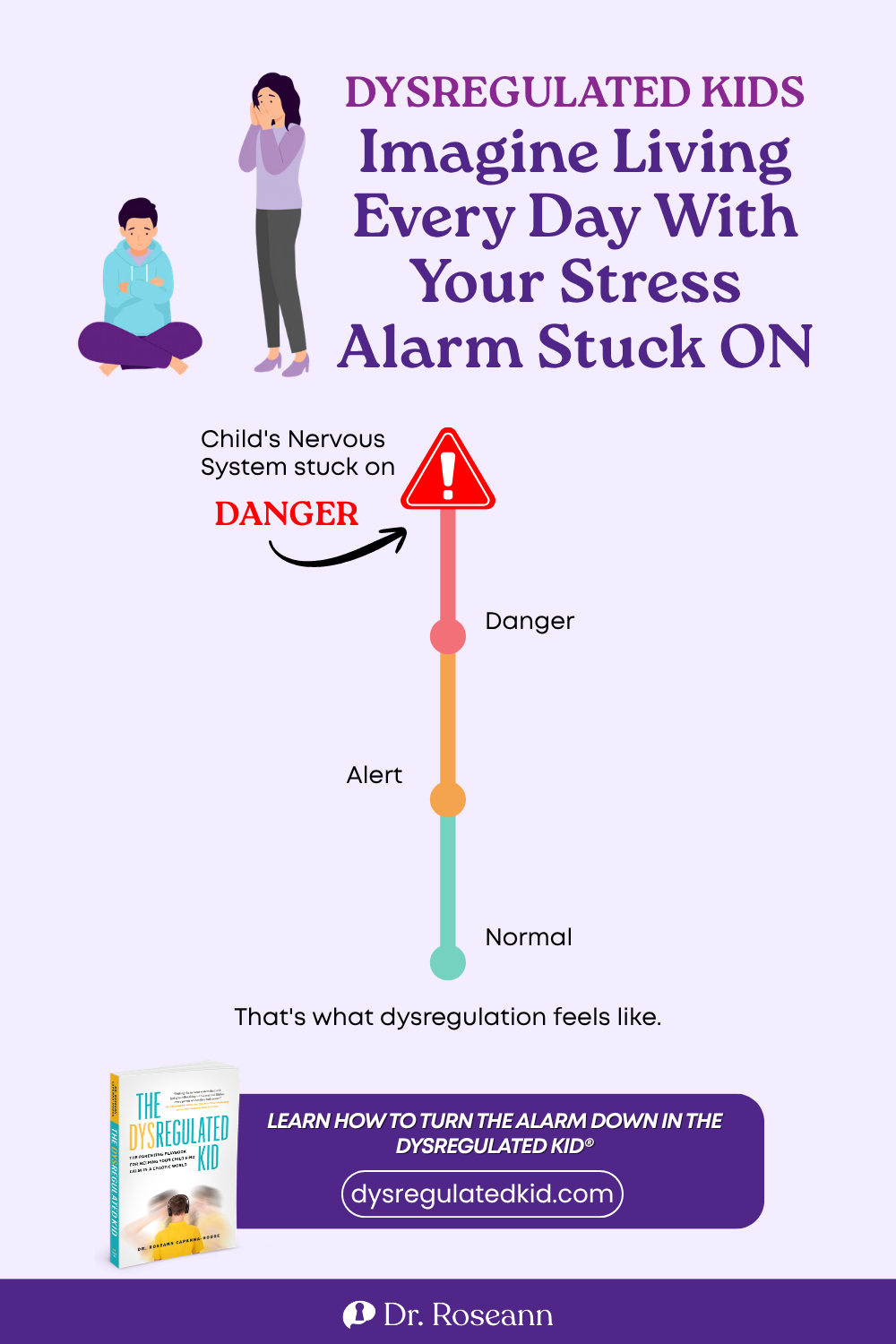
What Makes Gifted Anxiety Different from General Anxiety?
Giftedness may shape the content of a child’s worries, but anxiety still needs an individualized assessment. There is no separate anxiety rule that applies to every gifted child.
A child might explain a fear in remarkable detail, consider every possible outcome, or question each reassurance you offer.
That does not mean they can reason their way out of the feeling.
Some children internalize and mask difficulties. Others show their distress openly. Look at your child’s actual symptoms rather than assuming a particular presentation.
A child can explain black holes and still need help handling a difficult evening. Knowledge does not replace coping practice.

What Contributes to Anxiety in Gifted Children?
Anxiety can involve several interacting factors. Explore what is happening for your child rather than attributing every difficulty to giftedness.
Areas to consider include:
- Sensory experiences: Ask which sounds, lights, textures, or settings feel uncomfortable.
- Perfectionism and expectations: Find out what making a mistake means to your child.
- Deep rumination: Notice worries that repeat without leading to a useful next step.
- Social disconnect or isolation: Ask about friendships, belonging, and fear of judgment.
- Task demands: Consider whether the work, instructions, or expectations fit the child.
- Other concerns: Discuss learning, developmental, physical health, or emotional difficulties that may also need assessment.
Research on children’s perfectionism illustrates that higher standards and greater anxiety do not consistently go together across comparison groups (Guignard et al., 2012).
Try:
“You care about doing this well. What feels most worrying about getting it wrong?”
That gives you more to work with than simply saying, “Stop being a perfectionist.”
How Can I Help My Gifted Child Manage Anxiety?
Combine appropriate anxiety care with practical support that fits your child’s abilities, interests, and emotional needs.
Strategies to discuss or practice include:
- Cognitive-behavioral therapy (CBT): Ask how the therapist will adapt explanations and practice to your child.
- Comfortable breathing or mindful noticing: Offer these as coping options rather than requirements.
- Co-regulation: Stay nearby if welcomed and use brief, steady language.
- Making room for mistakes: Model correcting an error without harsh self-judgment.
- Parent-focused treatment: Ask whether structured support for your responses would help.
Try:
“I believe this feels hard, and I believe you can work on it with support. Let’s follow the next step we planned.”
For additional parenting resources, explore the Self-Regulation Toolkit.
What Tools Help Calm the Nervous System in Gifted Kids?
Choose comfortable coping tools your child accepts, and consider clinical interventions individually with their provider. A calming activity and treatment for an anxiety disorder have different purposes.
Everyday starting points include:
- A quieter space when needed.
- Gentle breathing without forced breath-holding.
- A familiar movement break.
- Predictable transitions.
- A brief check-in with a trusted adult.
Tools families may also discuss include neurofeedback, PEMF, and magnesium. Their suitability depends on the individual child, the intended use, and evidence relevant to their age and condition.
Ask:
- What difficulty are we targeting?
- What research applies to this use?
- What precautions or monitoring are needed?
- How does it fit with the anxiety treatment plan?
For families considering care without medication, CBT and structured parent-based treatment offer options to discuss with a qualified professional (Walkup et al., 2008; Lebowitz et al., 2020).
Calming first is part of my parenting approach; it should work alongside the child’s appropriate care.

Gifted Child Anxiety: Supporting Emotional and School Needs
How Do I Support My Gifted Child at Home and in School?
Coordinate support around a specific difficulty, with clear roles for your child, family, school, and therapist. Address the effort and distress involved—not just the grade.
At Home:
- Make room for anxiety conversations. Ask what your child fears.
- Keep routines predictable and manageable.
- Model ordinary mistakes and recovery.
- Notice flexibility, participation, and asking for help.
- Follow the therapist’s plan for responding to reassurance-seeking or avoidance.
Try:
“I made a mistake, and I can correct it. That’s part of learning.”
You do not need to demonstrate perfection to help your child handle imperfection.
At School:
- Describe the actual concern. “She spends most of the lesson erasing” is more useful than “She’s a perfectionist.”
- Ask whether work is appropriately challenging.
- Discuss school-based mental health support.
- Identify a trusted adult your child can approach.
- Explore interest-based clubs if your child wants those opportunities.
- Coordinate participation goals with the treating professional.
A concrete example: A child understands the material but avoids presentations because they fear forgetting a word.
| Setting | Support to coordinate | What to notice |
|---|---|---|
| Home | Practice the agreed step without restarting for every imperfection | Can the child continue after a small mistake? |
| School | Arrange a starting step recommended by the therapist | Is participation becoming more manageable? |
| Therapy | Address the feared outcome and plan gradual practice | Are distress and avoidance changing? |
How We Helped Mason and Jennifer
Jennifer and I looked beyond Mason’s finished work to the distress surrounding it.
His care included support for regulation, CBT strategies addressing his harsh self-judgment, and coaching for Jennifer on responding to difficult moments. The original account also described neurofeedback and magnesium as part of his individualized care.
Over time, the family described Mason becoming more willing to participate in class and share his artwork. He was finding room to try without expecting every attempt to be perfect.
His interests included robotics and creative writing—opportunities to enjoy learning and creating.
What Happens If Gifted Anxiety Goes Untreated?
When anxiety interferes with daily life, seek assessment rather than assuming strong abilities will compensate for it. Its course varies, so avoid treating worsening difficulties as inevitable.
Reasons to seek help include:
- Increasing school avoidance.
- Missing activities the child wants to join.
- Persistent disruption to sleep or family routines.
- Distress affecting friendships.
- A child saying they cannot cope.
Try:
“The worry is getting in the way of things you want to do. Let’s get some help with that.”
Research shows that children with anxiety disorders can improve with appropriate treatment (Walkup et al., 2008; Lebowitz et al., 2020).
You don’t need to wait for grades to fall before taking distress seriously.
You Can Help Your Gifted Child Thrive
Support your child’s abilities and emotional needs together. Listen to their experience, teach manageable coping steps, and coordinate appropriate care.
Make room for calm, connection, and the ordinary messiness of learning.
Try:
“You don’t have to prove how smart you are every time you try something. We can work on the hard parts together.”
My book, The Dysregulated Kid, offers practical ways to bring Regulation First Parenting® into everyday family life.
Your child can be capable and need help. Both deserve room in the plan.
It’s gonna be OK.
FAQs
What age does gifted anxiety usually show up?
There is no single established onset age for “gifted anxiety.” The phrase describes anxiety in a gifted child rather than a separate disorder with its own timeline.
Discuss persistent distress or interference with your child’s provider, whatever their age.
Is my child gifted or just anxious?
Giftedness and anxiety are different questions, and a child can have both. Assessment should consider abilities and emotional concerns separately.
Does gifted anxiety go away on its own?
The course varies by child and by the anxiety involved. When worry persists or interferes with life, seek guidance rather than waiting for giftedness or maturity to resolve it.
Can therapy help even if my child is very logical?
Logical thinking does not rule out benefit from therapy. CBT has demonstrated benefit in childhood anxiety trials, although the cited research was not specific to gifted children (Walkup et al., 2008).
Ask how the therapist will adapt explanations and practice to your child.
Should I tell my child they are gifted?
Consider their age, preferences, and questions when discussing assessment findings. Explain strengths without creating an expectation that they must excel at everything.
Try: “You learn some things quickly. Everyone also has things they need help practicing.”
Why do gifted kids have anxiety in the first place?
There is no single cause that applies to gifted children as a group. Investigate the particular worries, circumstances, and other needs affecting your child rather than attributing anxiety to intelligence alone.
What are the signs of gifted anxiety in kids at home or school?
Persistent worry, avoidance, fear of mistakes, repeated reassurance-seeking, or disrupted participation are concerns to discuss. These patterns require context and do not diagnose anxiety by themselves.
How can I help my gifted child calm their anxiety in the moment?
Stay nearby if welcomed, reduce unnecessary demands, and offer a familiar coping option. Use brief, steady language:
“I’m here. Let’s take the next step together.”
For recurring situations, follow the plan developed with your child’s therapist.
Citations
Guignard, J.-H., Jacquet, A.-Y., & Lubart, T. I. (2012). Perfectionism and anxiety: A paradox in intellectual giftedness? PLOS ONE, 7(7), Article e41043. https://doi.org/10.1371/journal.pone.0041043
Lebowitz, E. R., Marin, C., Martino, A., Shimshoni, Y., & Silverman, W. K. (2020). Parent-based treatment as efficacious as cognitive-behavioral therapy for childhood anxiety: A randomized noninferiority study of supportive parenting for anxious childhood emotions. Journal of the American Academy of Child & Adolescent Psychiatry, 59(3), 362–372. https://doi.org/10.1016/j.jaac.2019.02.014
Walkup, J. T., Albano, A. M., Piacentini, J., Birmaher, B., Compton, S. N., Sherrill, J. T., Ginsburg, G. S., Rynn, M. A., McCracken, J., Waslick, B., Iyengar, S., March, J. S., & Kendall, P. C. (2008). Cognitive behavioral therapy, sertraline, or a combination in childhood anxiety. The New England Journal of Medicine, 359(26), 2753–2766. https://doi.org/10.1056/NEJMoa0804633
Always remember… “Calm Brain, Happy Family™”
Disclaimer: This article is not intended to give health advice and it is recommended to consult with a physician before beginning any new wellness regime. The effectiveness of diagnosis and treatment vary by patient and condition. Dr. Roseann Capanna-Hodge, LLC does not guarantee certain results.
Meet the Expert
Licensed Therapist | Certified School Psychologist
Board Certified in Neurofeedback (BCN) | 30+ Years Clinical Experience
Expert in Emotional Dysregulation in Children and Nervous System Regulation
Host, Dysregulated Kids Podcast | Author, The Dysregulated Kid
Dr. Roseann Capanna-Hodge is a licensed therapist, certified school psychologist, and leading expert in emotional dysregulation in children and nervous system regulation. With over 30 years of clinical experience and having analyzed more than 10,000 brain maps, she helps families understand what behavior is really signaling—and how to calm the nervous system first so real change can happen.
She is the creator of Regulation First Parenting® and the CALMS Protocol™, host of the top 1% podcast Dysregulated Kids, and author of The Dysregulated Kid.

Want more Regulation First Parenting® guidance from Dr. Roseann? Add us as a preferred source on Google.